
Dubrovnik, Croatia: Sunrises, Stone Walls, and the Adriatic
Before the Journey Began
Some trips begin with a plan. Others begin with people.
This one started as a celebration — two close friends turning 60 — and quickly grew into something bigger: friends, family, and eventually enough of us to fill an entire boat for a cycling journey through Croatia’s islands.
This trip was a little different for me. Most of our travels — and the stories we share here at LnR Photography — are adventures Randy and I take together, but this one was built around two things he wisely avoids: cycling and boats. Since they’re not his thing, this became a solo adventure for me — though I was lucky to be travelling with a good friend, which made stepping into this journey on my own feel a little less strange.
Before the cycling and island-hopping began, we arrived early in Dubrovnik to settle in, recover from a long travel day from Canada, and ease into Croatia at a slower pace. It wasn’t a photography trip, at least not in the way I usually travel, but Dubrovnik has a way of making photographers out of anyone. Between the ancient stone walls, polished limestone streets, and the Adriatic stretching endlessly beyond them, it was impossible not to reach for the camera.
Before the boat, before the islands, there was Dubrovnik.
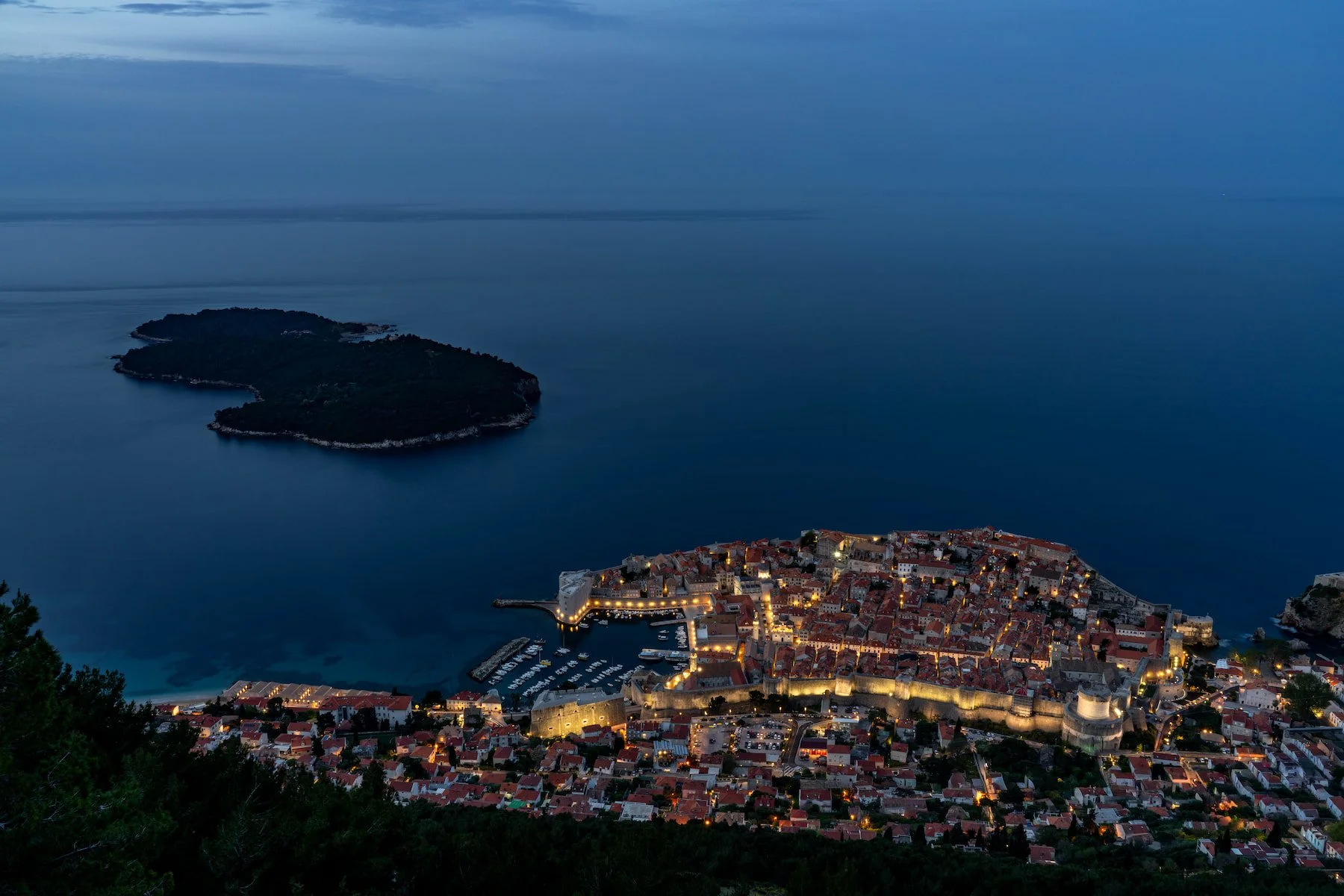
Dubrovnik Old Town at blue hour from the Mt Srd viewpoint
Climbing Mt Srđ
After arriving late the night before and taking a much-needed slower start that first morning, our first real outing took us up — quite literally. We had lunch reservations at Panorama Restaurant on Mt Srđ, the mountain ridge that rises directly behind the city, and rather than take the cable car, we decided to earn the view.
We took an Uber to the trailhead and began the steady climb up the switchback trail, roughly 2.5 kilometres with about 300 metres of elevation gain. The path, known locally as the Way of the Cross, winds steadily upward with markers along the route, and while the climb is manageable, it rewards patience. With every turn, the view seemed to open wider — Dubrovnik’s terracotta rooftops below us, the city walls tracing the coastline, and the deep blue Adriatic stretching out toward the islands we would soon be sailing through.
At the summit sits Fort Imperial, built during the Napoleonic era in the early 1800s and later used during the Croatian War of Independence in 1991, when Dubrovnik came under siege. Like so much in Croatia, even the viewpoints carry layers of history. But on this day, history shared space with something simpler: a long lunch with one of the country's best views.
Panorama Restaurant fully lives up to its name. Perched high above Dubrovnik, the terrace offers an extraordinary vantage point over the city, sea, and islands beyond. It’s absolutely worth visiting, whether you hike up or take the cable car, but reservations are essential. It’s one of those travel meals where the setting is every bit as memorable as the food.
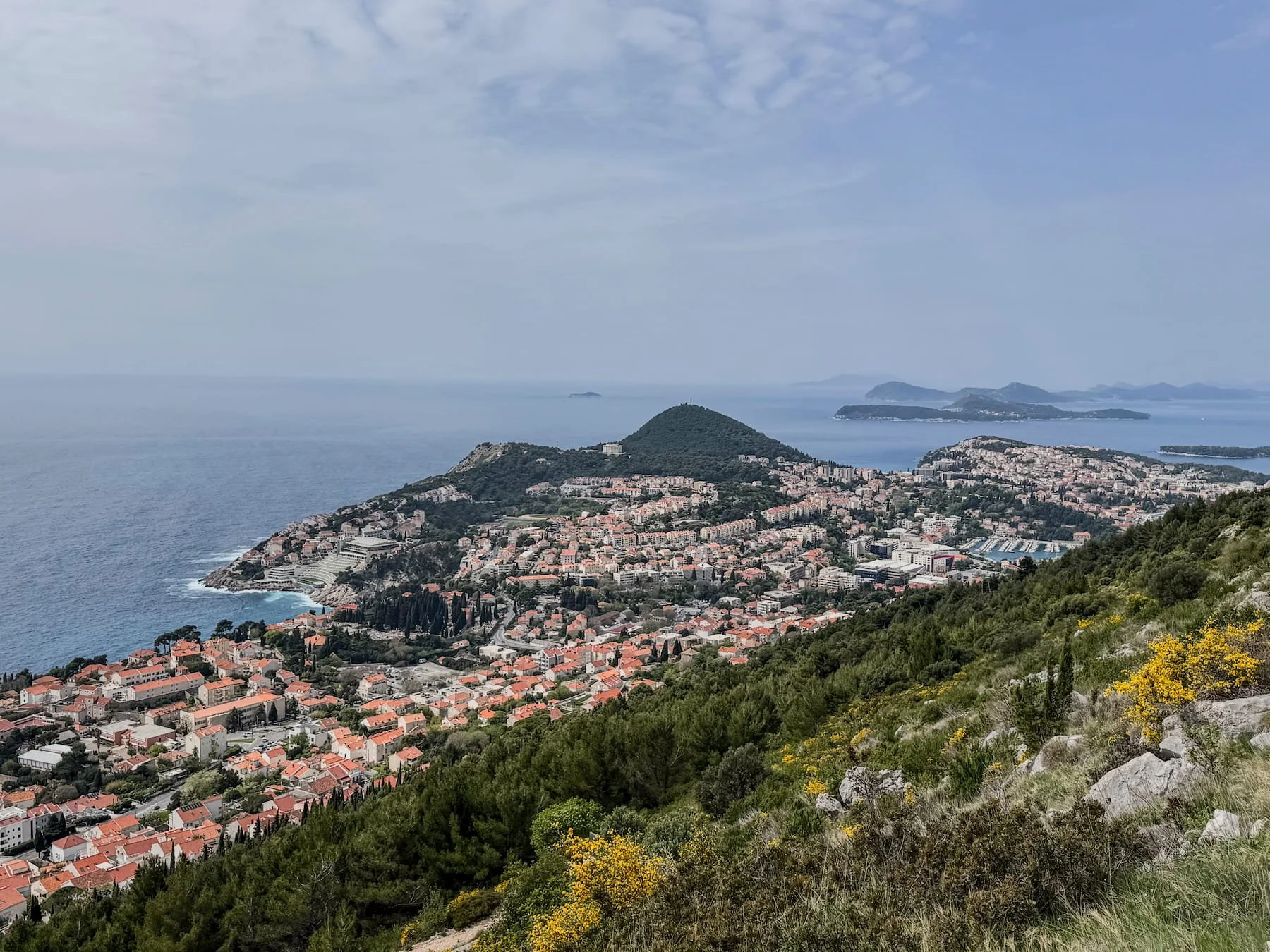
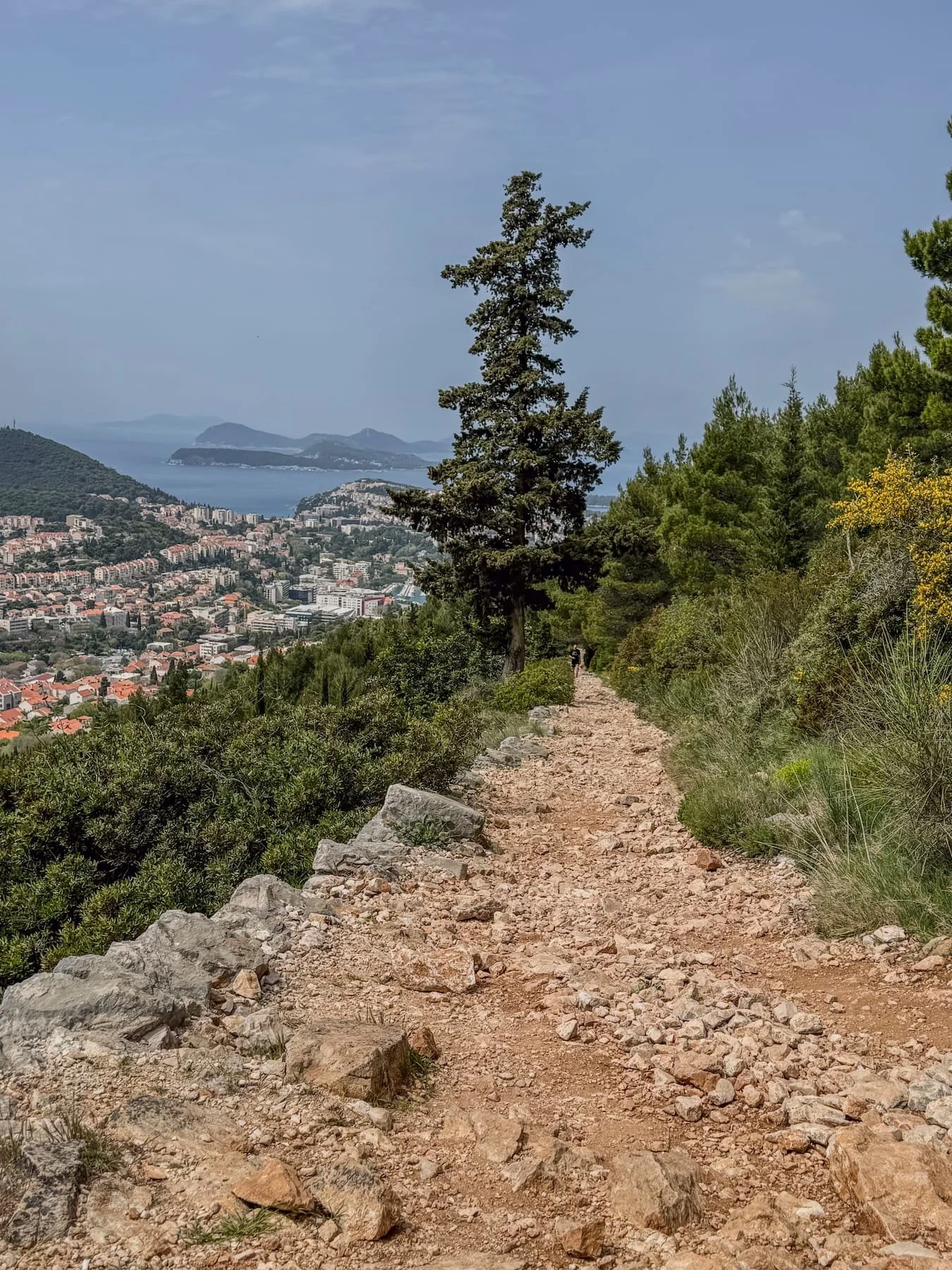
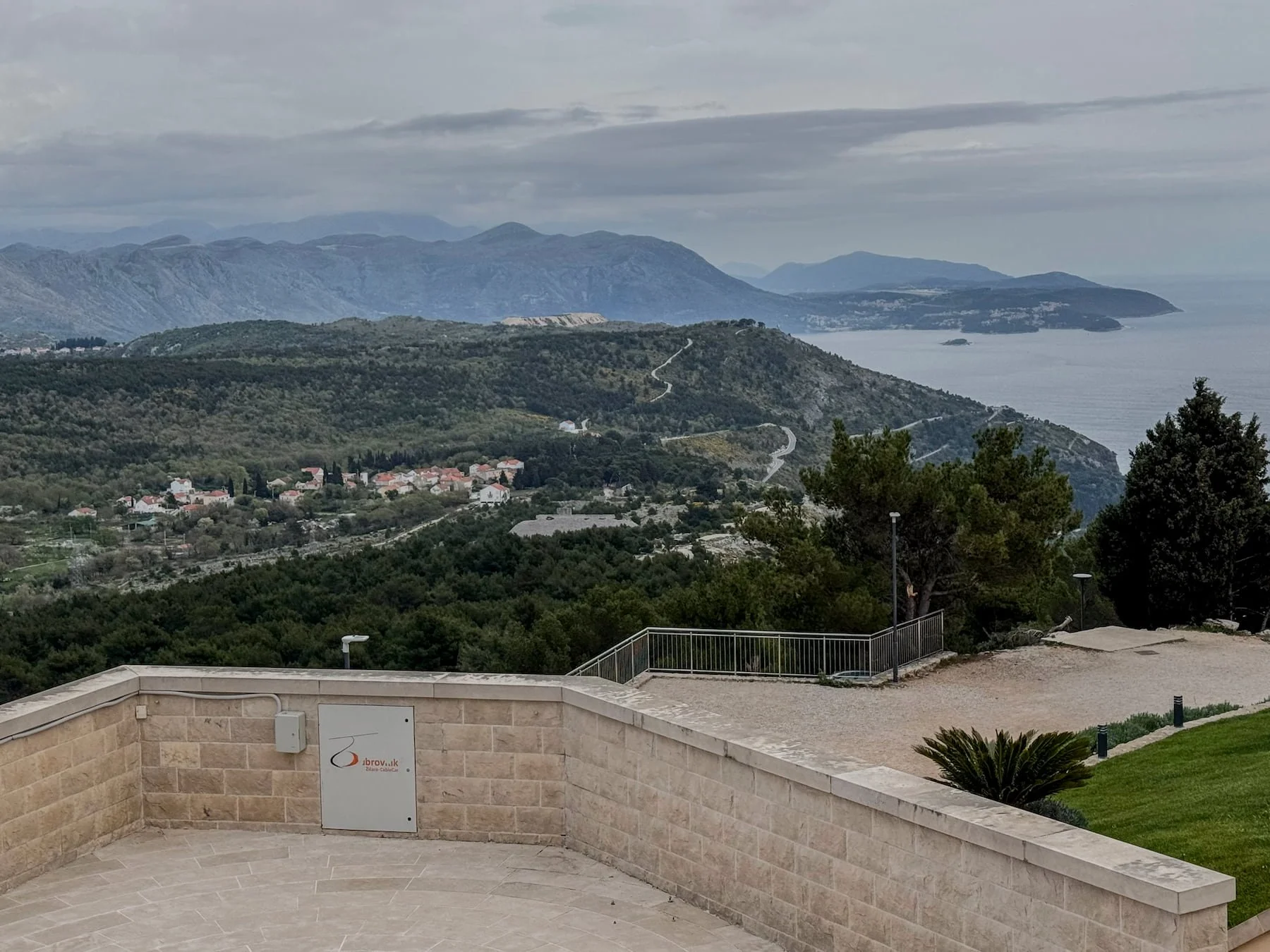
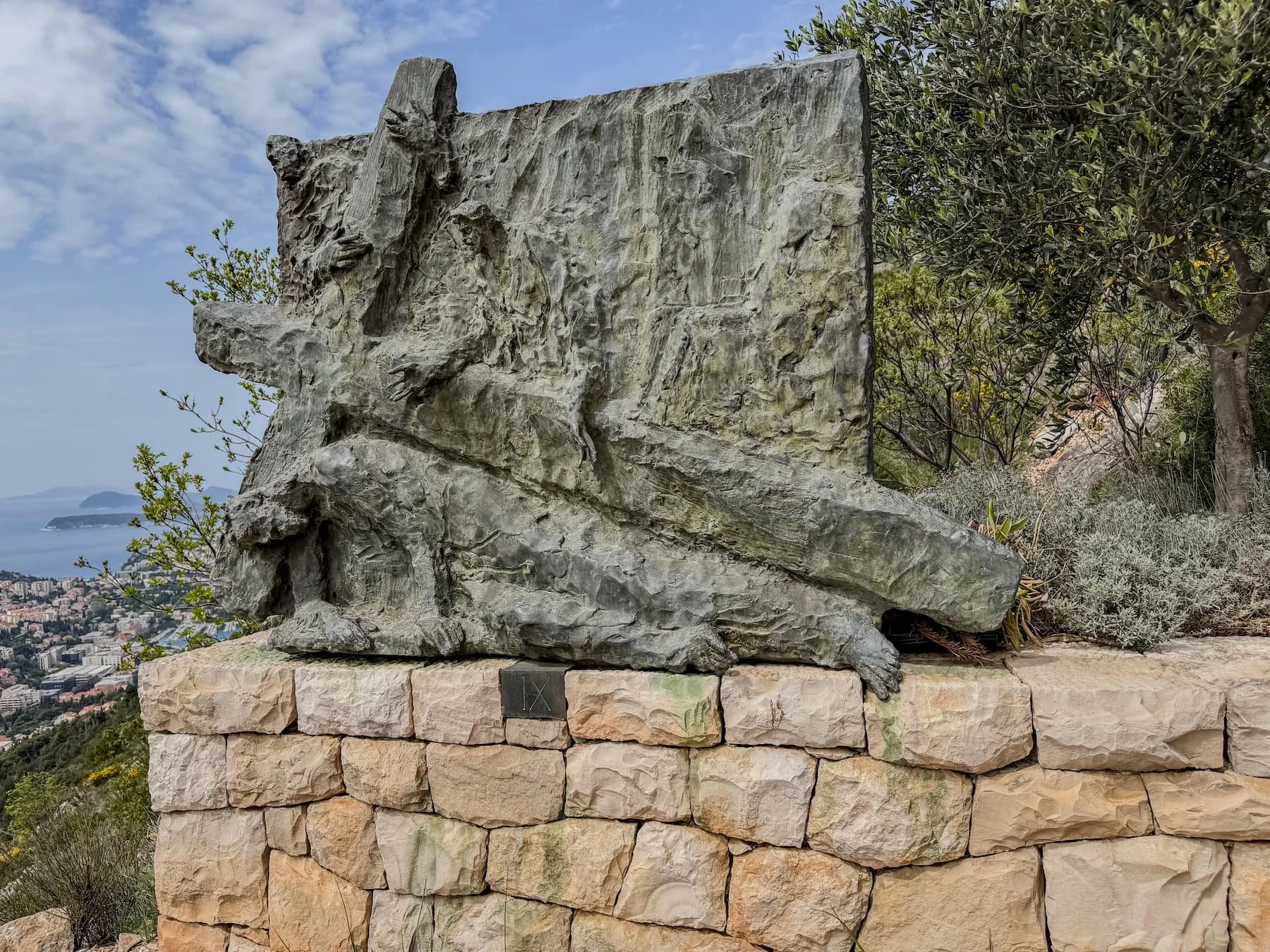
Wandering Dubrovnik’s Old Town
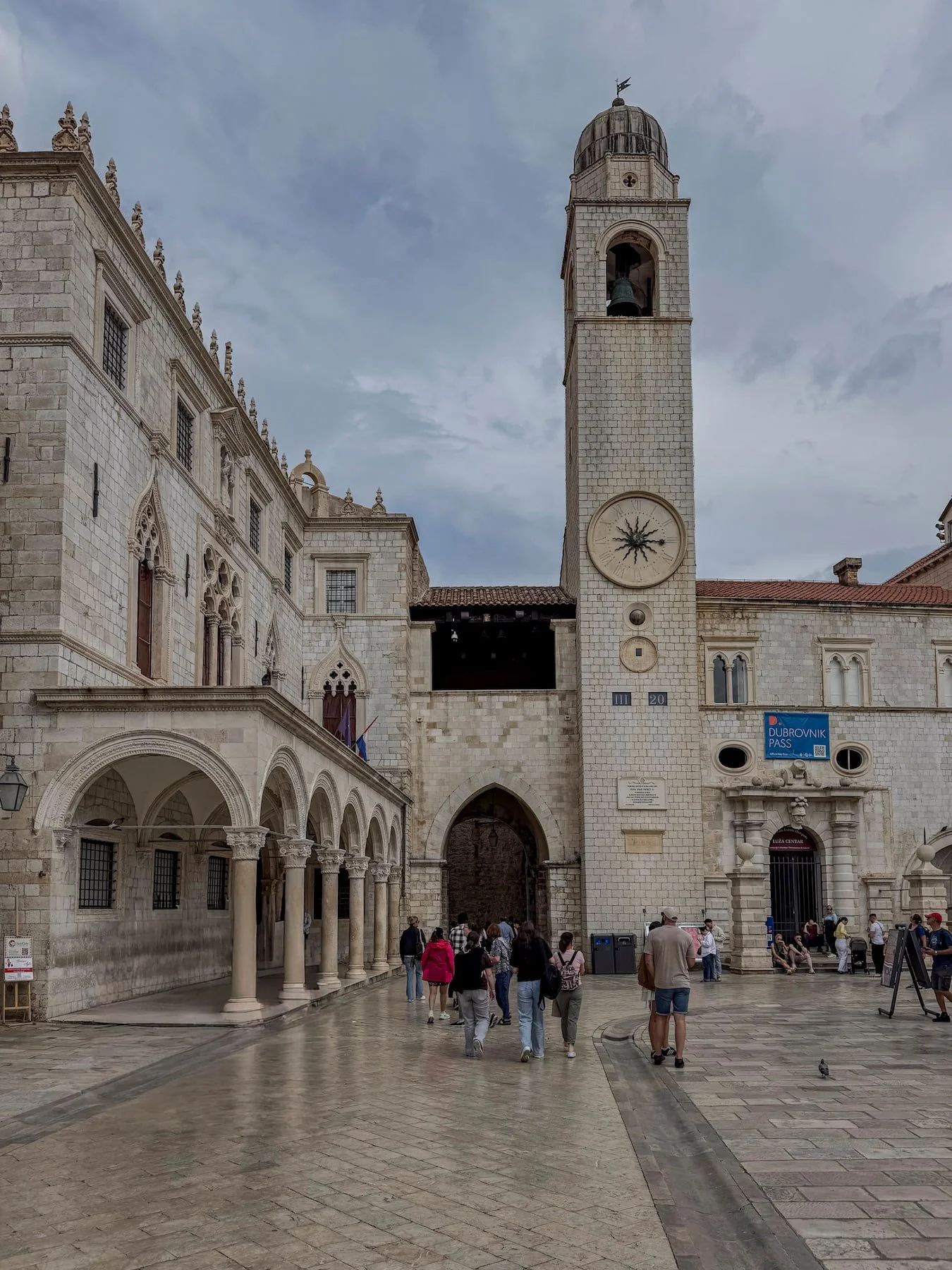
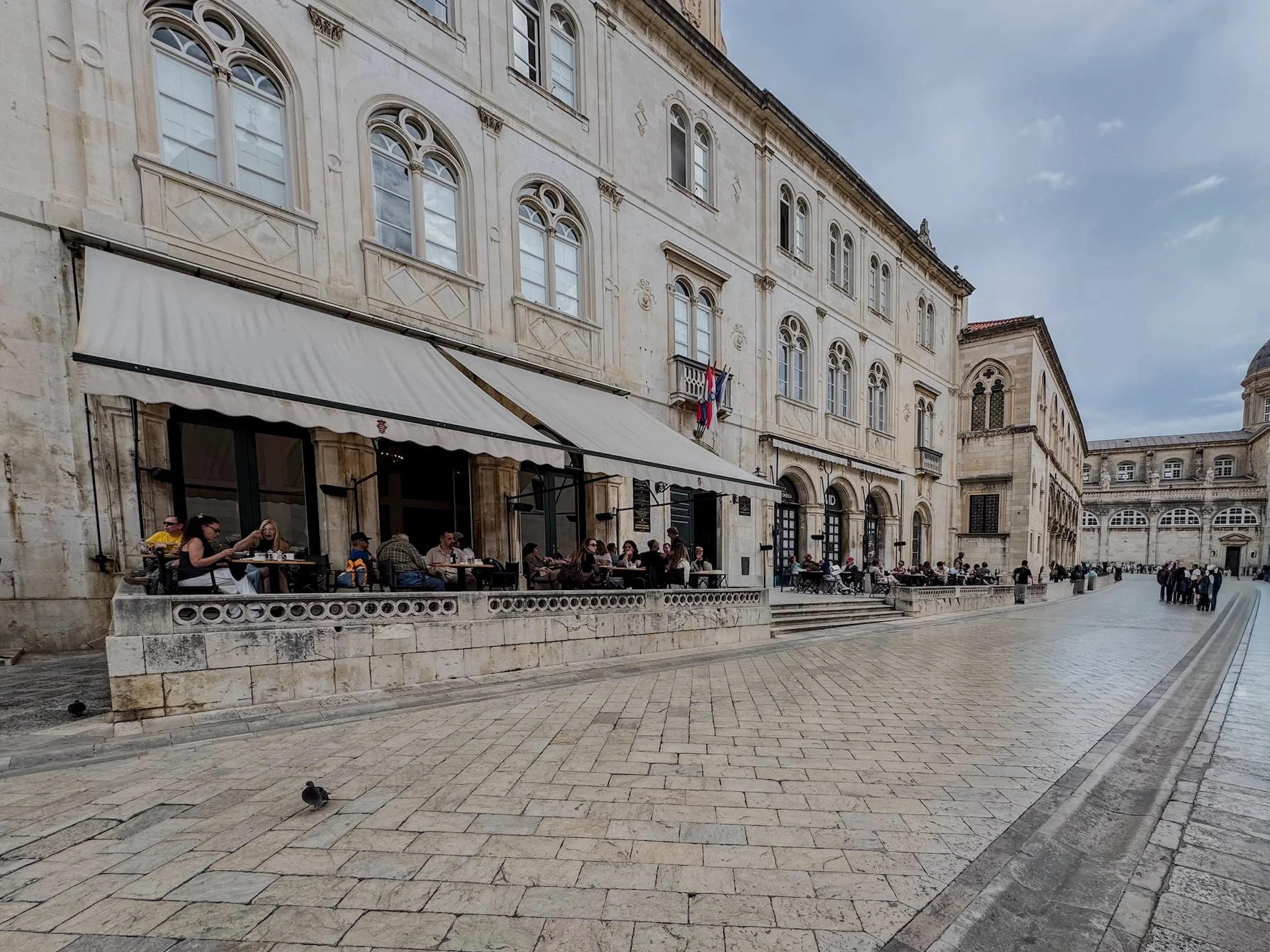
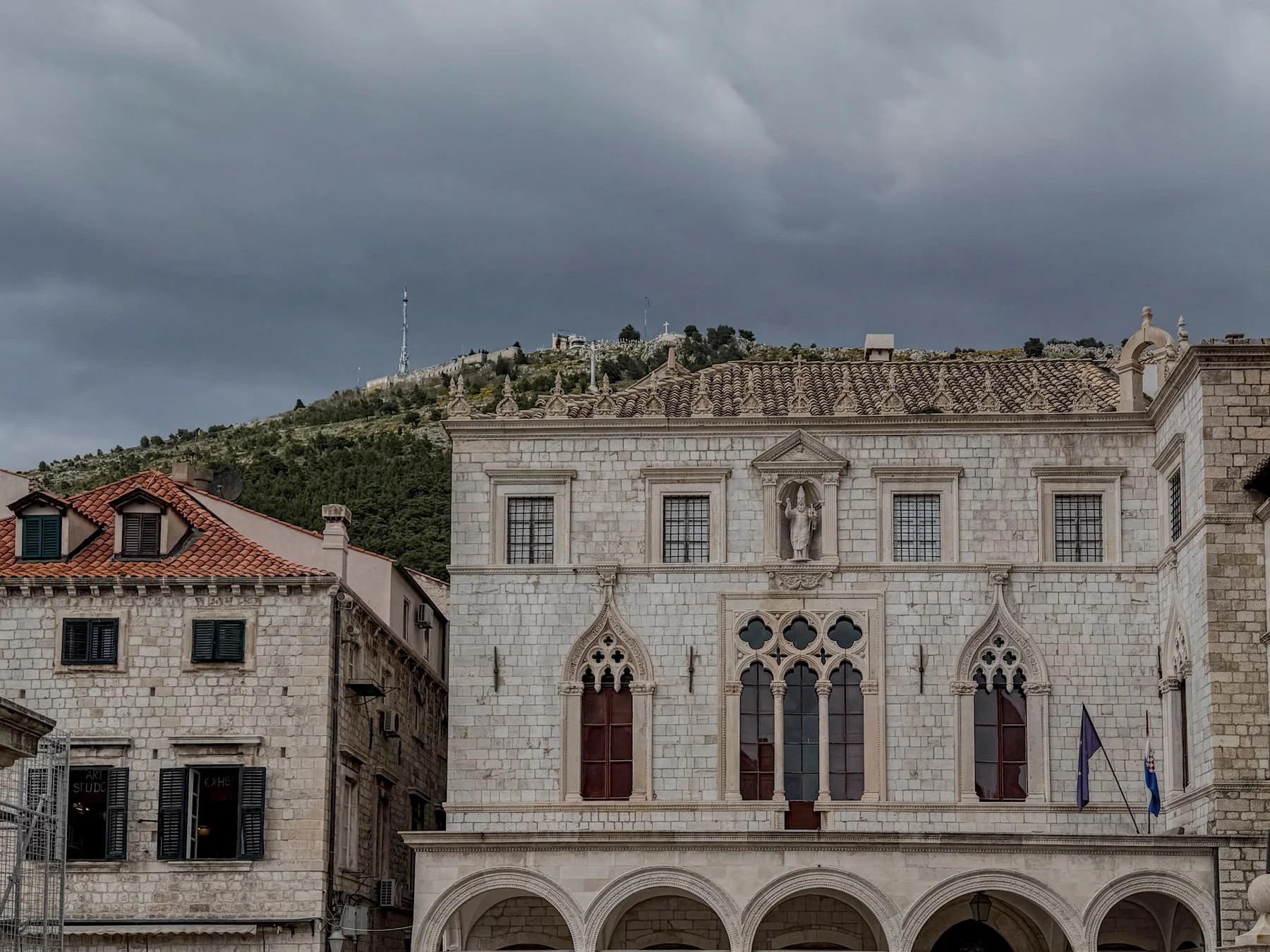
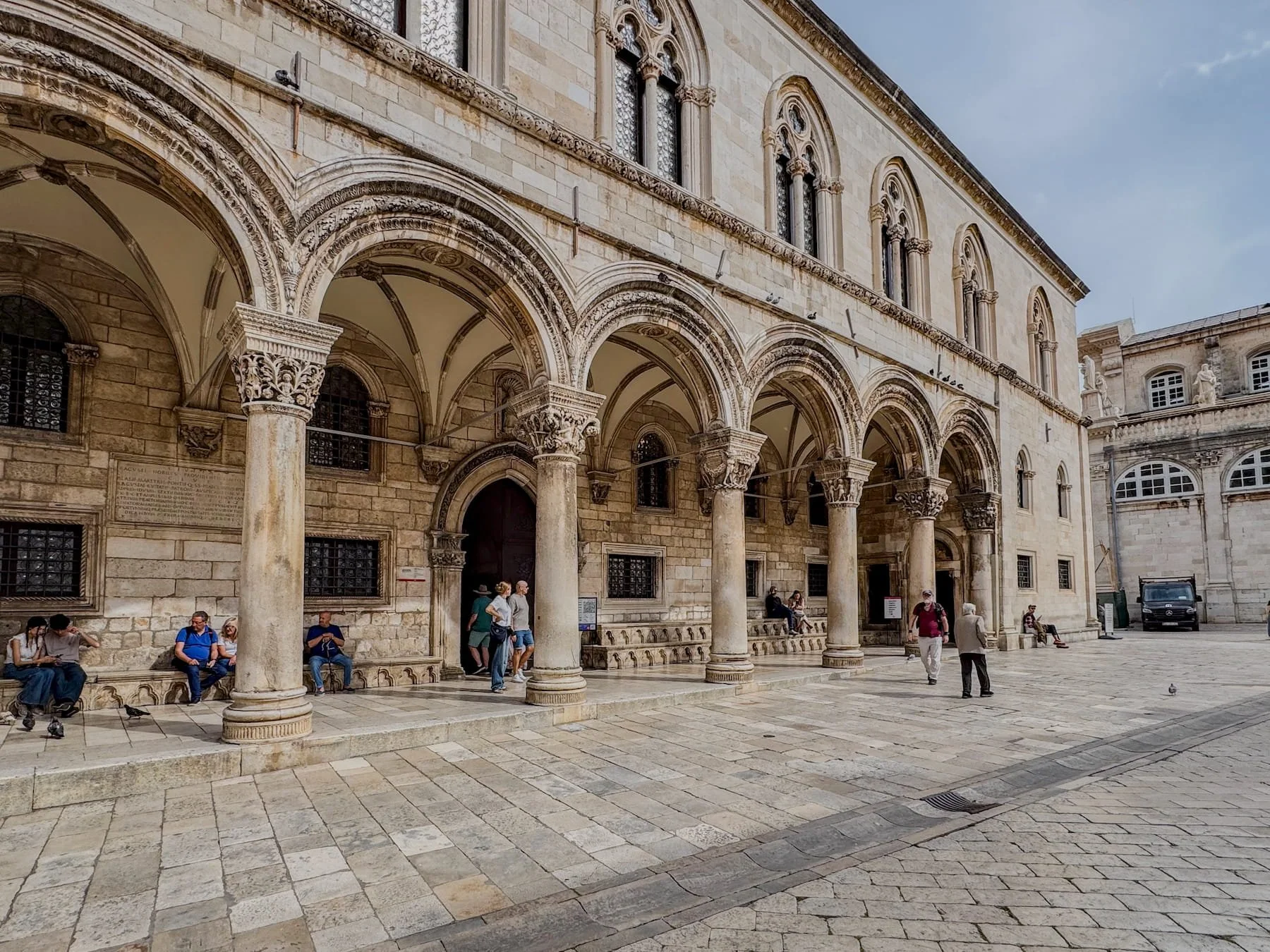
That afternoon, we made our way into Dubrovnik’s Old Town, and as with so many historic cities, the best way to experience it is simply to wander.
Dubrovnik is often called the Pearl of the Adriatic, and it’s easy to understand why. Founded in the 7th century by refugees fleeing the destruction of nearby Epidaurum (modern-day Cavtat), the city grew into the Republic of Ragusa, an independent maritime republic that became one of the Adriatic’s most important centres of trade and diplomacy. Much of what stands today was rebuilt after the devastating earthquake of 1667, which destroyed large parts of the city but gave rise to the beautiful blend of Gothic, Renaissance, and Baroque architecture that defines it now.
At the centre of the Old Town is the Stradun, the city’s main limestone street, polished smooth by centuries of footsteps and glowing in the late afternoon light. But as beautiful as the main street is, the real charm lies in the side streets — narrow stone staircases climbing between weathered buildings, tiny courtyards tucked between homes, and glimpses of sea appearing unexpectedly at the end of an alleyway. Every turn felt like another photograph waiting to happen.
We had hoped to stop at Buža Bar, the famous cliffside bar carved into the city’s outer walls, but arrived just as it was closing. It felt like a small travel defeat at the time, but like many of those little missed moments, it simply redirected the evening. We met up with others from our soon-to-be boat group, found another spot for dinner, and settled into that easy first-night rhythm of shared stories, warm air, and the growing excitement of the week ahead.
First Light Over Dubrovnik
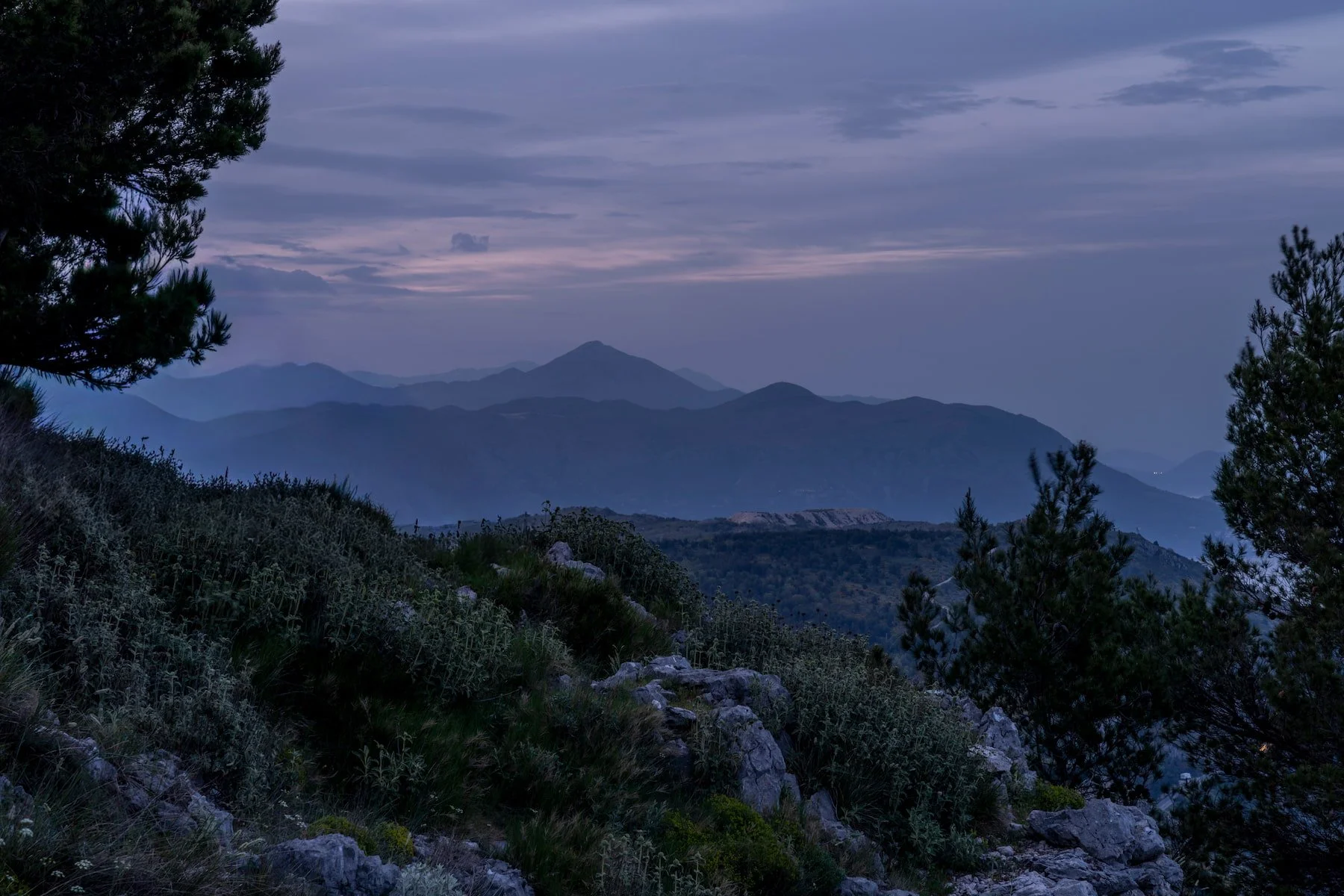
The next morning, on our second full day, was up and early! My travelling companion — a wonderfully supportive friend — got up with me before dawn, and we made our way up to the Mt Srd viewpoint while Dubrovnik was still sleeping. The reward was extraordinary: the walled Old Town glowing below us like a jewel set against the dark Adriatic, its illuminated ramparts tracing the city's outline while Lokrum Island floated in the deep blue beyond. Turning inland, the layered ridges of the Dinaric Alps faded into soft purple silhouettes against the pre-dawn sky.
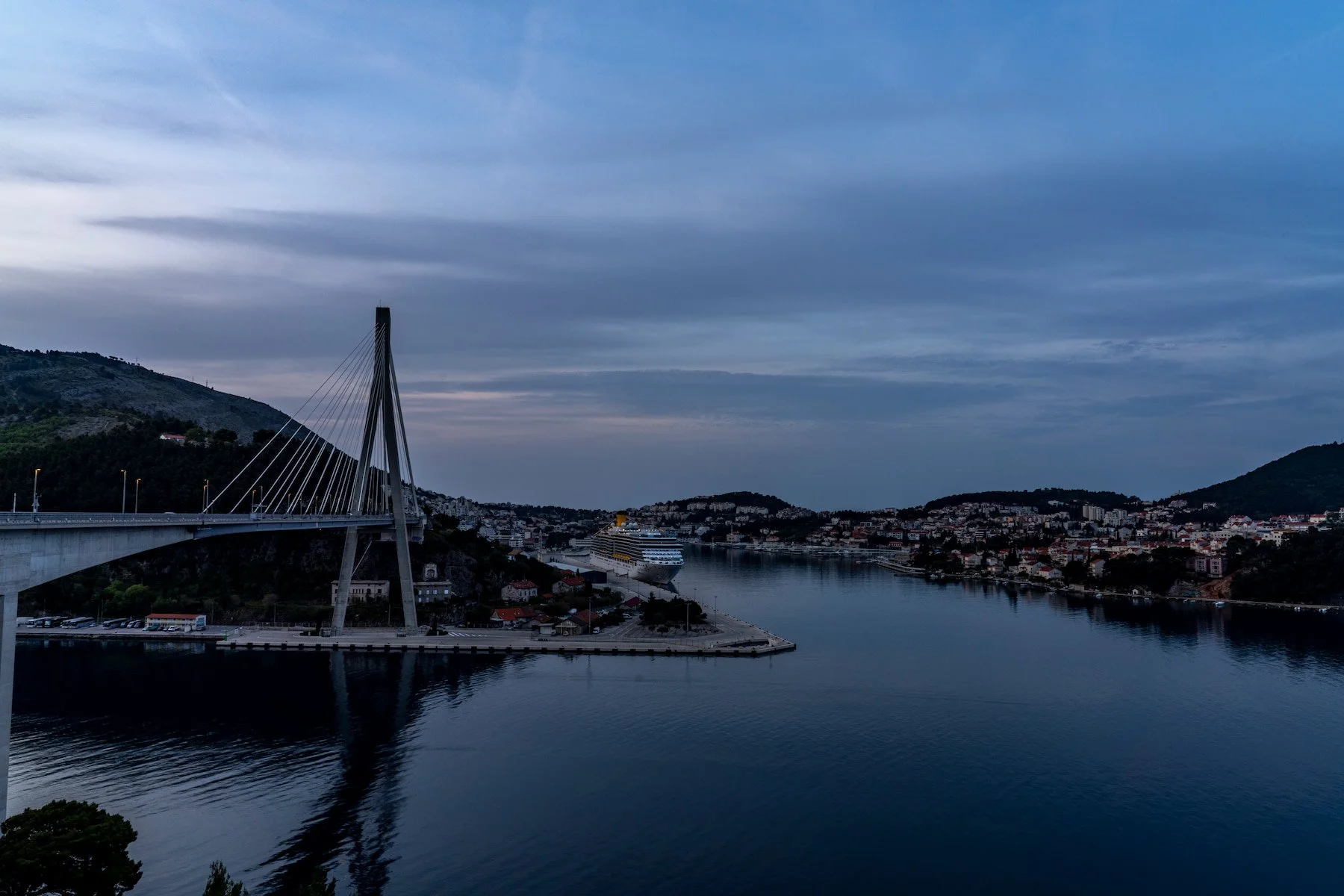
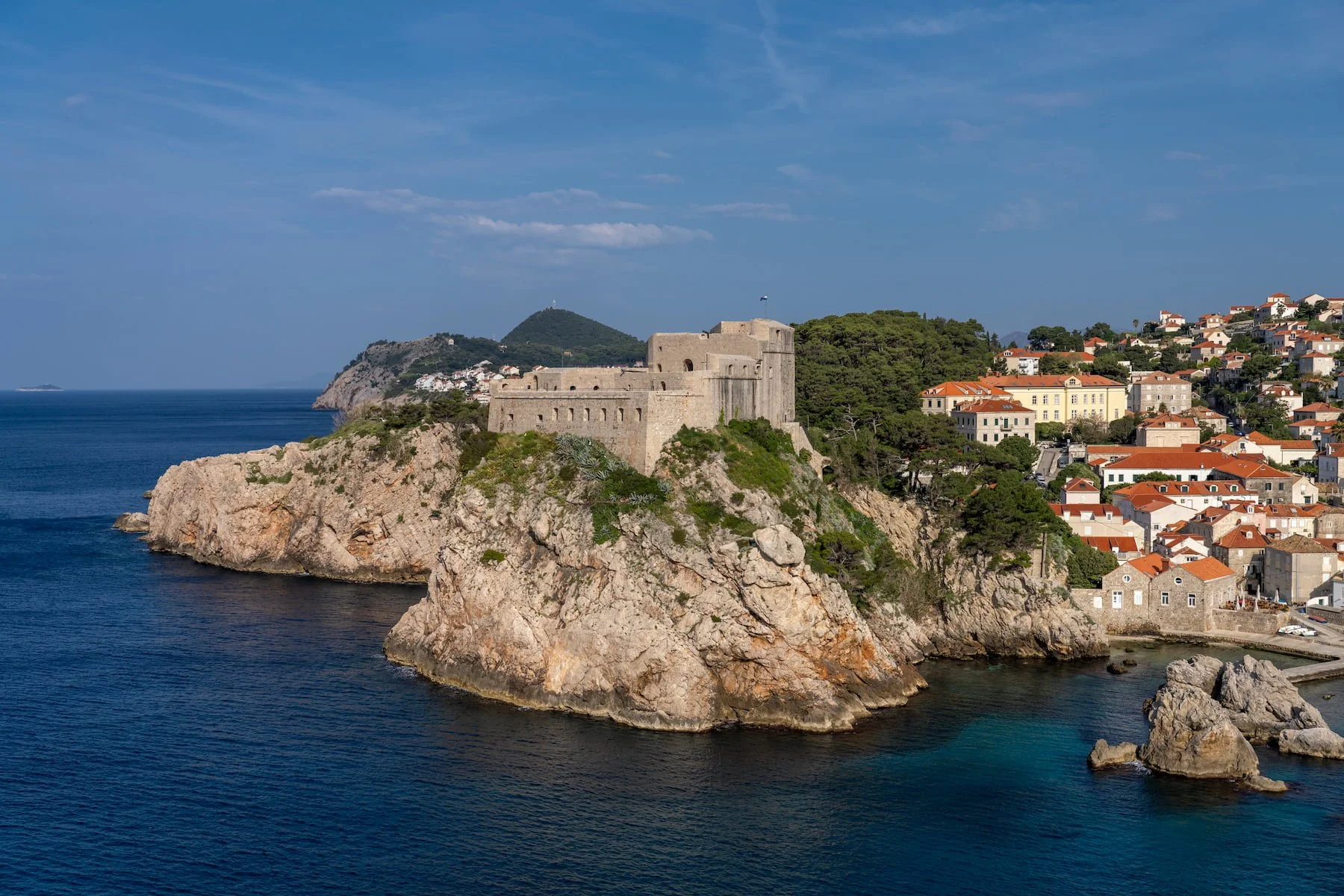
On the way back down, we stopped to photograph the Franjo Tuđman Bridge — Dubrovnik's striking cable-stayed span across the Gruž harbour inlet, with a cruise ship resting at dock in the still water beyond. From there, we moved to Fort Lovrijenac and the old port, where the massive fortress walls rose above the harbour in the soft early light.
Perched dramatically on its rocky outcrop just outside the western walls, Lovrijenac has guarded Dubrovnik for centuries and has become one of the city’s most important defensive fortresses. Standing there in that early light, looking at the stone rising out of the sea, it was easy to feel the weight of all the history this city has carried.
Those quiet morning hours ended up being some of my favourite moments in Dubrovnik — not just for the photographs, but for the stillness.

Ferry to Cavtat
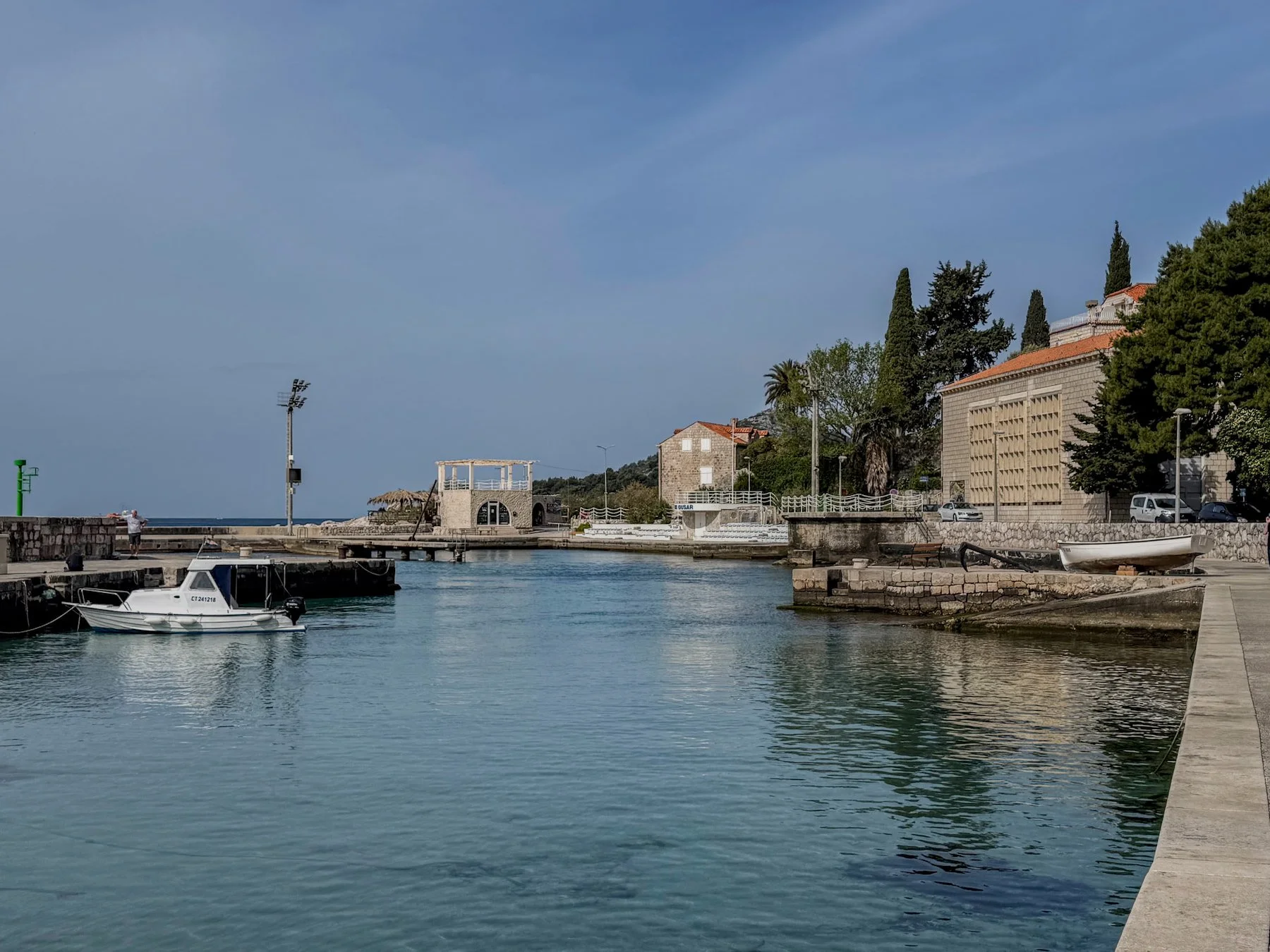
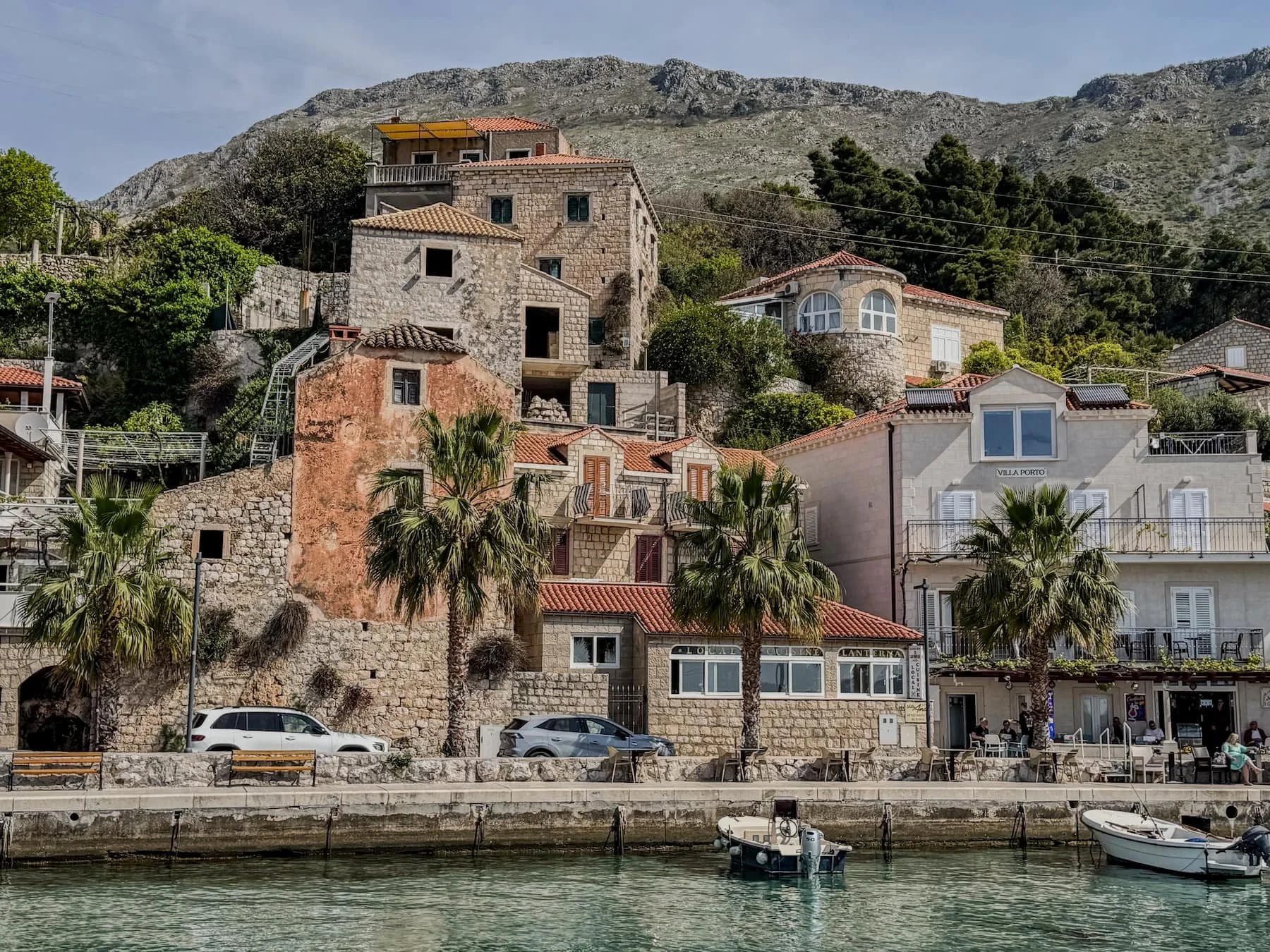
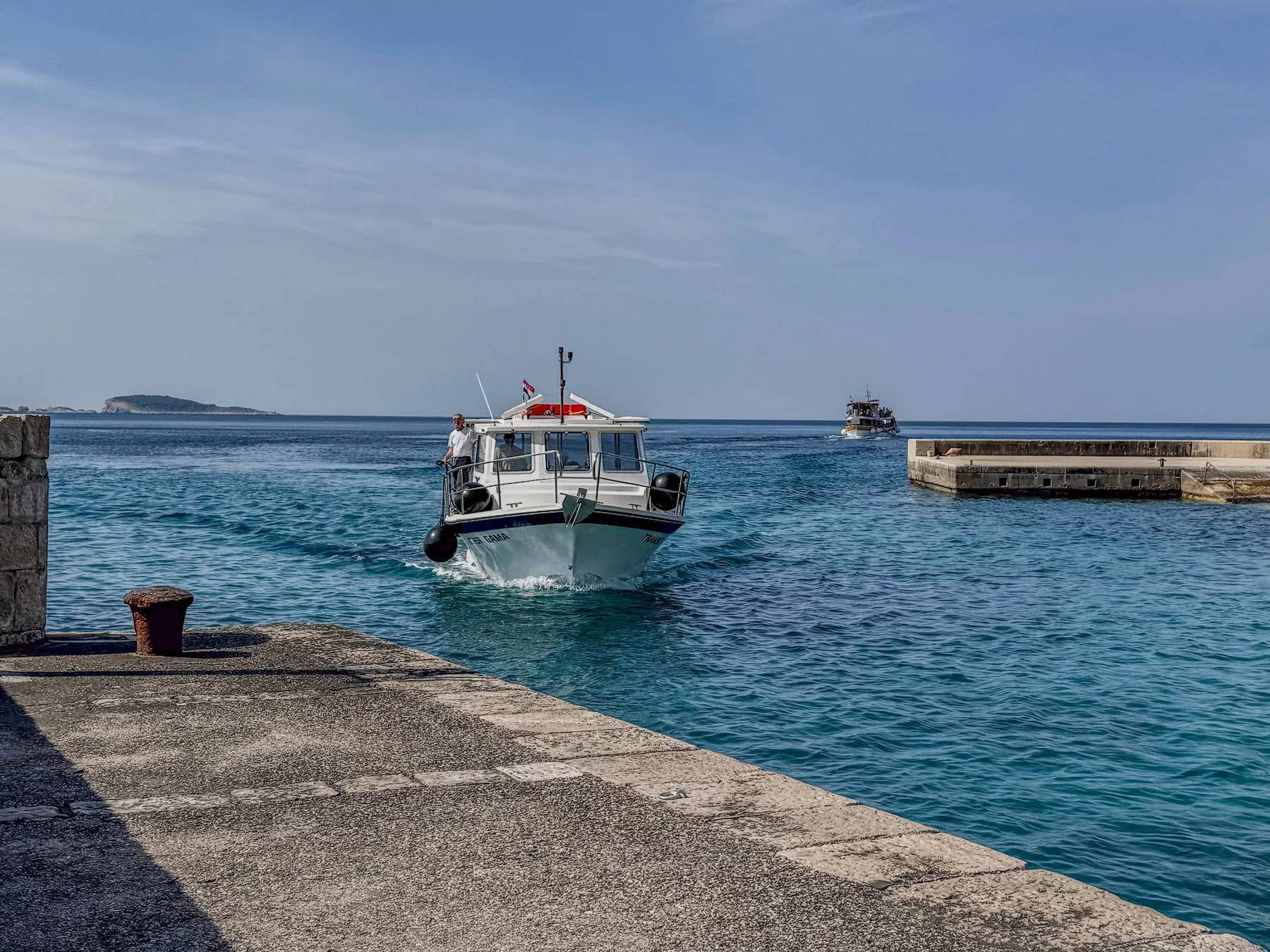
Later that morning, we caught the ferry from Mlini to Cavtat, and it turned out to be one of the most relaxed days of our stay.
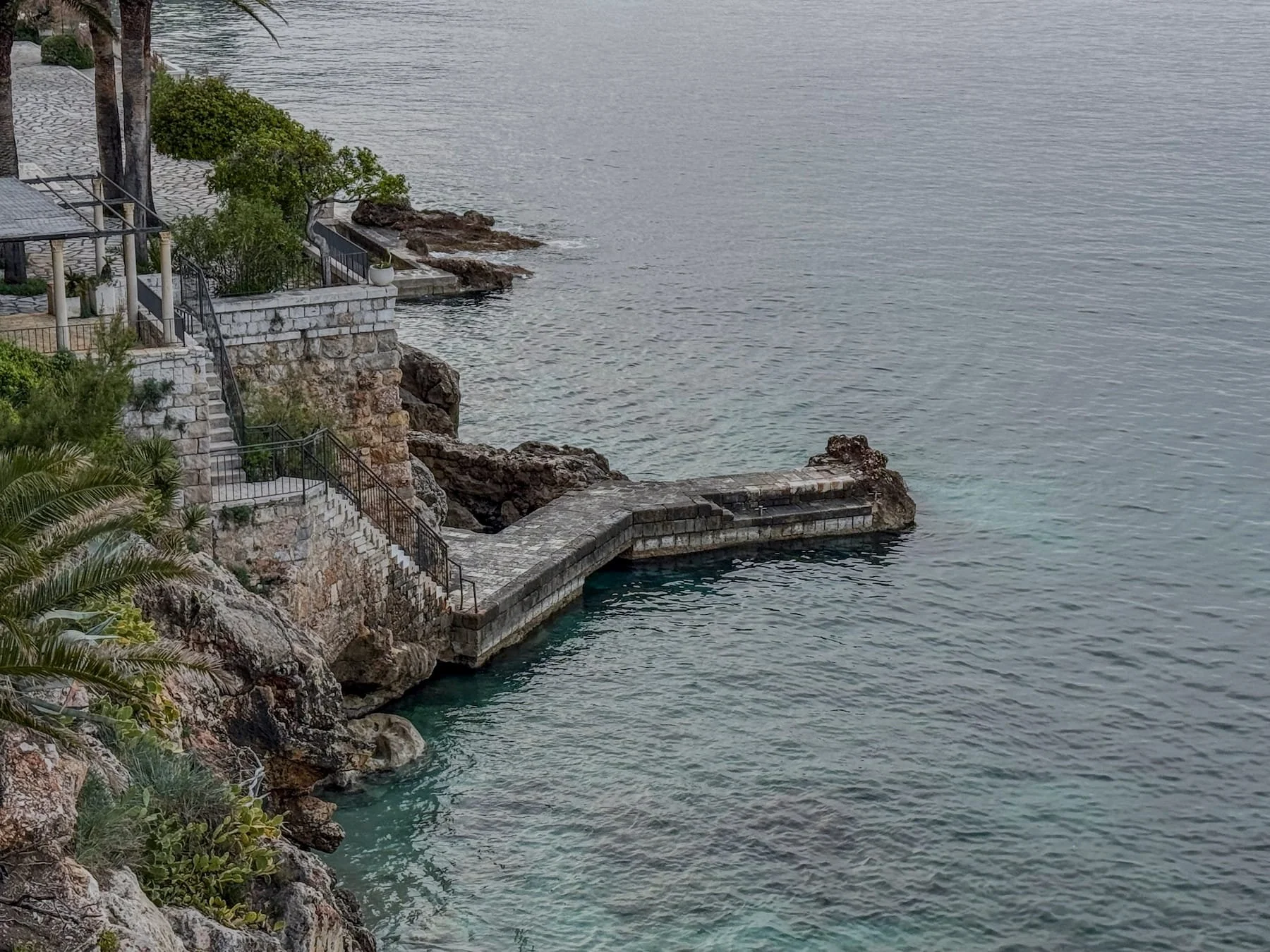
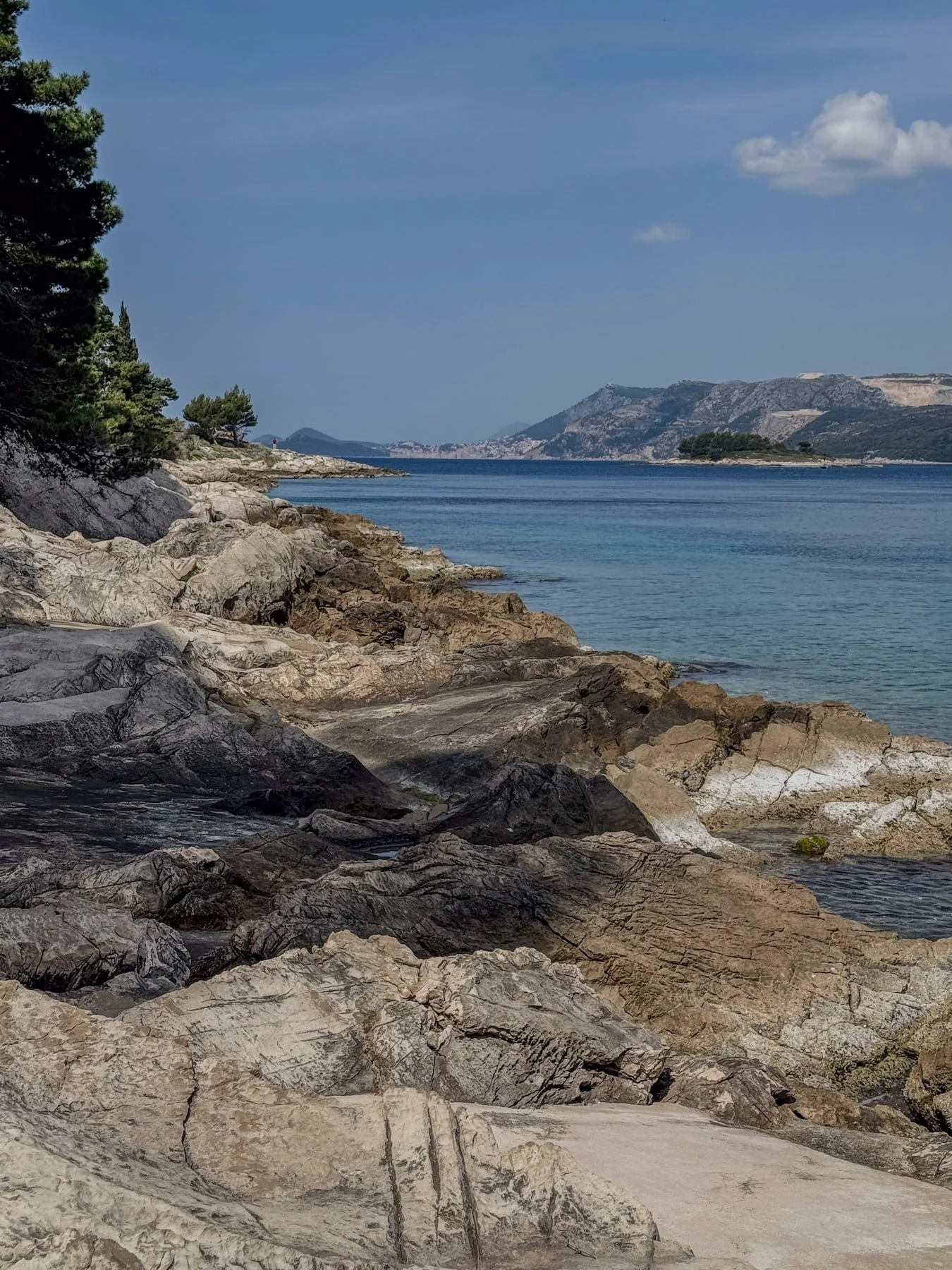
Mlini’s small harbour was quiet and unhurried, with fishing boats rocking gently in the morning light and the kind of pace that immediately slows you down. There’s something about local ferries that always feels grounding — less about getting somewhere quickly and more about becoming part of the landscape for a little while. The ride itself gave us beautiful views back along the coastline, passing villages tucked into coves and pine-covered hills sloping toward the sea.
Cavtat: Where Dubrovnik Began
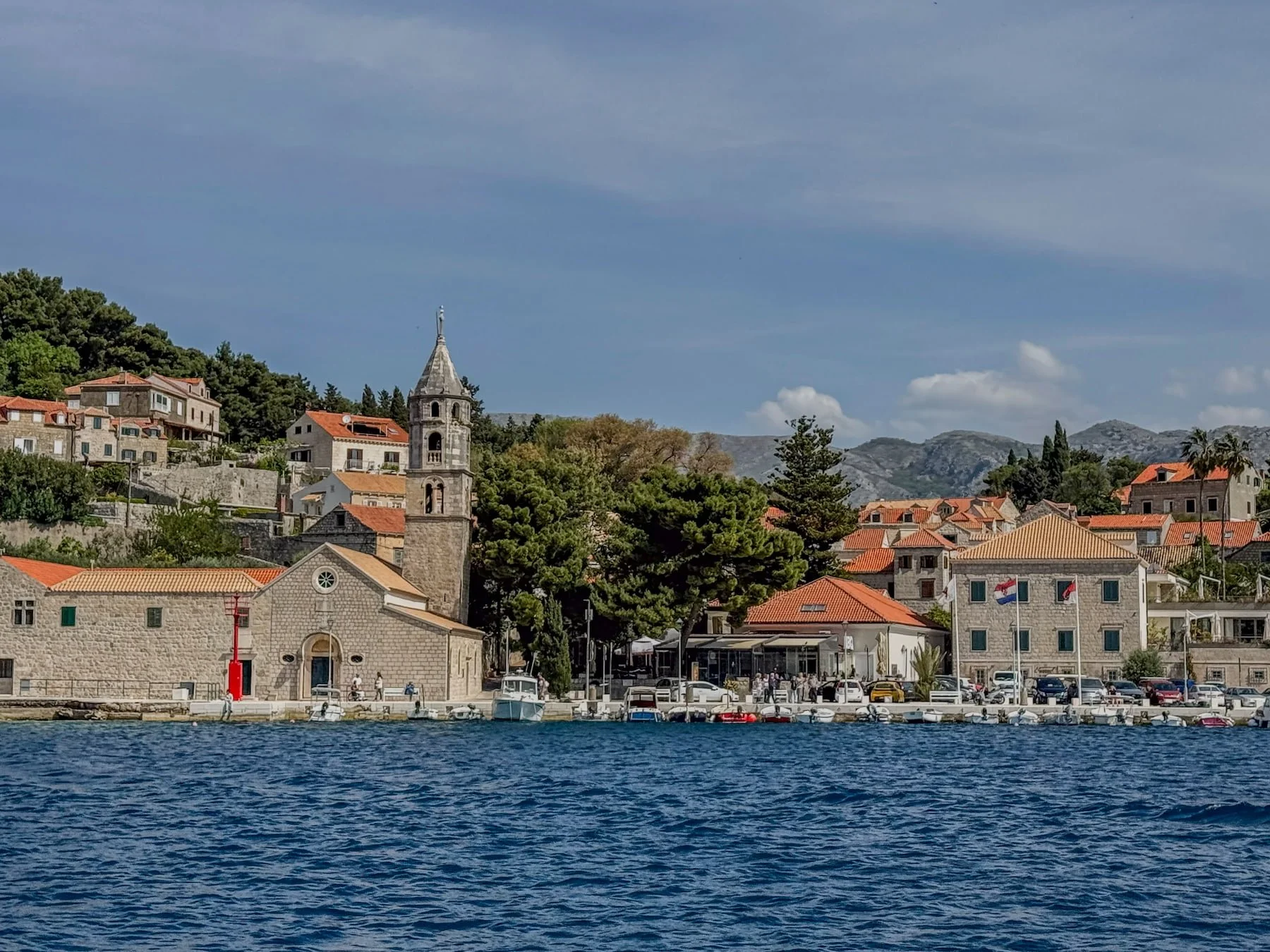
Cavtat feels like Dubrovnik’s quieter, softer counterpart, but its history runs even deeper. Built on the site of ancient Epidaurum, it was once a Greek and later Roman settlement before being destroyed in the 7th century. Many of its refugees fled north and established what would become Dubrovnik, making Cavtat, in many ways, the beginning of Dubrovnik’s story.
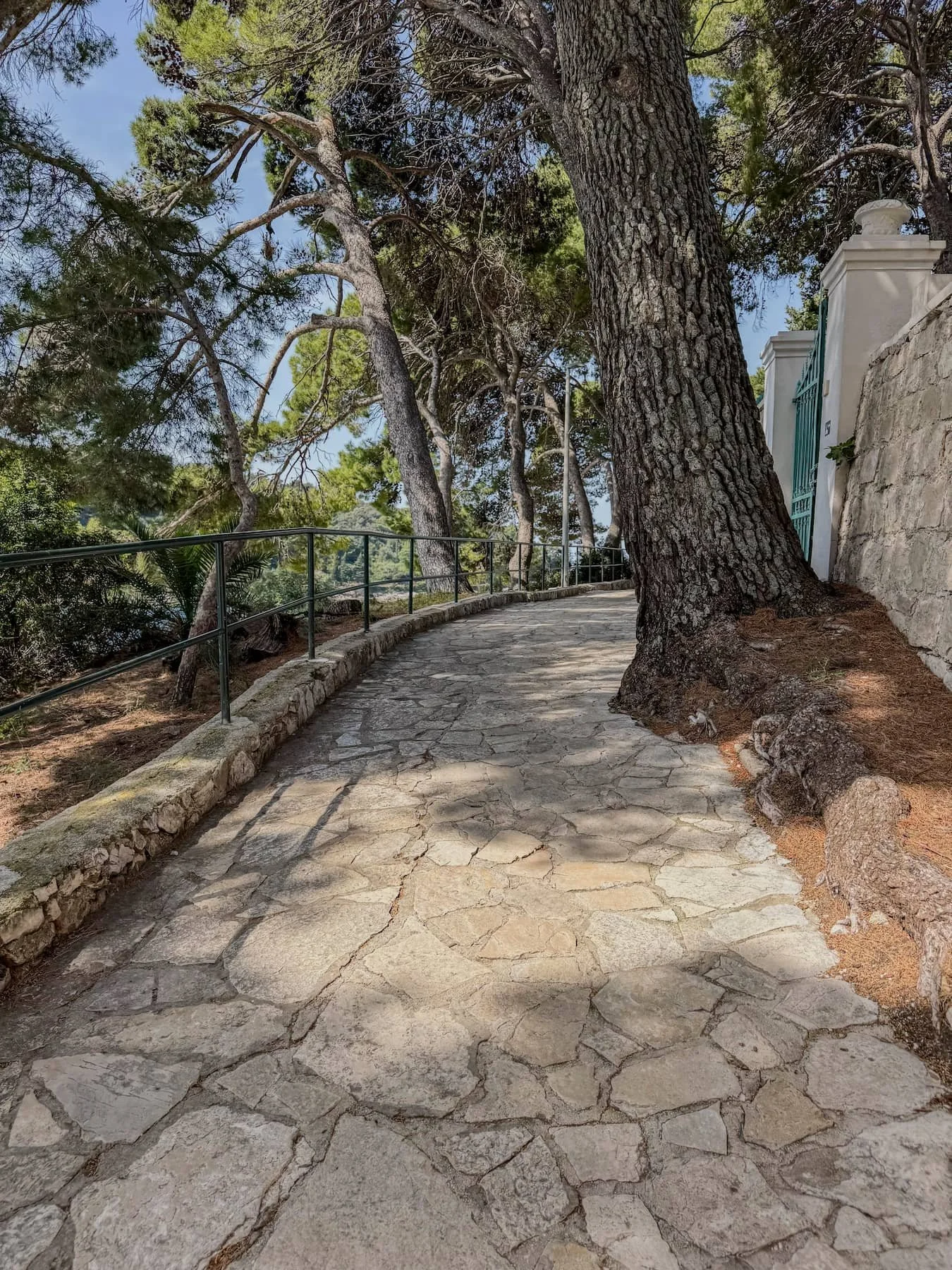
Today, it’s an elegant harbour town with palm-lined promenades, sailboats in the bay, and a wonderfully easy pace of life. We spent the afternoon walking the peninsula loop — an easy coastal path shaded by pines, with hidden coves, sea views, and just enough elevation to keep things interesting without ever feeling like work.
After some shopping — including a couple of beautiful Croatian bracelets inspired by the Šibenski botun, a traditional Dalmatian filigree button design — we settled in for a long lunch on the seaside promenade. It was one of those travel afternoons where time stretches and slows, and there’s nowhere else you need to be.
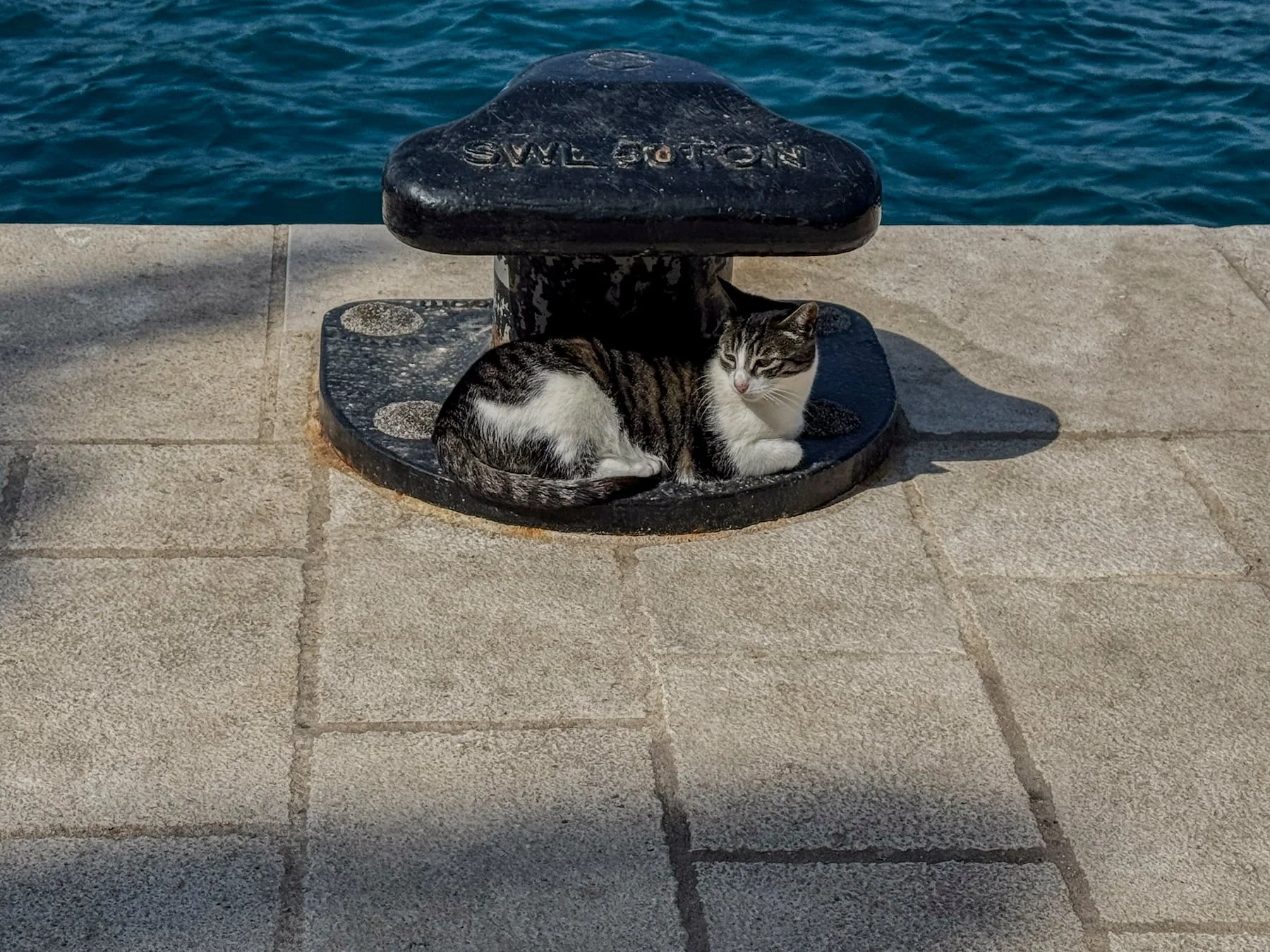
And then there were the cats.
They were everywhere — curled on stone walls, stretched out in sunny doorways, weaving confidently between café tables. Like many old port cities, Dubrovnik and the surrounding coast historically relied on cats to control rodents on ships and in warehouses, and over time they simply became part of the fabric of daily life. Judging by how healthy and relaxed they all looked, it’s a relationship that continues to work well for everyone.
Walking the Walls
On our final morning in Dubrovnik, before boarding the boat and beginning the cycling portion of the trip, we walked the city walls — and if there’s one experience that feels essential here, it’s this.
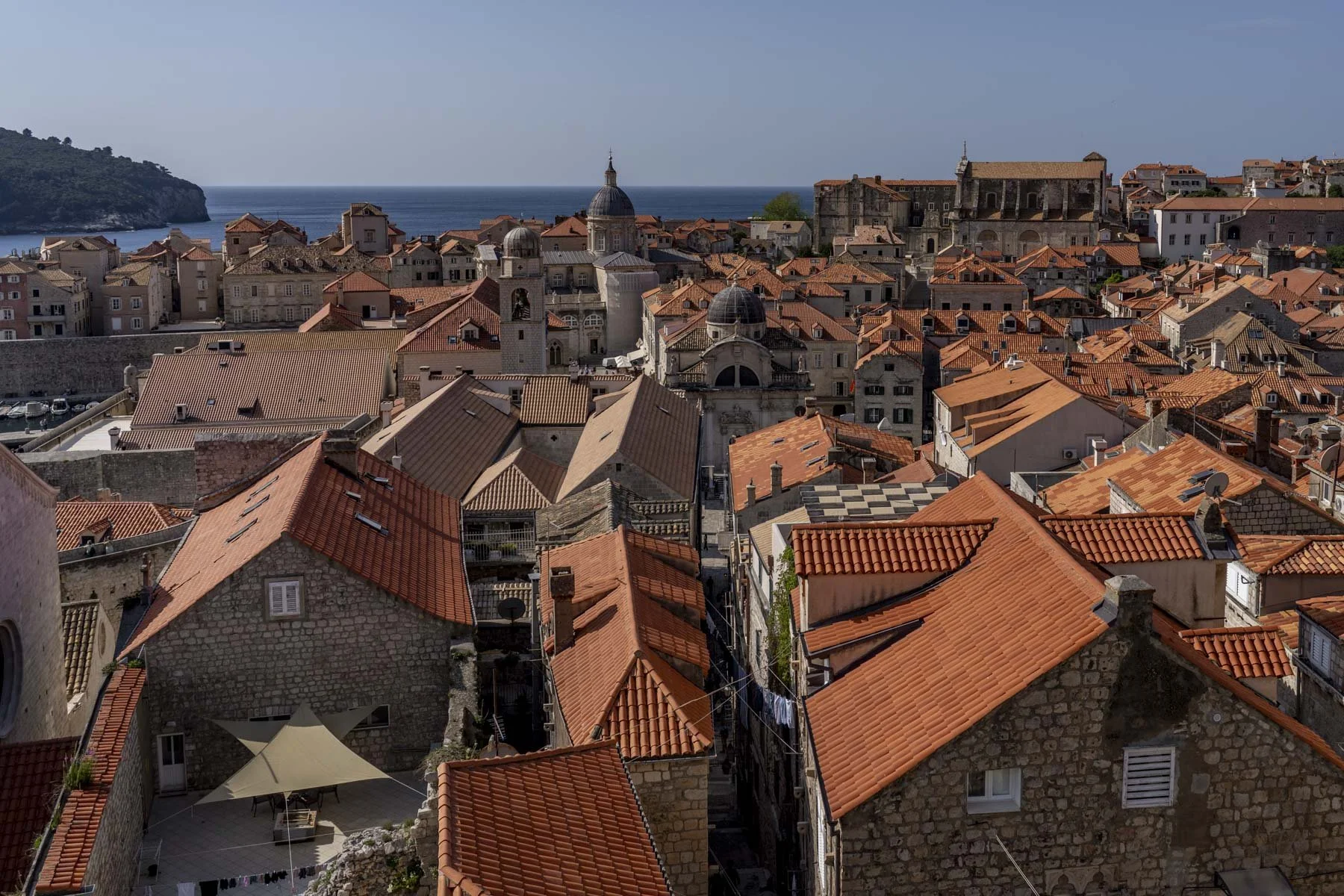
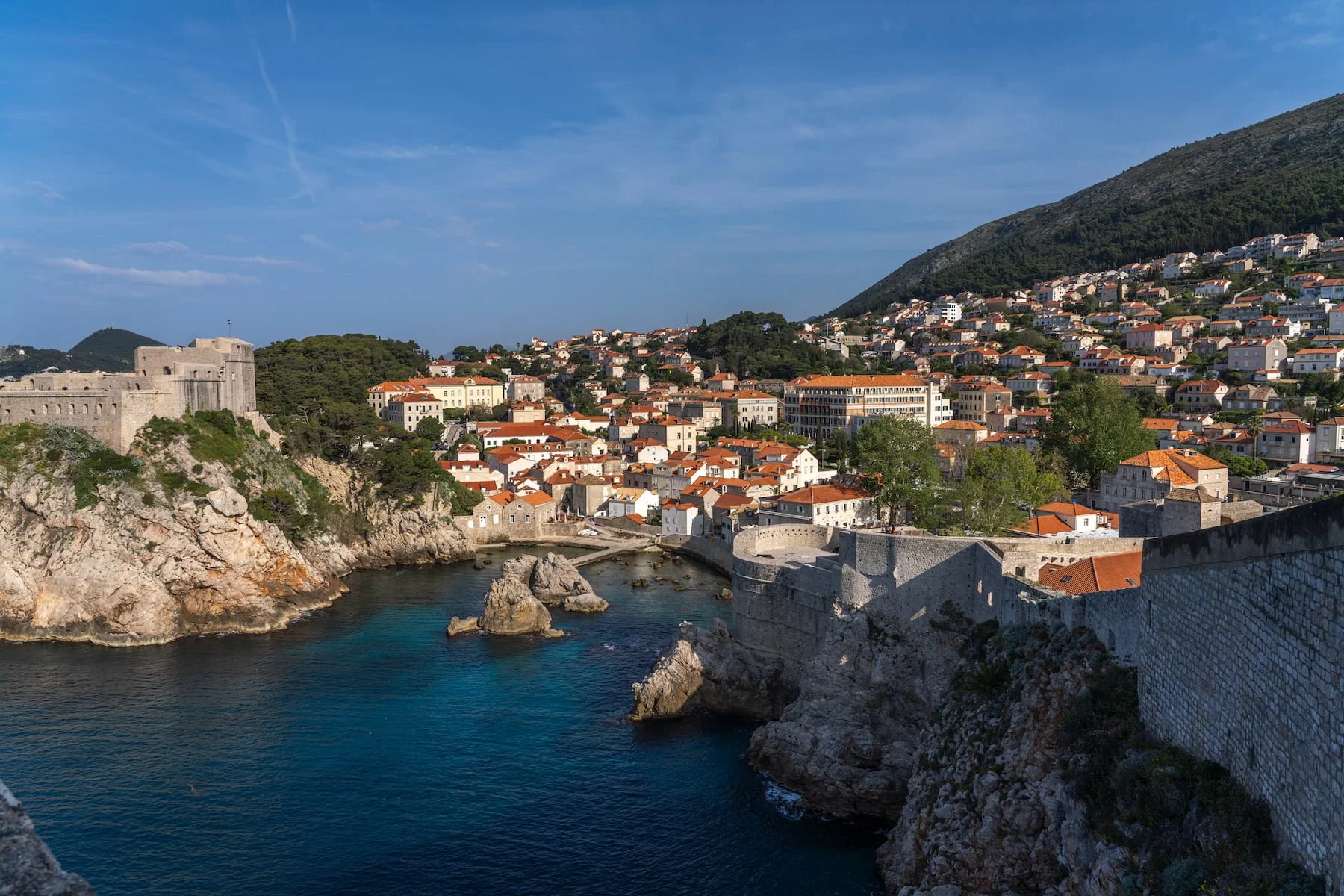
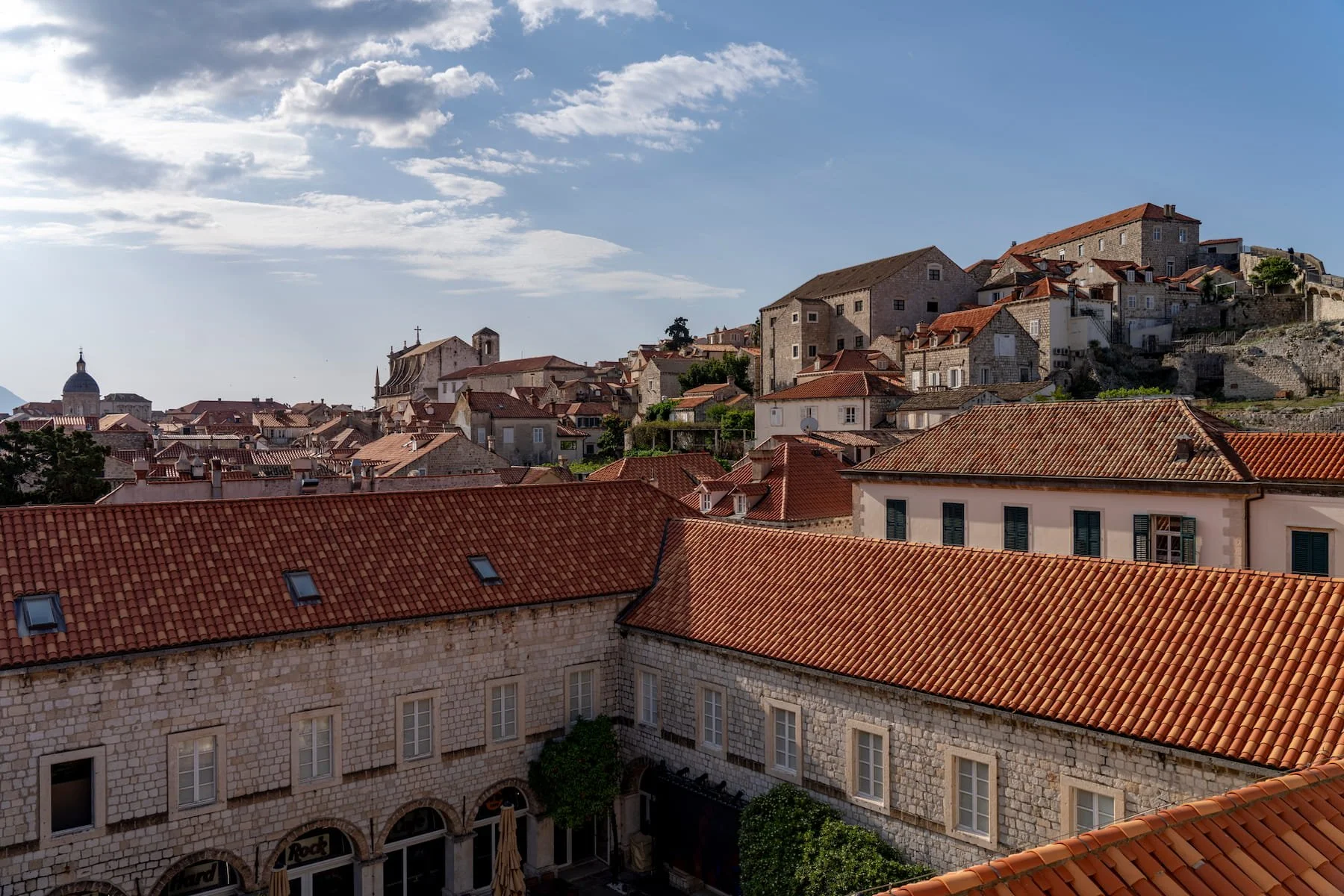
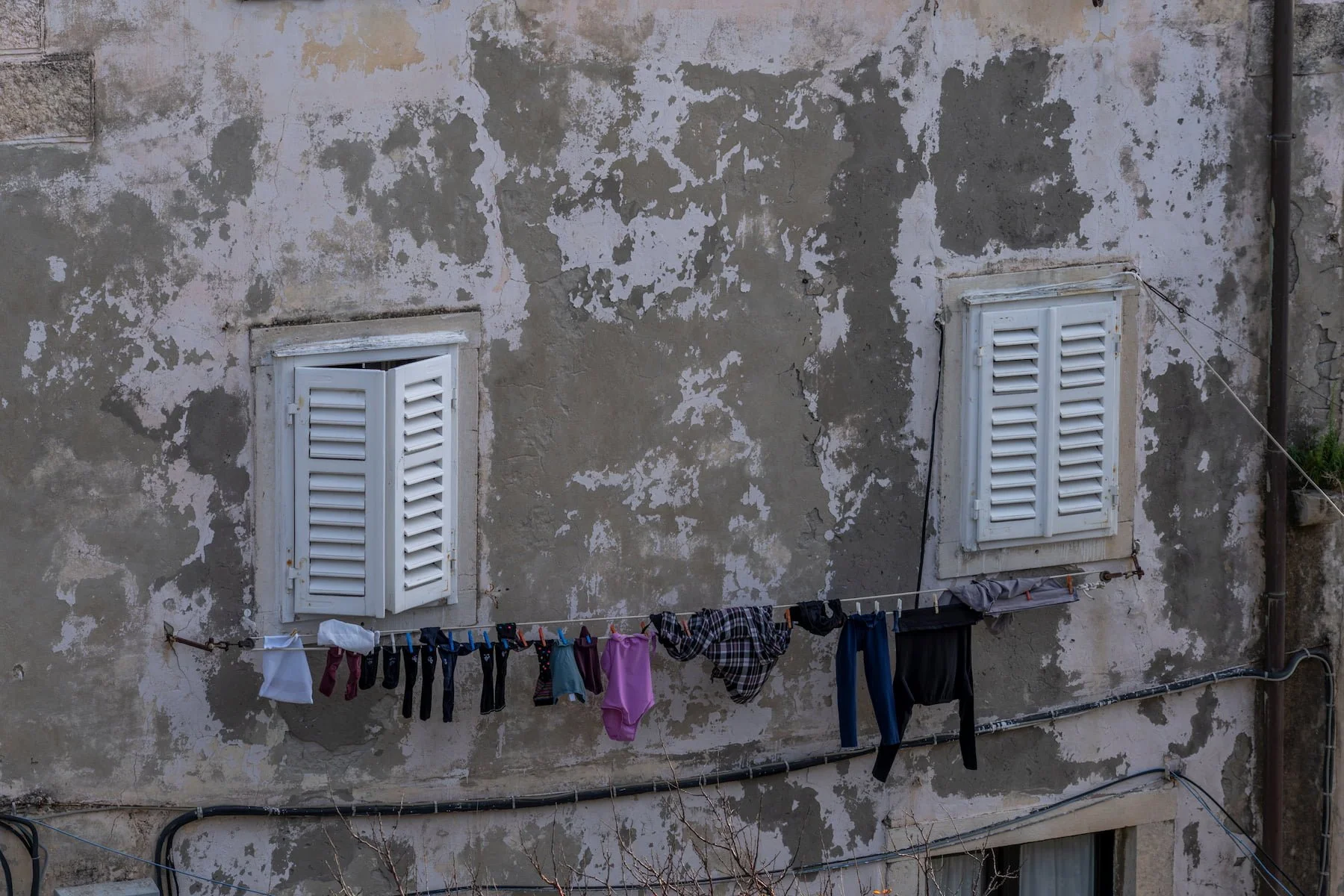
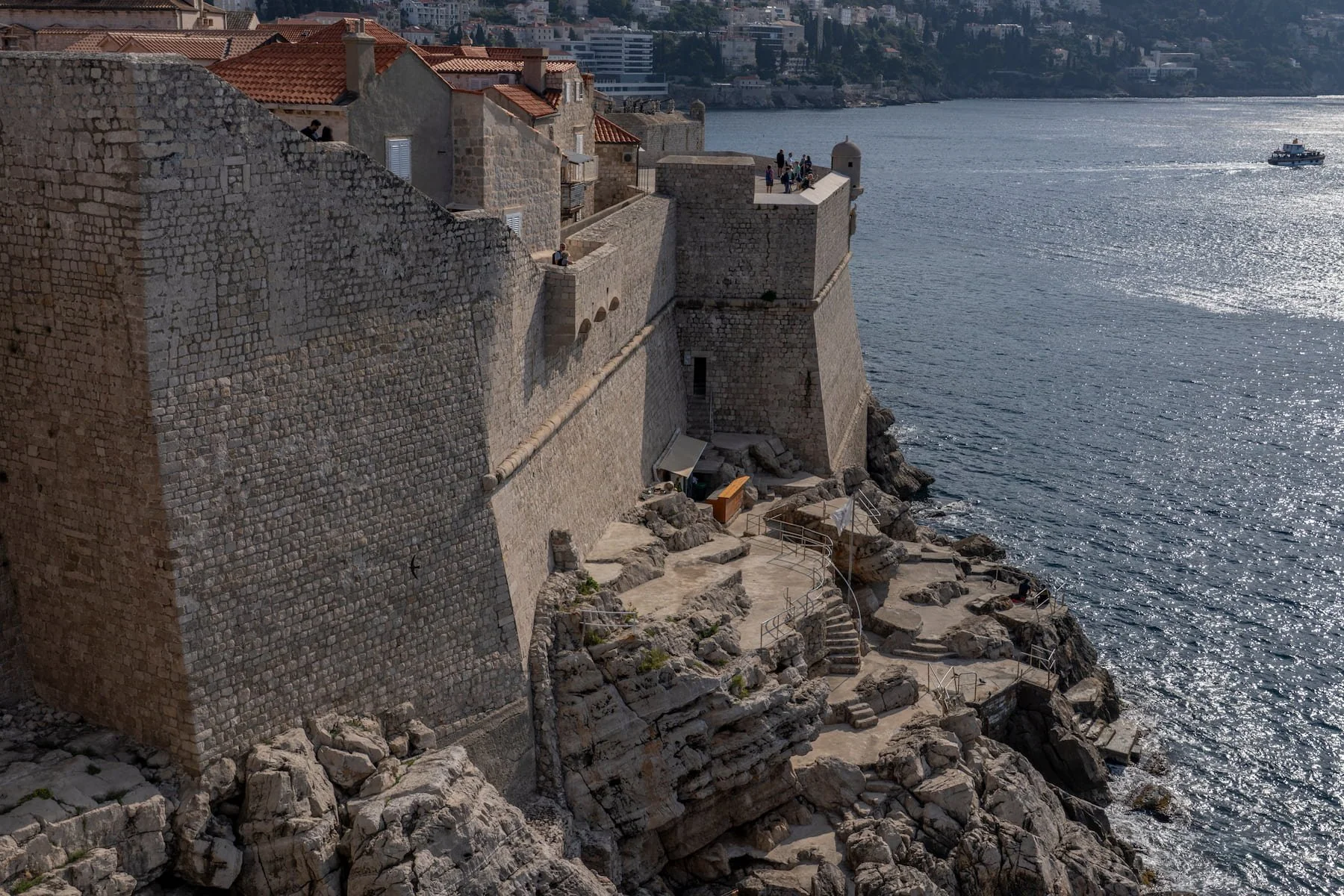
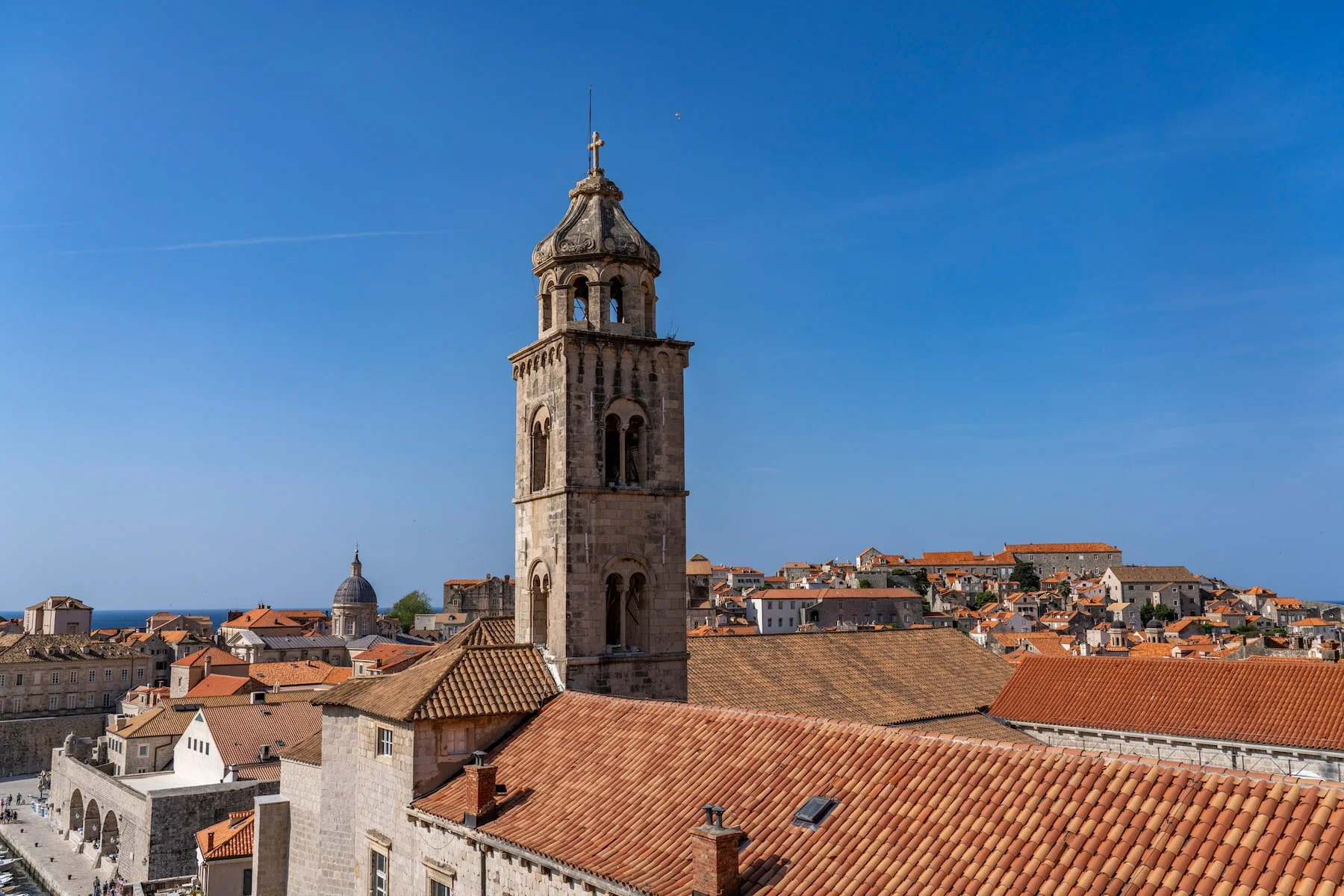
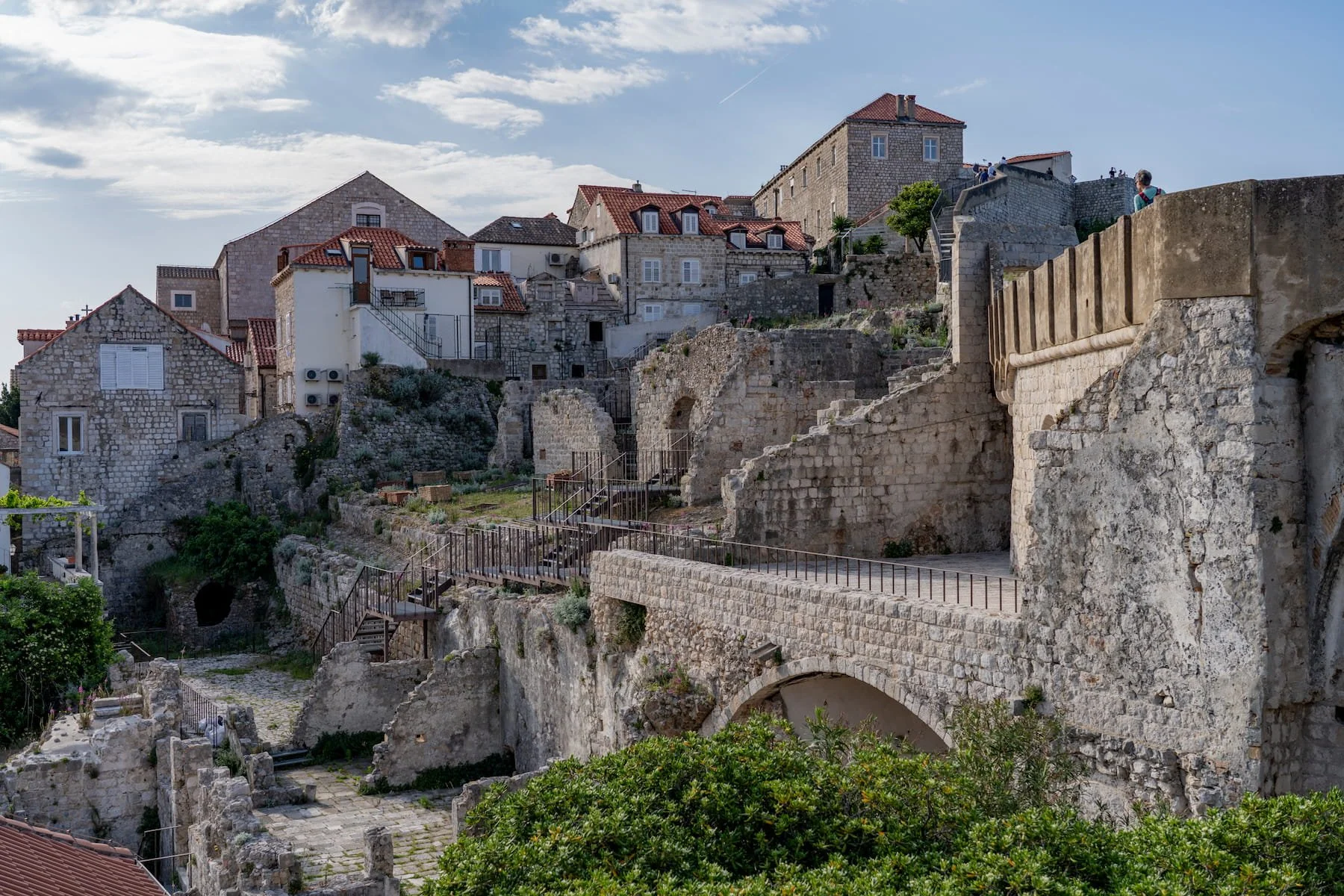
Stretching nearly two kilometres around the Old Town, Dubrovnik’s walls are among the finest preserved medieval fortifications in Europe, built and strengthened over centuries to protect the Republic of Ragusa from attack by land and sea. Walking them gives you the city’s best perspective — the terracotta rooftops packed tightly below, church towers rising above them, with laundry strung between windows and cats visible in the courtyards far below, and the Adriatic stretching endlessly beyond.
What struck me most from above was how visible the city’s resilience still is. Scattered among the older, weathered roof tiles are brighter orange replacements — a legacy of the 1991 siege, when Dubrovnik sustained heavy damage during the Croatian War of Independence. It’s a quiet reminder that this city’s story of endurance isn’t ancient history. It’s recent.
And from the walls, we looked down at Buža Bar — the spot we’d missed on our first afternoon — waiting for the multitude of people who would enjoy the view and leap into the crystal-clear water below. Next time!
By then, though, it didn’t matter. Dubrovnik had already given us more than enough.
Setting Sail
That afternoon, we boarded the boat and began the next chapter of the journey — seven days of cycling and sailing north through Croatia’s islands toward Split.
Dubrovnik was the perfect beginning: sunrise light, ancient stone, sea air, and just enough stillness before the pace shifted. As the city walls faded into the distance and the sun dropped low over the Adriatic, it felt like the real journey was only just beginning.
Continue the Journey: Croatia by Bike and Boat: Island Hopping from Dubrovnik to Split.
A selection of images from this journey — from ancient city walls to Adriatic coastlines — can be found in our Europe gallery.
For more on the bike and boat tour route, visit Boat Bike Tours — Dubrovnik to Split.