
After leaving our tiny house near Kirkjubæjarklaustur, we began working our way west again.
Our first stop was familiar territory: Vík. The weather had prevented us from photographing the town's hilltop church properly earlier in the trip, so this time we stopped for a few photographs before returning to a favourite Iceland road-trip ritual — coffee and a pastry.
Víkurkirkja above Vík — a photograph we finally managed on our return west after rain had hidden the view earlier in the trip.
What we didn't do was buy groceries. That would prove to be a minor mistake.
We were heading inland for three nights, away from the heavily travelled South Coast, and hadn't really thought about how limited the shopping options would become. It was another small reminder that once you leave Iceland's main tourist corridor, even fairly ordinary travel logistics require a little more planning.
A Schoolhouse in the Icelandic Countryside
Our base for the next three nights was Ásaskóli, near Árnes. It turned out to be one of those accommodations we remember as much for the people as for the place itself.
Our hosts were extraordinarily welcoming. When we arrived, they sat down with us and went through a map of the surrounding area, pointing out places we might enjoy and helping us get oriented.
The property had its own story. The house had originally been the local school — in fact, our host had attended school there as a child — and the space where we stayed had once been the stable. There was something appealing about staying somewhere with that kind of history rather than in a purpose-built hotel. It was also exactly what we needed at this point in the trip.
After moving every couple of nights through the Westman Islands, Vík, the glacier lagoons and Stokksnes, having three nights in one place gave us a chance to slow down. We could photograph in the mornings, come back to edit, relax for part of the day and decide what we felt like doing next.
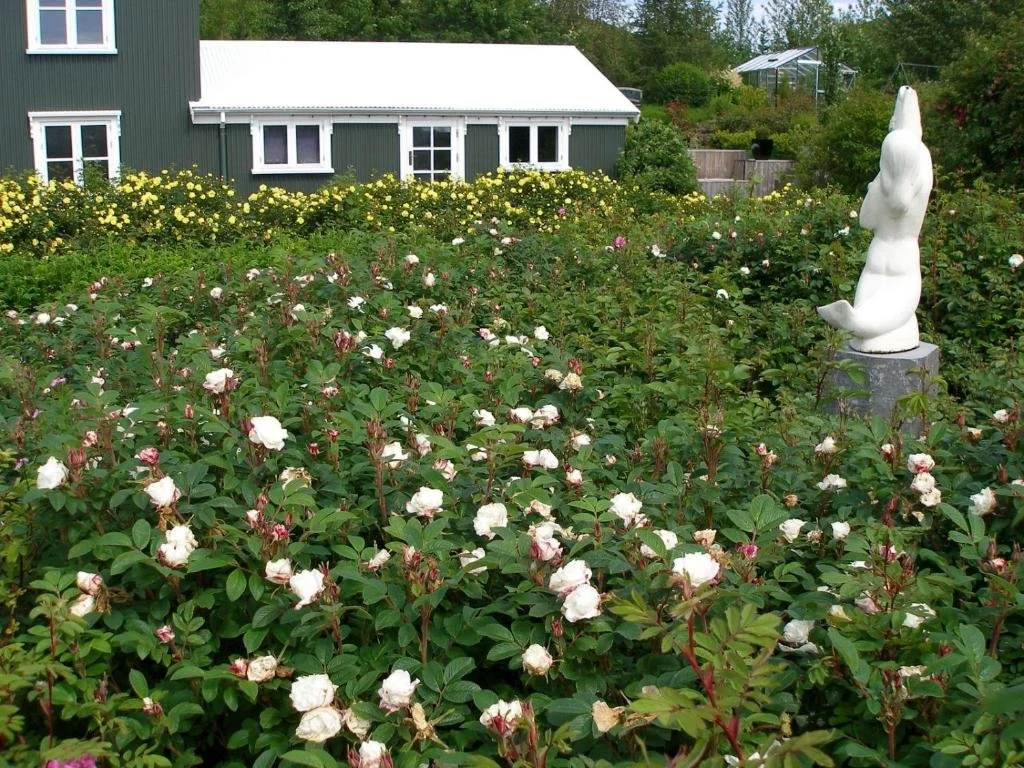
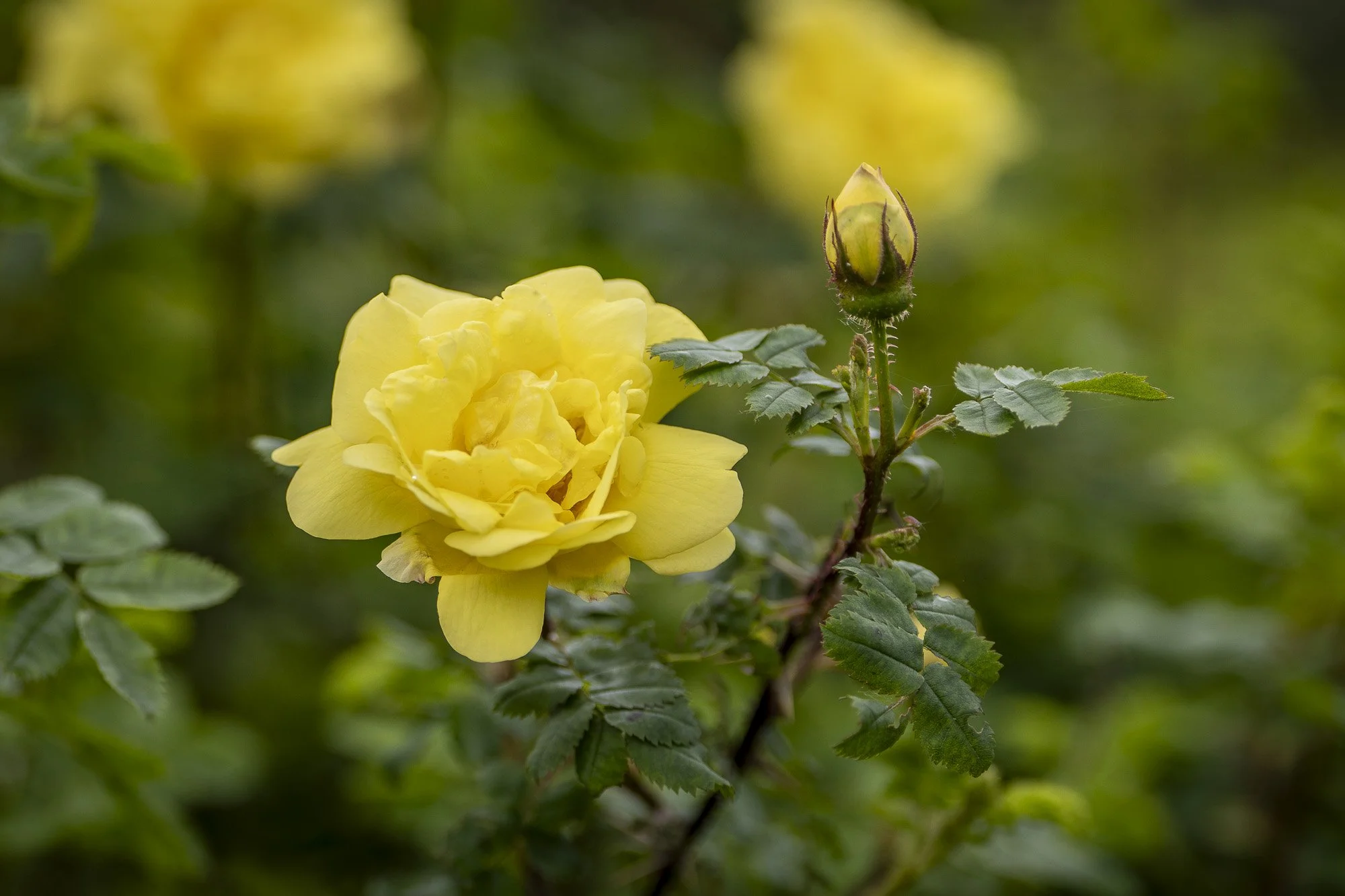
The gardens surrounding the house were remarkable too, with hundreds of rose varieties growing in a place where we certainly hadn't expected to find them.
We had arrived somewhere that felt very different from the Iceland we'd been travelling through for the previous week.
An Early Morning at Brúarfoss
The following morning we were back to an early photography alarm. We drove quiet roads through still villages, enjoying the early morning light. Along the way, we made a quick stop at Laugarás Lagoon, where mist drifted around the grass-covered roof and distinctive arches inspired by the caves of South Iceland.
Morning mist drifting around the turf-covered roof and distinctive arches of Laugarás Lagoon on our early drive to Brúarfoss.
We reached Brúarfoss at about 5:15 a.m. and, for most of our time there, had the waterfall completely to ourselves.
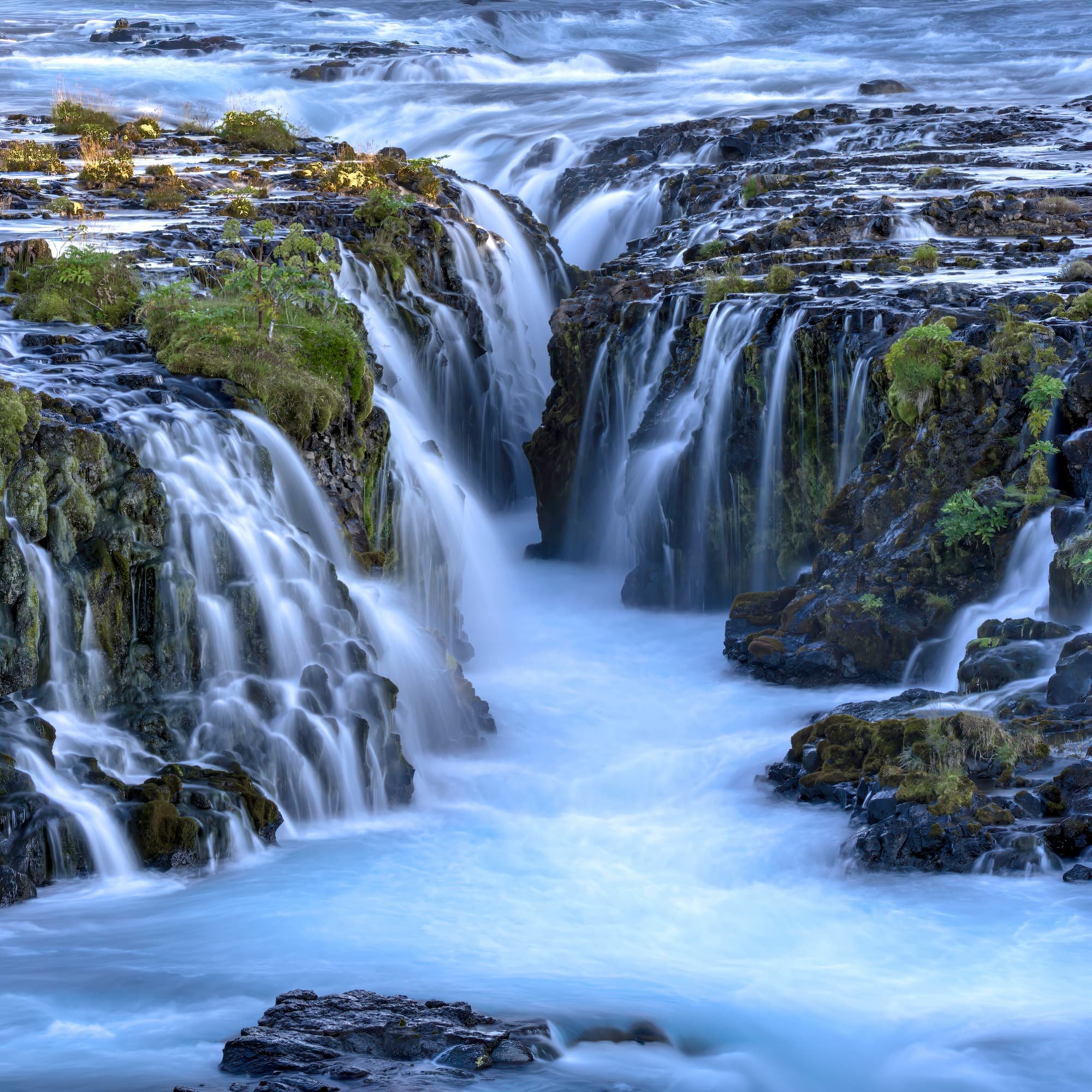
Brúarfoss isn't one of Iceland's towering waterfalls. Instead, vivid blue water spreads across a series of dark rocky ledges before converging into a narrow channel in the middle. The colour alone makes it distinctive.
The vivid blue water of Brúarfoss converges through dark volcanic rock — photographed in the quiet of an early Iceland morning.
The early start solved one problem beautifully: crowds. It created another. We had deliberately timed our arrival for after the earliest light, hoping the falls wouldn't still be completely in shadow. But the rising sun had already reached parts of the waterfall while other areas remained dark, creating much more contrast than we would have chosen photographically. An even earlier arrival might have given us softer, more even light.
Still, there is something rather wonderful about standing beside a beautiful Icelandic waterfall at that hour with almost nobody else around.
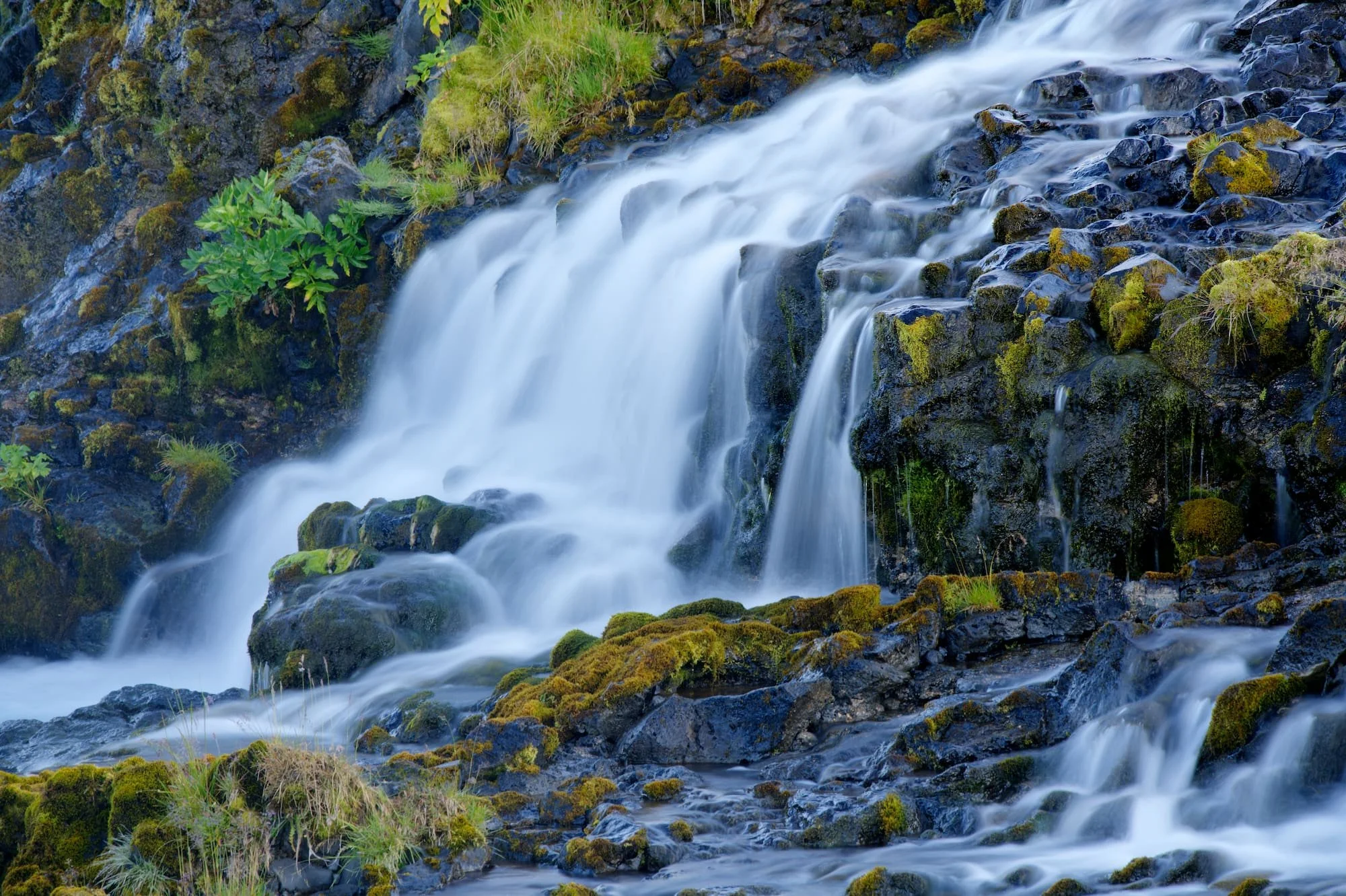
One other photographer appeared for a while, and then disappeared again, leaving us to work through compositions at our own pace.
The conditions weren't perfect. The morning was absolutely worth it.
Later that day, ordinary life intervened. We drove to Flúðir for groceries and found the local selection much smaller than we'd hoped. This was when we realized locals go to Selfoss for serious grocery shopping.
Gjáin — A Different Kind of Iceland
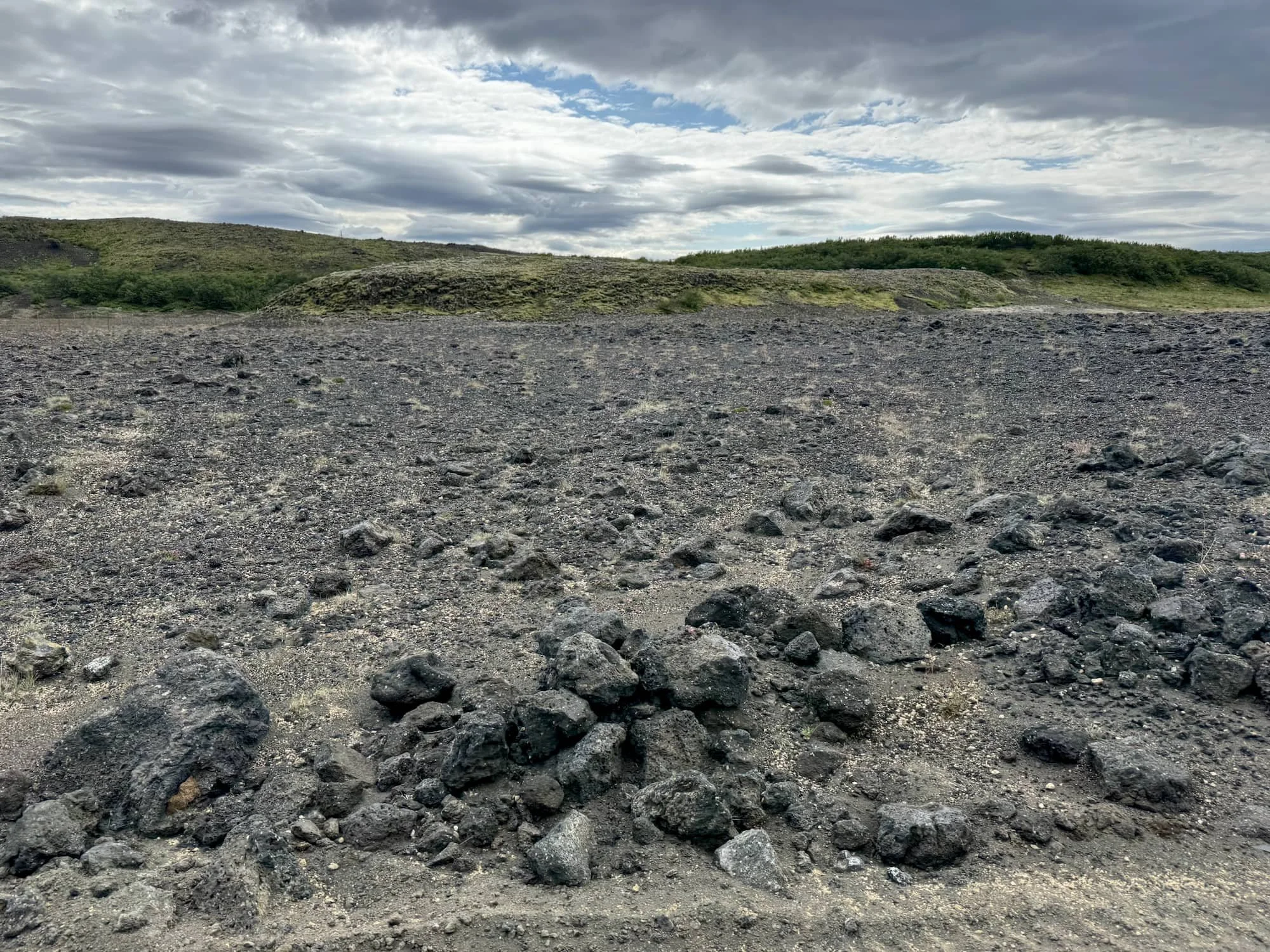
Our hosts at Ásaskóli had strongly recommended Gjáin, so the next morning we decided to take their advice. The final few miles were on a rough road cut through an old lava landscape, the kind of road that makes you wonder whether you’ve taken a wrong turn. We drove very slowly, hoping our tires would survive. By the time we reached the small parking area, it felt as though we were in the middle of nowhere.
Then we walked over to the viewpoint.
Below us was this unexpectedly lush valley filled with streams, waterfalls, moss and twisting paths — completely different from the stark lava we had just driven through. “Out of this world” is probably an overused phrase in travel writing, but standing there for the first time, it genuinely felt that way.
Gjáin was unlike almost anywhere else we had visited in Iceland.
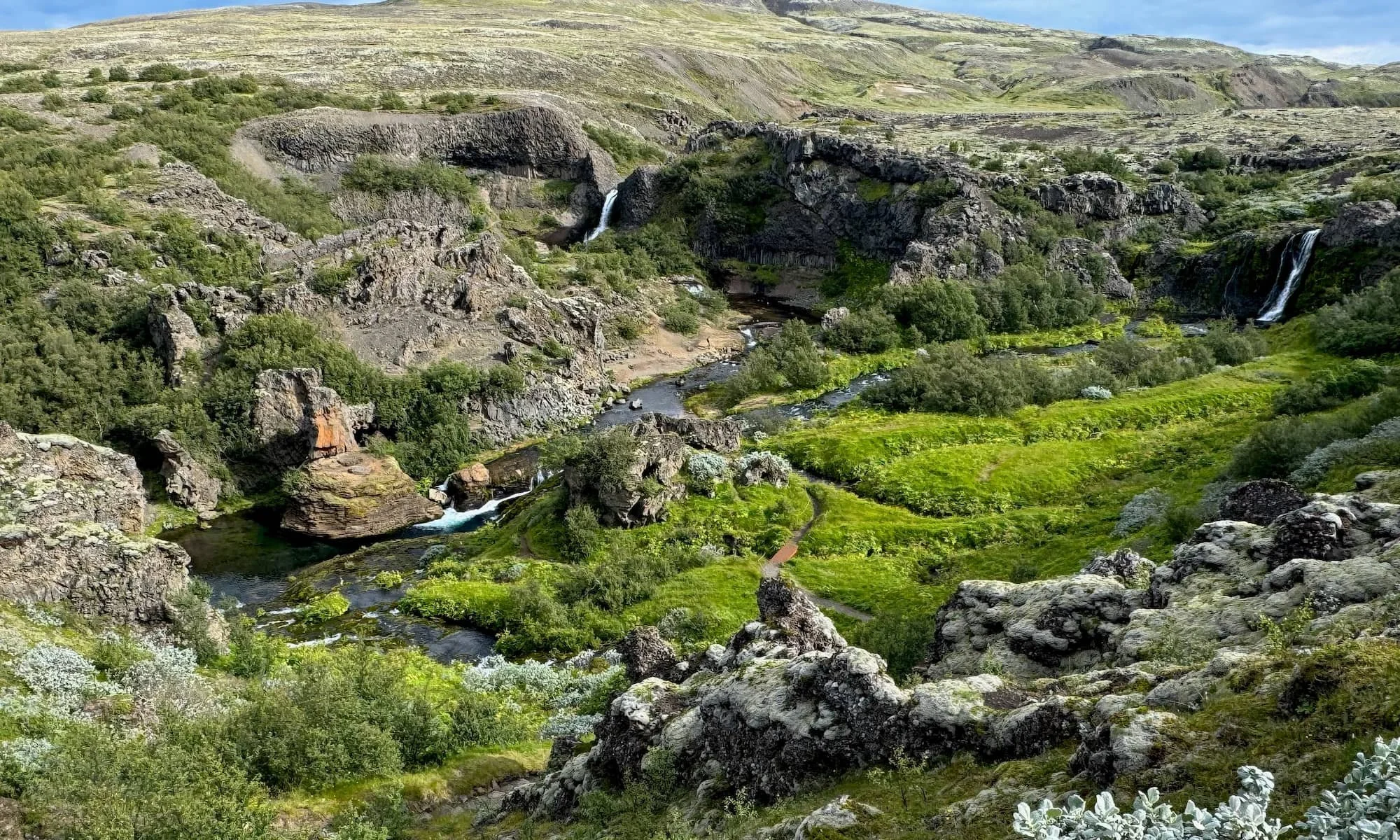
Rather than one dominant landmark, the valley is a collection of smaller discoveries: streams twisting through the grass, waterfalls dropping between dark lava formations, clear pools, little footpaths and changing views as you move through the landscape.
It was beautiful. It was also surprisingly difficult to photograph.
Some landscapes seem to organize themselves naturally into a photograph. Gjáin didn't. The appeal was in wandering through it — following a stream, finding another small waterfall around a bend, looking back from a slightly different position and discovering another composition.
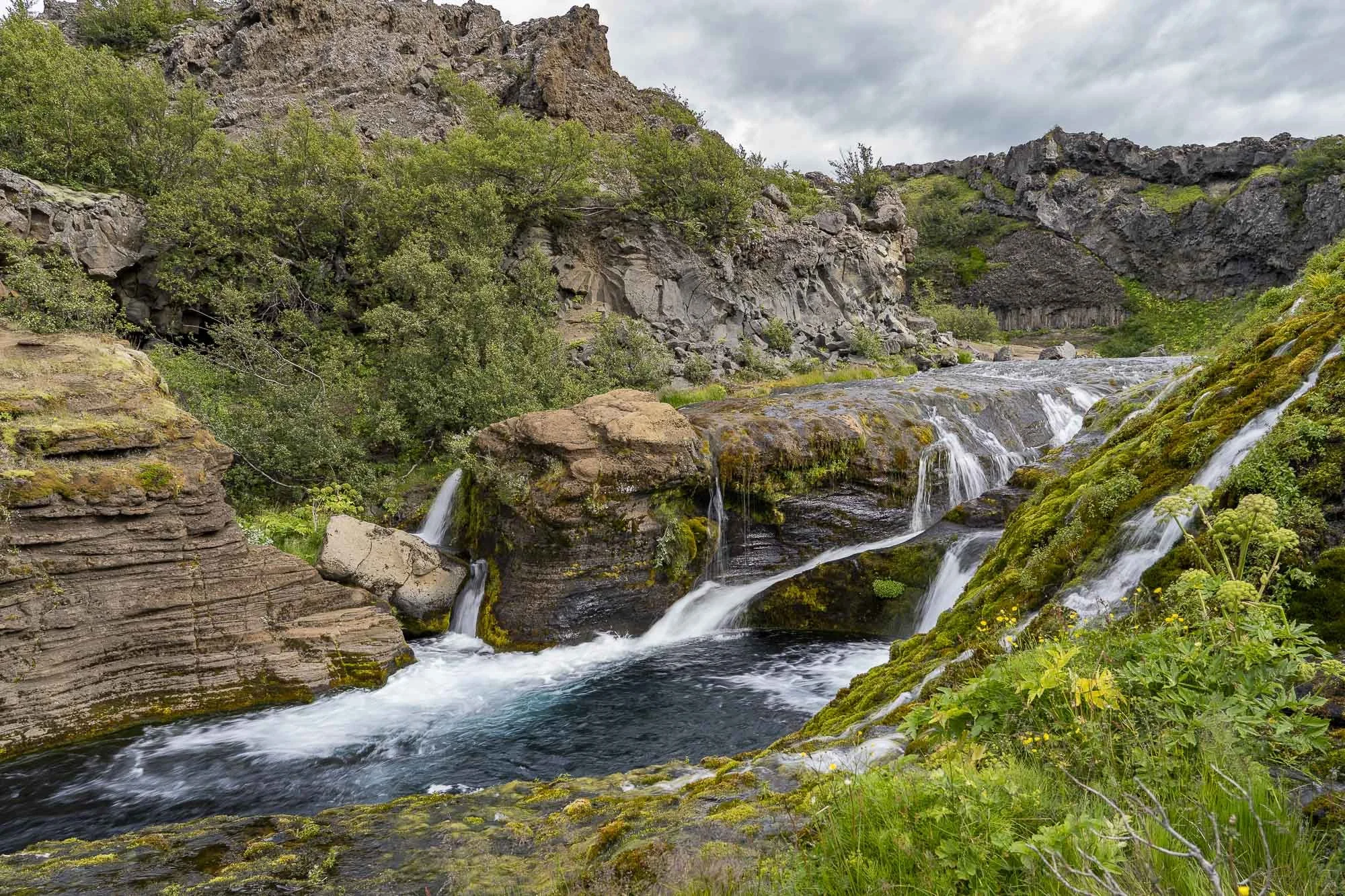
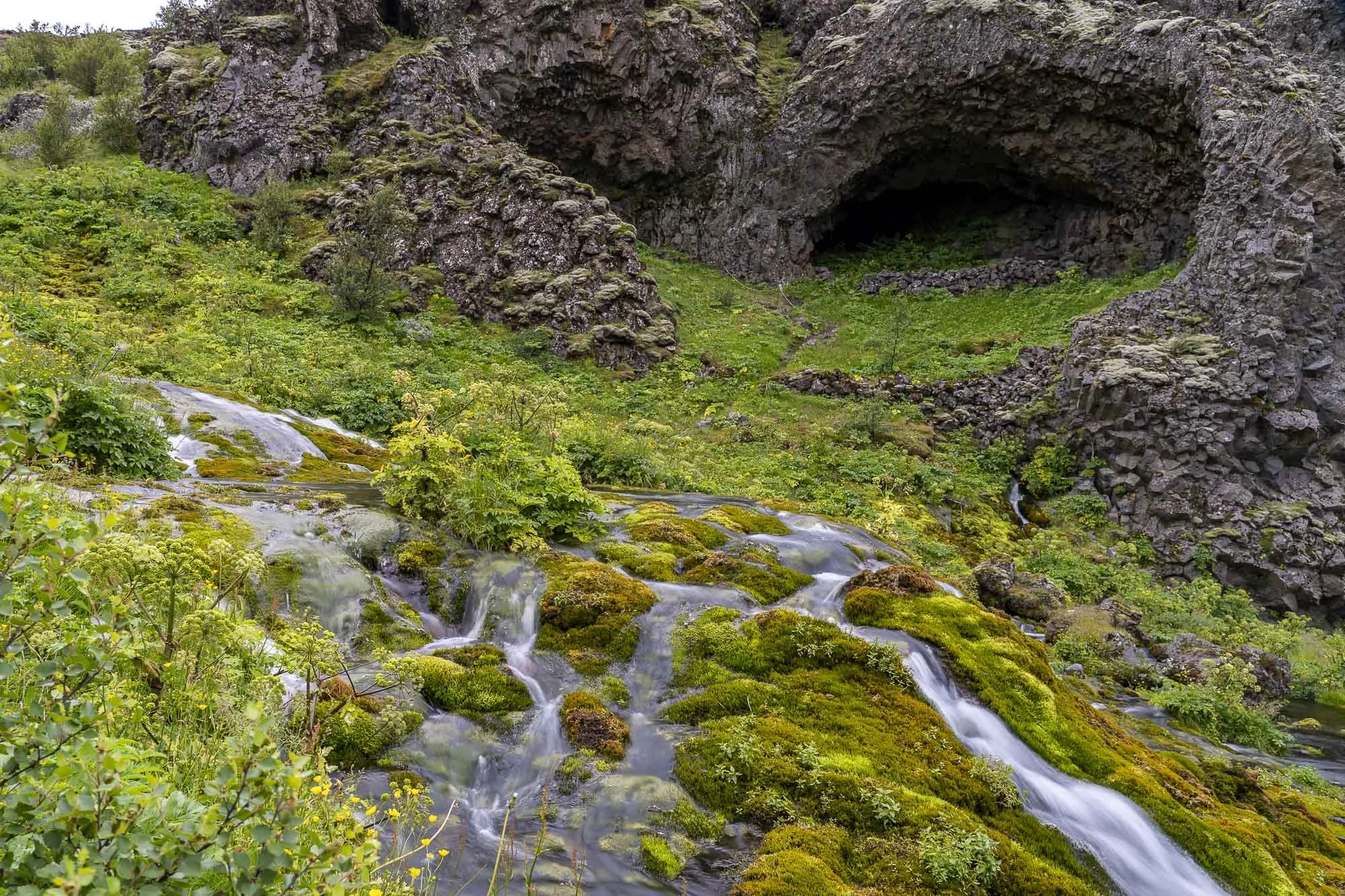
Trying to fit that experience into one frame was almost impossible.
And perhaps that was part of why we enjoyed it so much.
We each found our own perspective on Gjárfoss, one of the larger waterfalls in the valley, and came away with two quite different photographs. There were also smaller cascades and intimate scenes that invited us to slow down and pay attention to details rather than always looking for the biggest landscape.
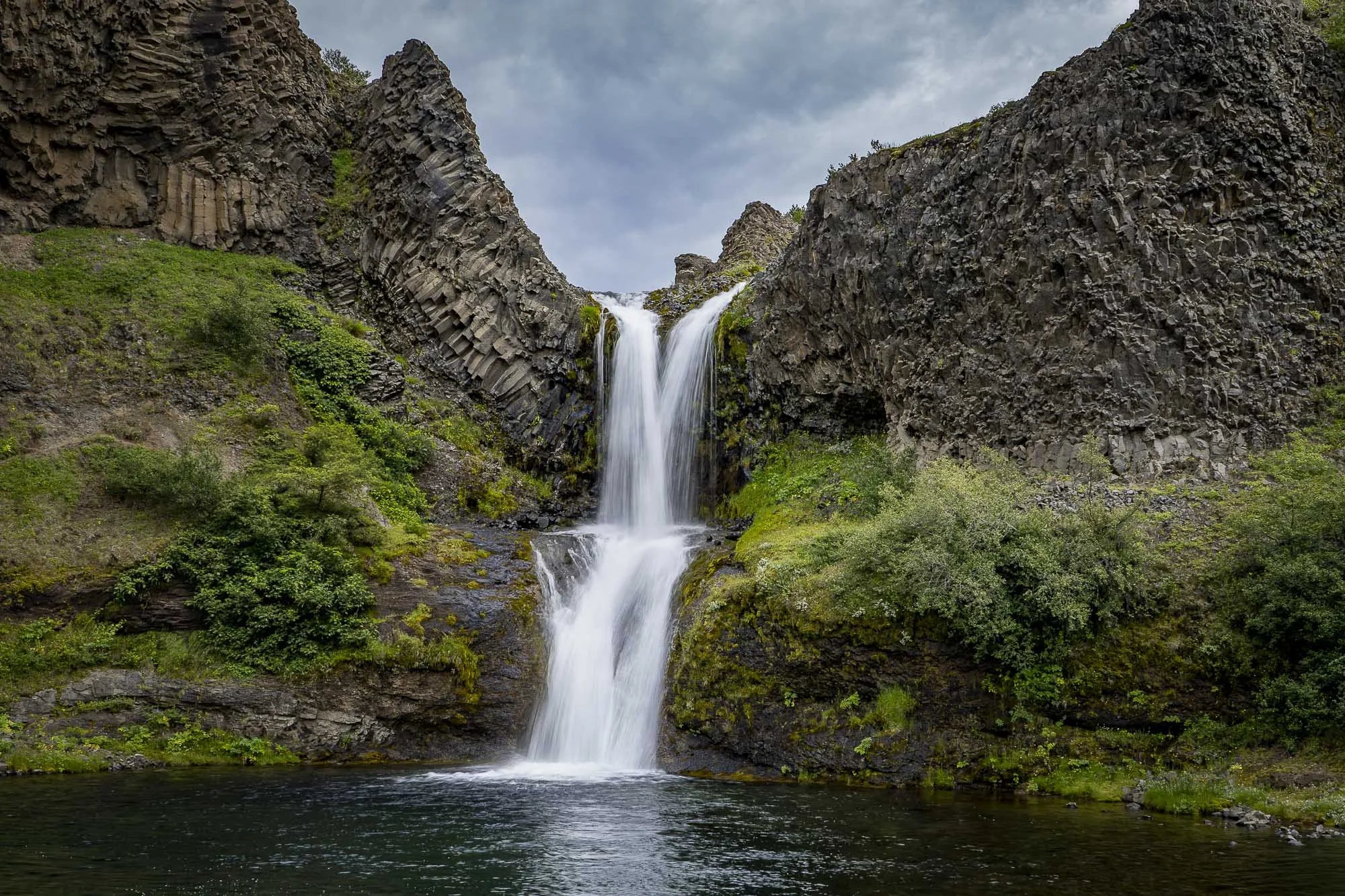
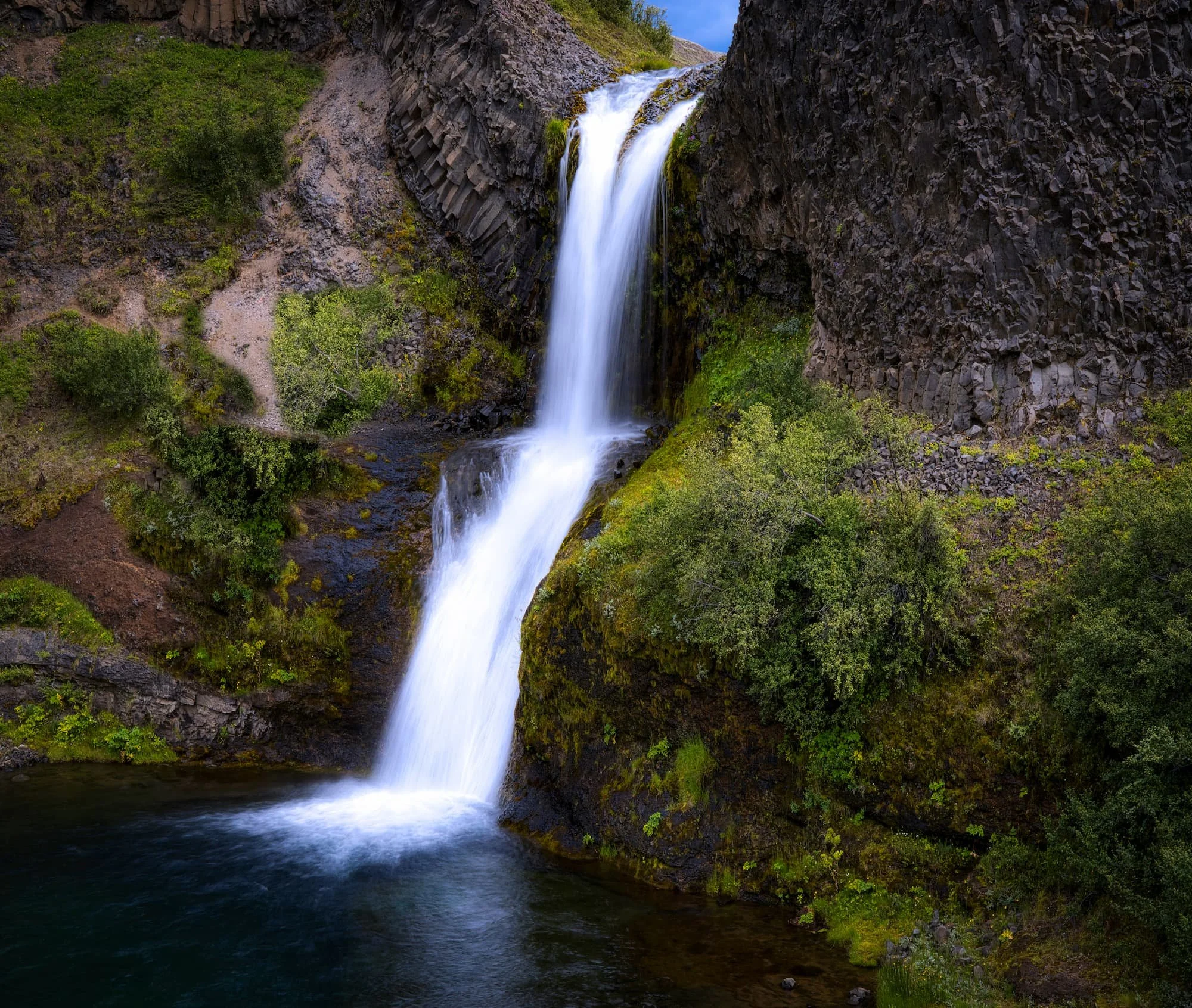
As the morning went on, more visitors arrived, but it never felt particularly busy.
We eventually returned to Ásaskóli for an afternoon of editing photographs and just relaxing.
We had thought about photographing the gardens, particularly the extraordinary collection of roses around the property, but Iceland had other plans.
It started raining. By then, we were fairly comfortable with changing the plan.
Turning North
After three nights at Ásaskóli, it was time to move again.
Our destination was the Snæfellsnes Peninsula, but first we finally addressed the grocery situation properly.
We stopped in Selfoss for coffee, pastries and a well-stocked grocery store — along with what seemed like half the population of South Iceland — before continuing north toward Borgarnes.
Another coffee stop followed there.
Then came the drive to Grundarfjörður.
It was longer and slower than we'd expected, with some construction and stretches of road that required more attention than the distance on the map had suggested. But the landscape became increasingly beautiful as we moved farther onto the peninsula.
By the time we reached Grundarfjörður, we were ready to stop driving.
Our accommodation was small, but the location was ideal for what we had planned the following morning.
Kirkjufell was just down the road.
That evening we went out for one of Iceland's much-discussed hot dogs. Perhaps expectations were too high. It tasted like a hot dog.
We returned to the apartment and I went to bed early, knowing the alarm would be going off at 3:00 a.m.
Randy, however, never really went to sleep.
While I slept before our 3:00 a.m. alarm, Randy captured the lingering midnight colour from our accommodation near Grundarfjörður.
Around midnight, he was still awake and noticed the late-evening light outside. While I slept, he went out with the camera and photographed the lingering Icelandic sunset.
At these latitudes in July, “night” remained a fairly flexible concept.
Blue Hour at Kirkjufell
At 3:00 a.m., it was my turn.
We headed straight for Kirkjufell, arriving to find only one other vehicle in the parking area — its occupants apparently still asleep. For a while, we had the blue hour almost completely to ourselves.
Kirkjufell is one of Iceland's most recognizable mountains, particularly from the familiar viewpoint near Kirkjufellsfoss. In the middle of the day, the familiar viewpoint near Kirkjufellsfoss can become very busy. At 3:00 in the morning, it felt completely different.
The light was soft and cool, the landscape was quiet, and we had time to experiment rather than simply finding a place to stand.
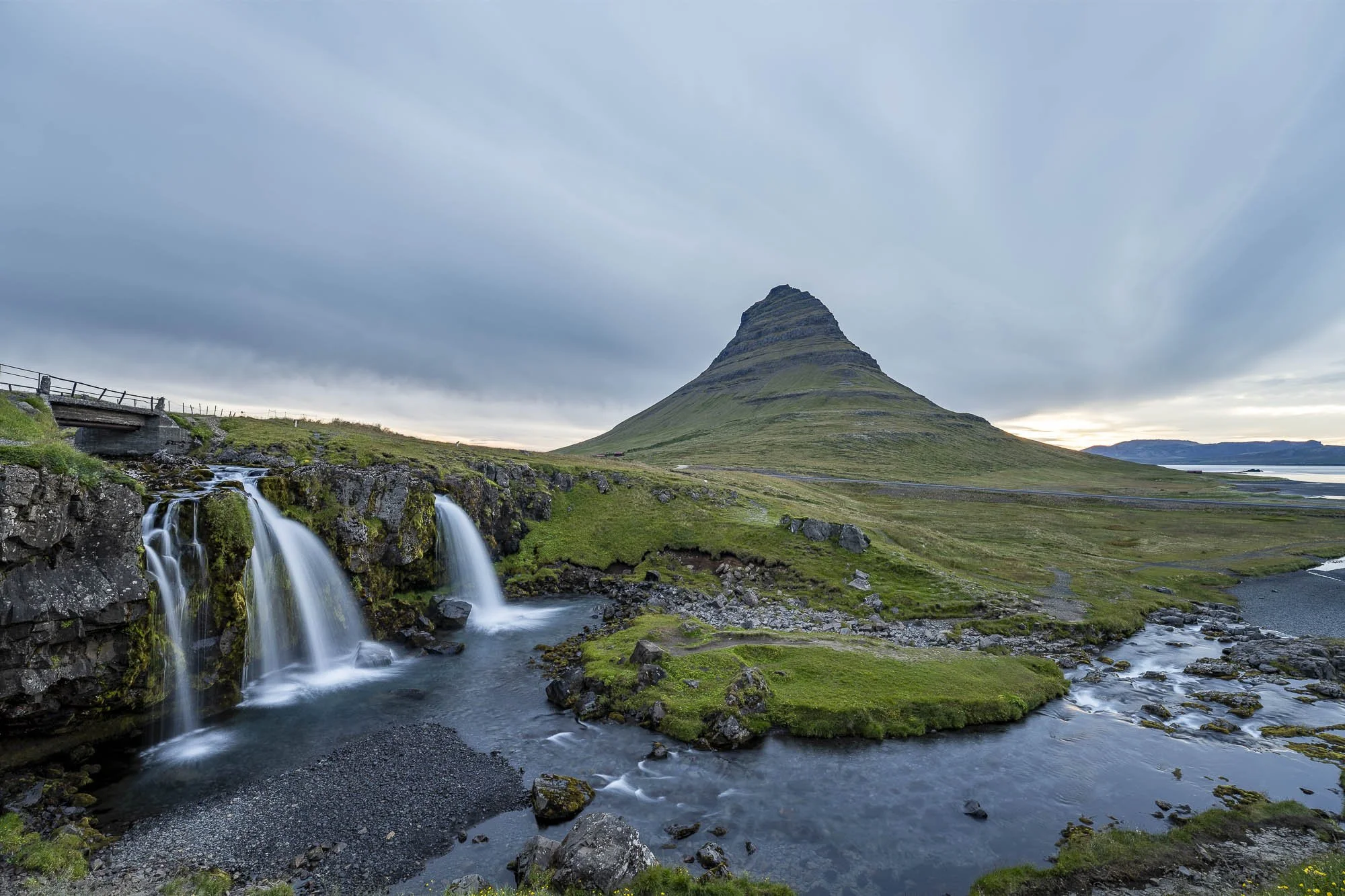
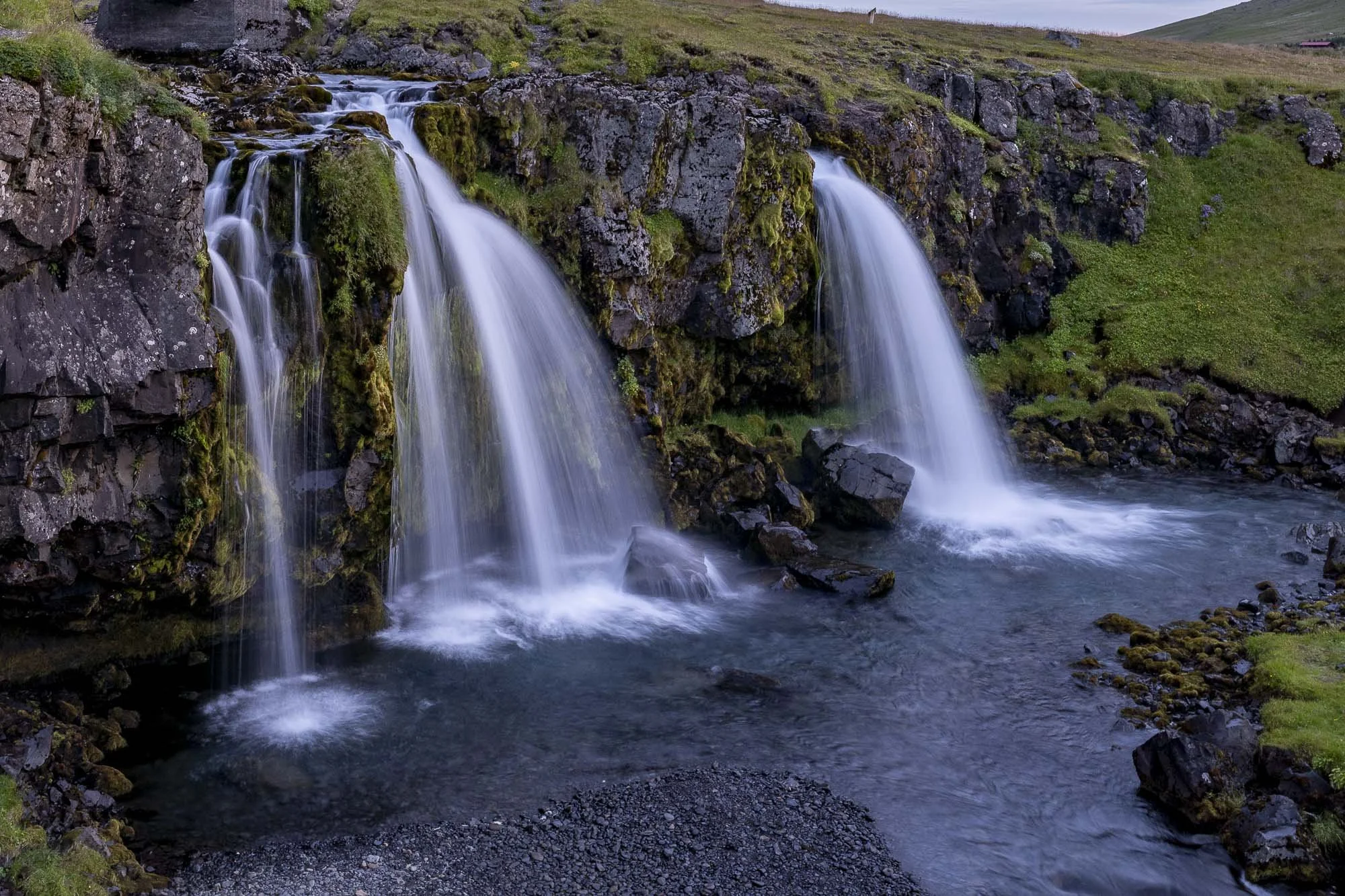
As sunrise approached, a few more photographers began arriving.
By then, we had already spent a good part of the morning working with HDR exposures and panoramic compositions. Some locations reward improvisation; Kirkjufell was one where arriving early with a specific photographic plan made a substantial difference.
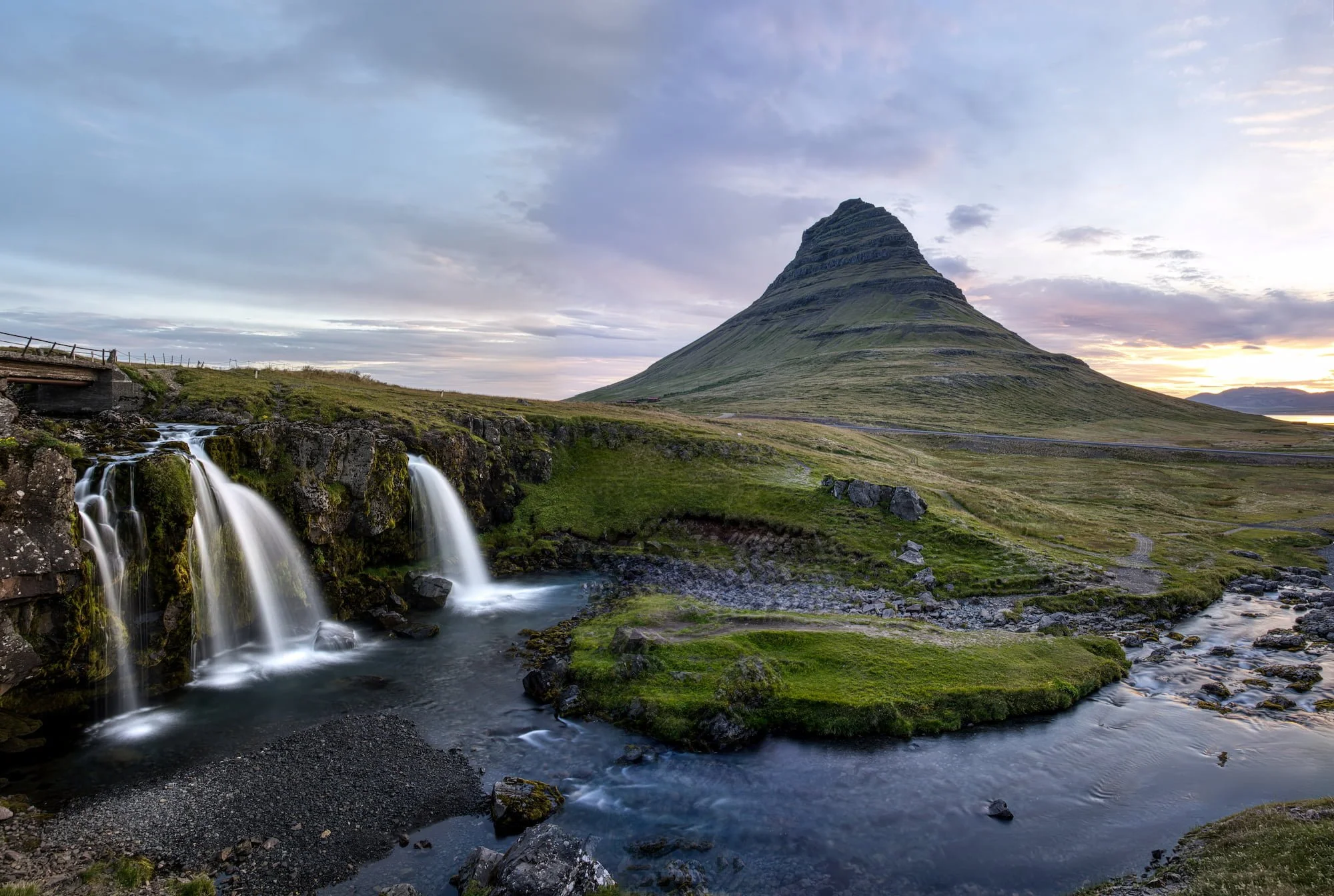
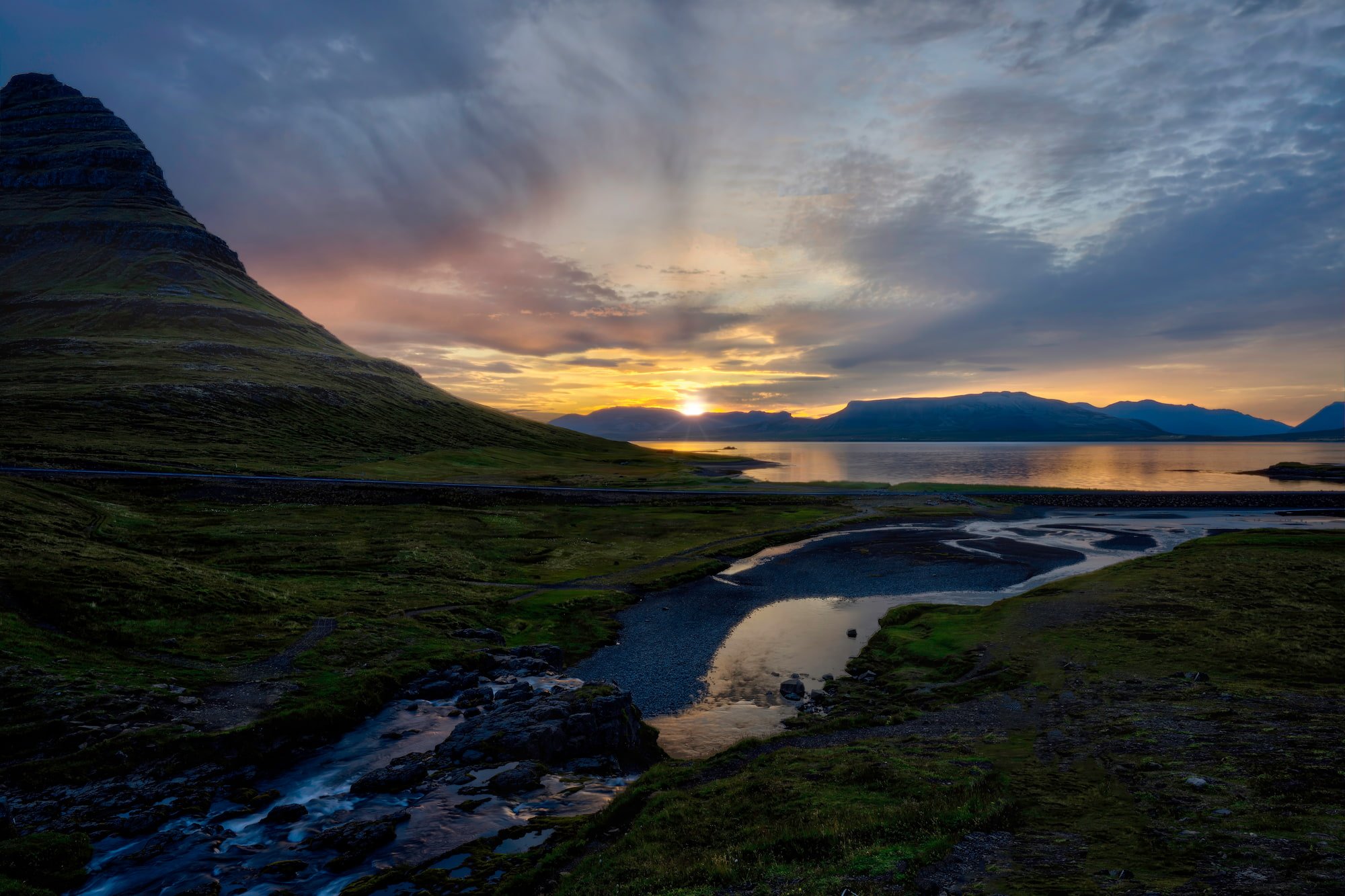
Kirkjufell and Kirkjufellsfoss in the soft early-morning light — the reward for a 3:00 a.m. start.
It became one of our more successful mornings of the trip.
Afterward, we returned to the apartment and did something equally important. We had a nap.
Around Snæfellsnes
Later that day we drove a loop around part of the Snæfellsnes Peninsula.
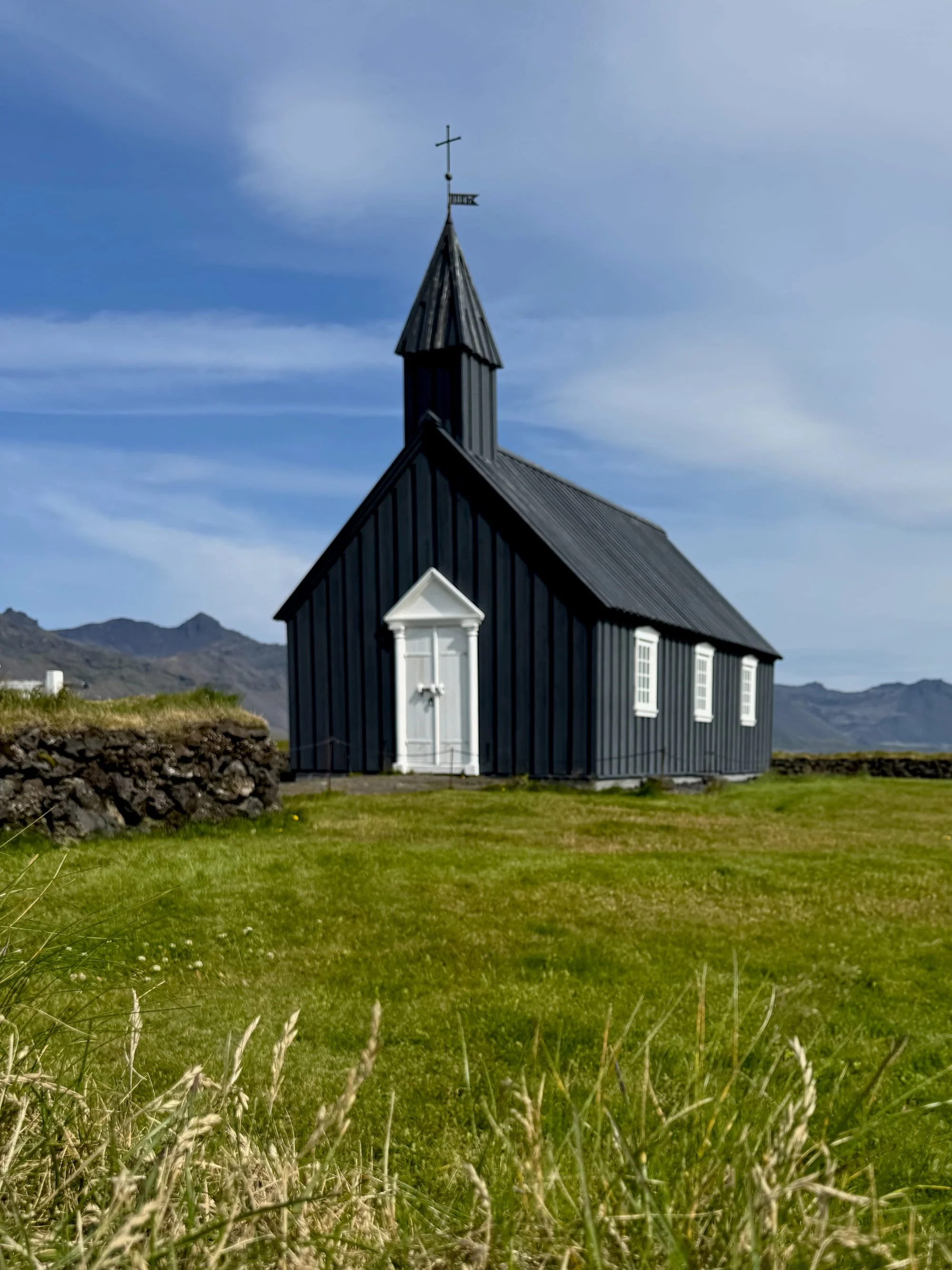
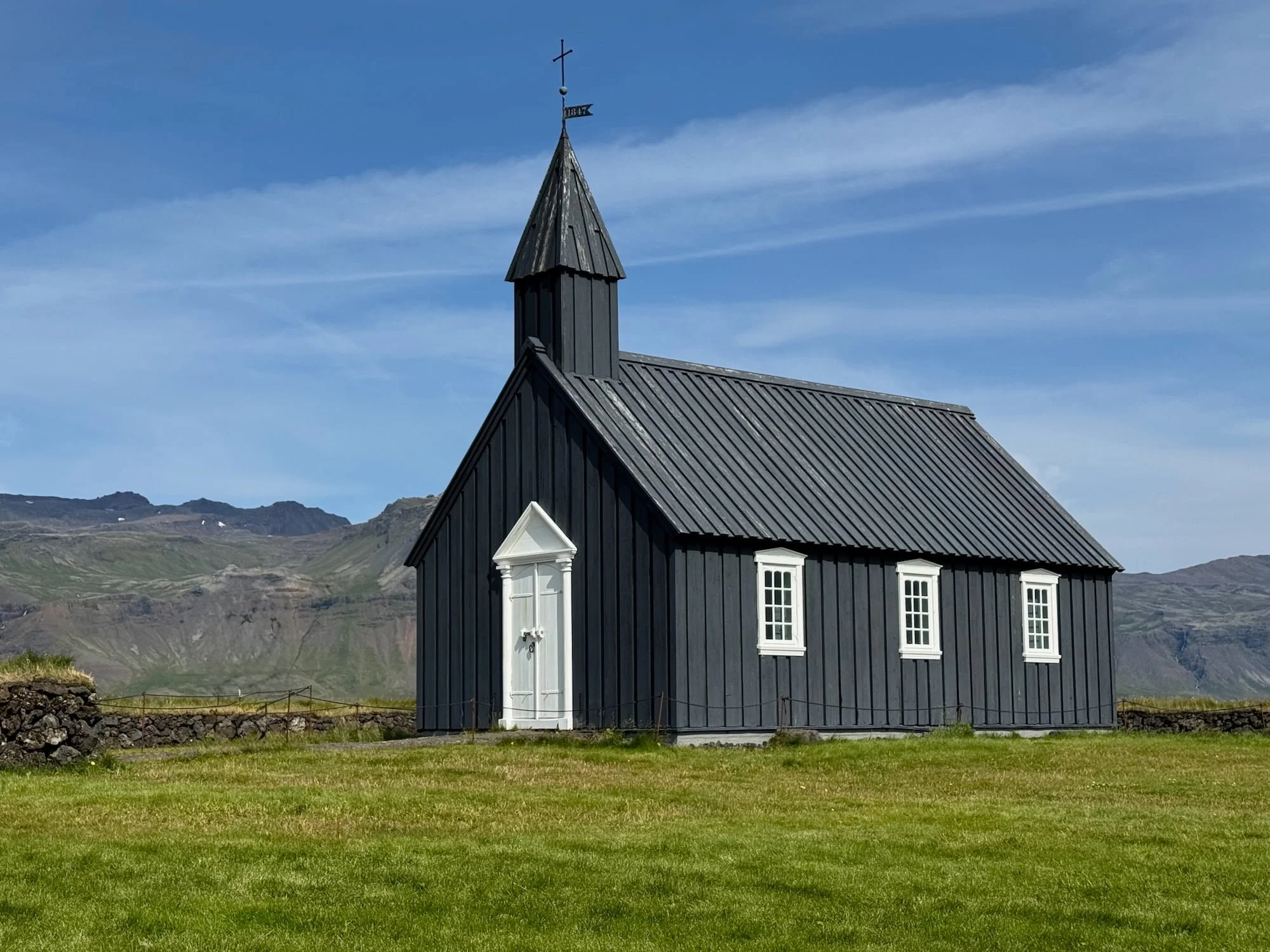
One of our main stops was Búðir, home to Búðakirkja, the small black church that has become another of Iceland's familiar photographic subjects.
By then we were firmly back in tourist territory.
Several of the better-known stops around the peninsula were very busy, and after nearly two weeks of travelling we weren't particularly motivated to fight crowds simply to say we'd seen everything.
So we didn't. We made a few stops, enjoyed the drive and returned to Grundarfjörður and photographed the local horses.
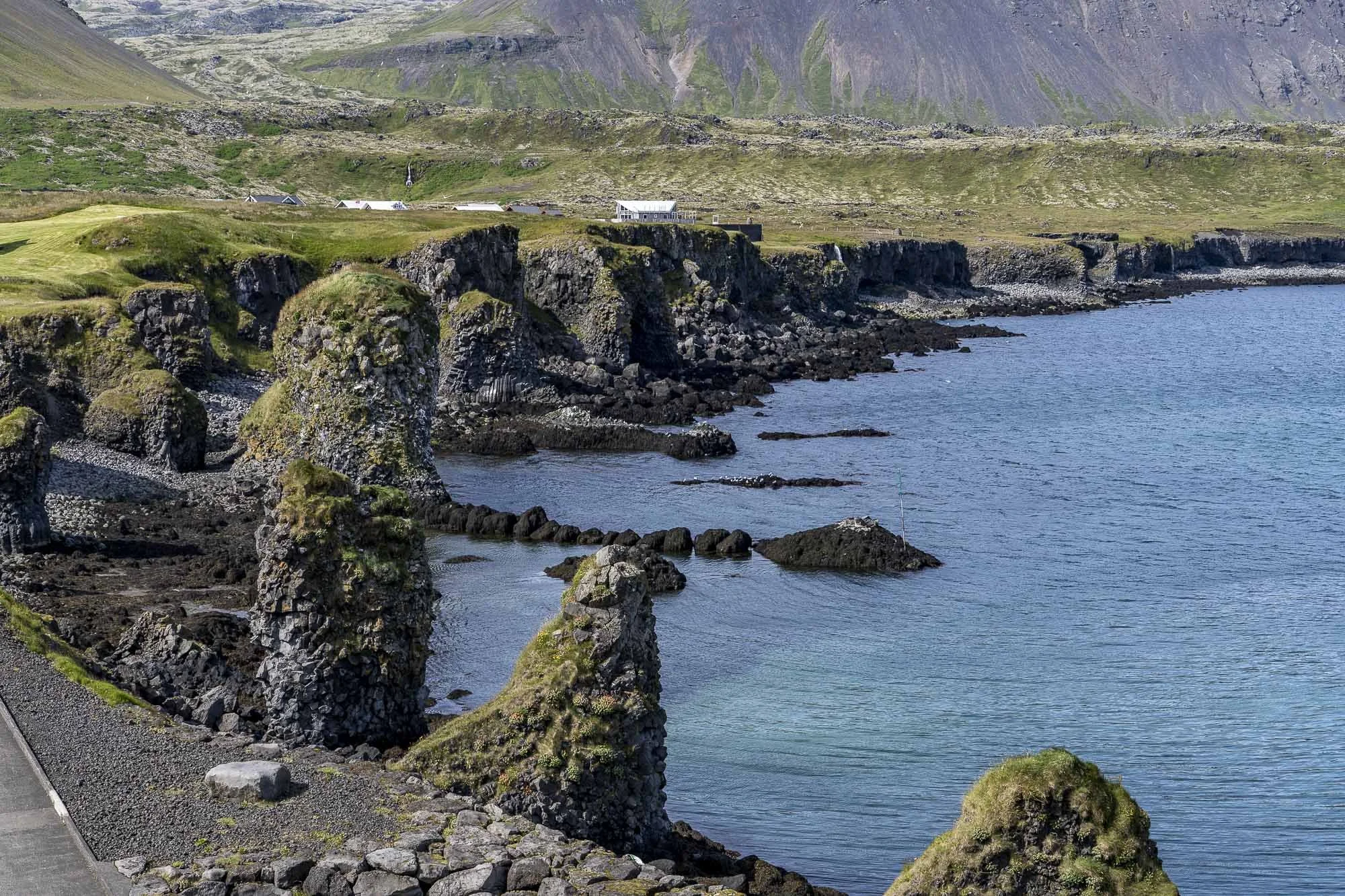
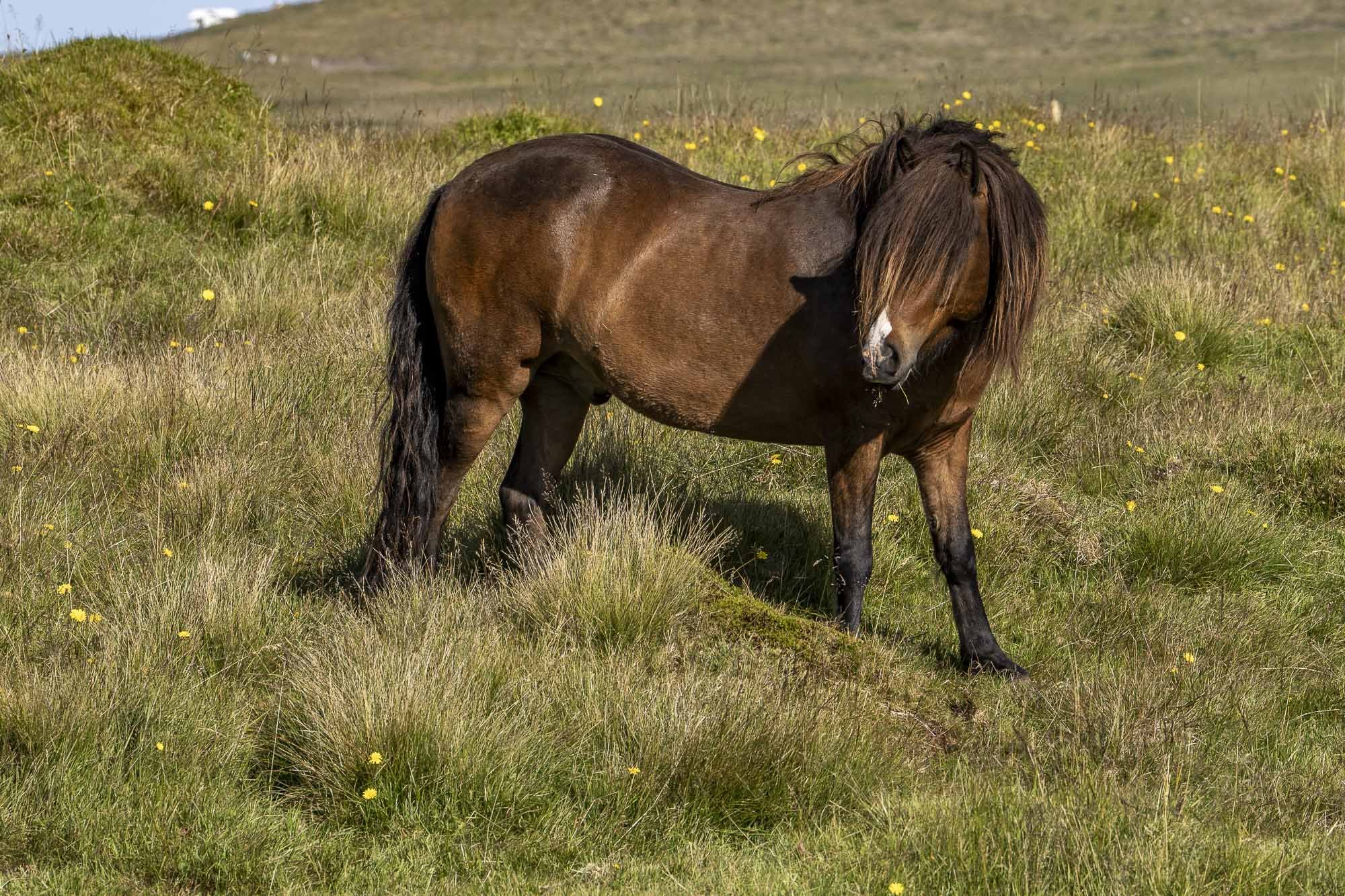
There is always a temptation on a trip like this to keep pushing because there is one more viewpoint, one more waterfall or one more photograph waiting somewhere down the road.
By this stage of our Iceland journey, we were content to let some of them go. We came for the photography, certainly, but we also came to travel together and enjoy Iceland.
Sometimes that meant setting the alarm for 3:00 a.m. Sometimes it meant going back to the apartment and doing nothing.
Both were part of the trip.
The Last Road
The following morning we packed the car one last time and began the drive back toward Keflavík. There were no major sightseeing stops planned. Just coffee. Fuel. The road south.
For our final night, we stayed near Garður, close enough to the airport to make the following morning straightforward. After almost two weeks of changing accommodations, early alarms, long drives, unpredictable weather and more photographs than we had yet begun to process, the final accommodation was unexpectedly lovely.
Over those two weeks, Iceland gave us almost every kind of weather, more waterfalls than we could count, our first Atlantic puffins, black sand beaches, glacier ice, quiet valleys and a few exceptionally early mornings.
We didn't photograph everything we'd planned. We didn't see everything either.
But somewhere between the puffin cliffs of Vestmannaeyjar and a blue-hour morning beneath Kirkjufell, we'd stopped trying to.
And that may have been one of the better decisions of the trip.
Explore the Iceland Journey
This is the final chapter of our Iceland road trip. Start with puffins and black sand on the Westman Islands and South Coast, then follow the journey east through Jökulsárlón, Fjallsárlón and Vestrahorn.
Start the Iceland journey from the beginning →