
Our Iceland trip began with an overnight flight from Canada and the rare luxury of a direct flight to Keflavík. We landed just before 8:00 in the morning, tired but excited to finally be there. Iceland apparently had one more test for us before we could begin: a bus from the plane to the terminal, followed by a very long passport-control line. There were rows of automated kiosks sitting unused, which made the wait feel particularly ironic. By the time we finally reached baggage claim, our luggage had been waiting considerably longer than we had.
Picking up our rental car was slightly less straightforward than planned too. After we found Blue Car Rental, we discovered that the automated key box wasn't cooperating. A visit to the counter, a vehicle change, and another wait eventually produced our keys. We had booked an SUV suitable for Iceland's F-roads and ended up with a hybrid, which made us hesitate about our later plans for the Highlands. Fortunately, river crossings were never part of our itinerary.
Our main objective that first day was simply to make it to Vestmannaeyjar, the Westman Islands. We had a ferry booked for the afternoon, so although there were several places we could have stopped along the drive from Keflavík, we resisted the temptation. After an overnight flight, we were running on very little sleep, and trying to turn arrival day into a sightseeing day wasn't going to make the trip better.
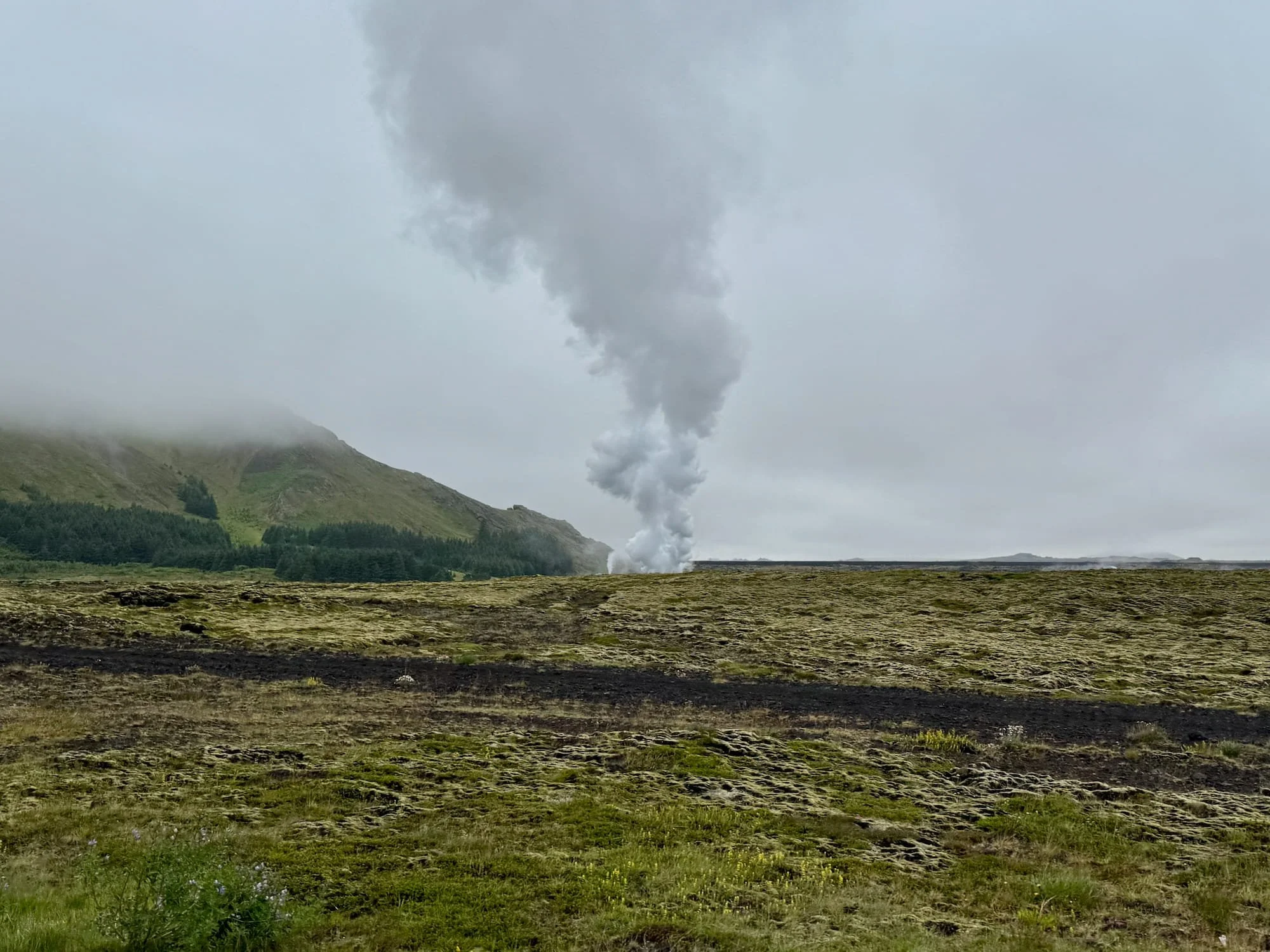
Not far from Keflavík, Iceland was already showing us what makes its landscape so unusual — moss-covered lava fields with geothermal steam rising near Svartsengi.
That decision paid off. When we reached the ferry terminal, we discovered there was space on an earlier sailing. Even better, our Airbnb was ready when we arrived. With rain falling steadily outside, we unpacked, slept and accepted that Iceland would still be there when we woke up.
Vestmannaeyjar (Westman Islands) — Our First Icelandic Puffins
One of the main reasons we had chosen July for this trip was puffins, and Vestmannaeyjar (or the Westman Islands) were our first real opportunity to photograph them.
Our introduction came during a local tour with Thomas, booked through Airbnb. He turned out to be an excellent guide — knowledgeable about the islands, wildlife and local history, and also simply interesting to spend time with. In weather that could best be described as thoroughly Icelandic, he first took us to a puffin lookout and then to another area where we could see the birds along the cliffs.
It was windy. It was cold. It rained. And it was completely worth it.
There were puffins everywhere compared with anything we would see later in the trip. Some were out on the grassy slopes, while others perched along the cliffs, giving us our first real chance to watch and photograph them up close.
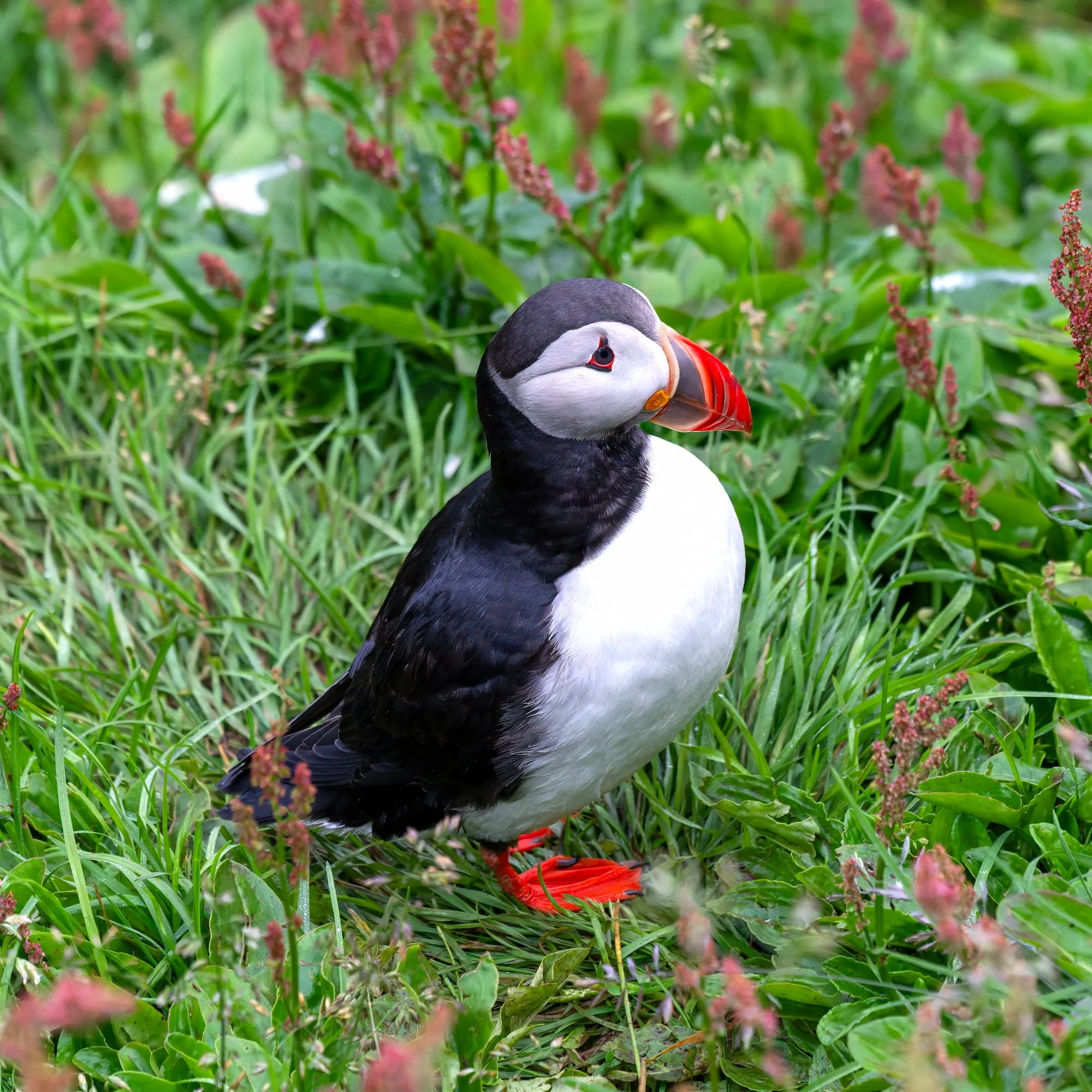
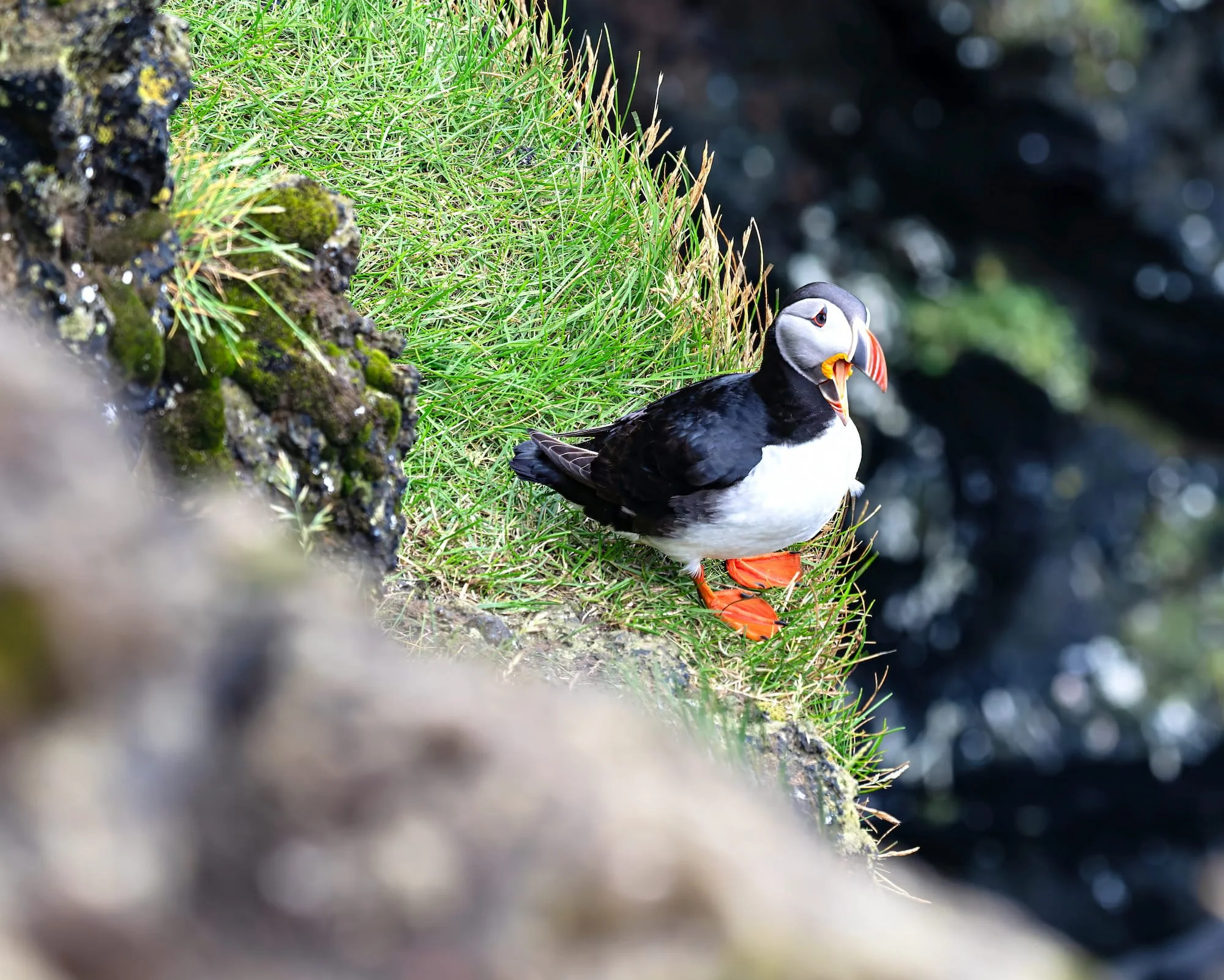
One of the things Thomas explained was why some of the younger puffins looked as though they had been playing in the dirt. These were non-breeding birds preparing burrows for a future nesting season, leaving their normally immaculate feathers decidedly grubby.
One particularly cooperative puffin kept disappearing near the cliff edge and then reappearing. “Come out to play, ’lil Puffin,” Randy encouraged. I don't think the puffin was listening, but he was very photogenic regardless.
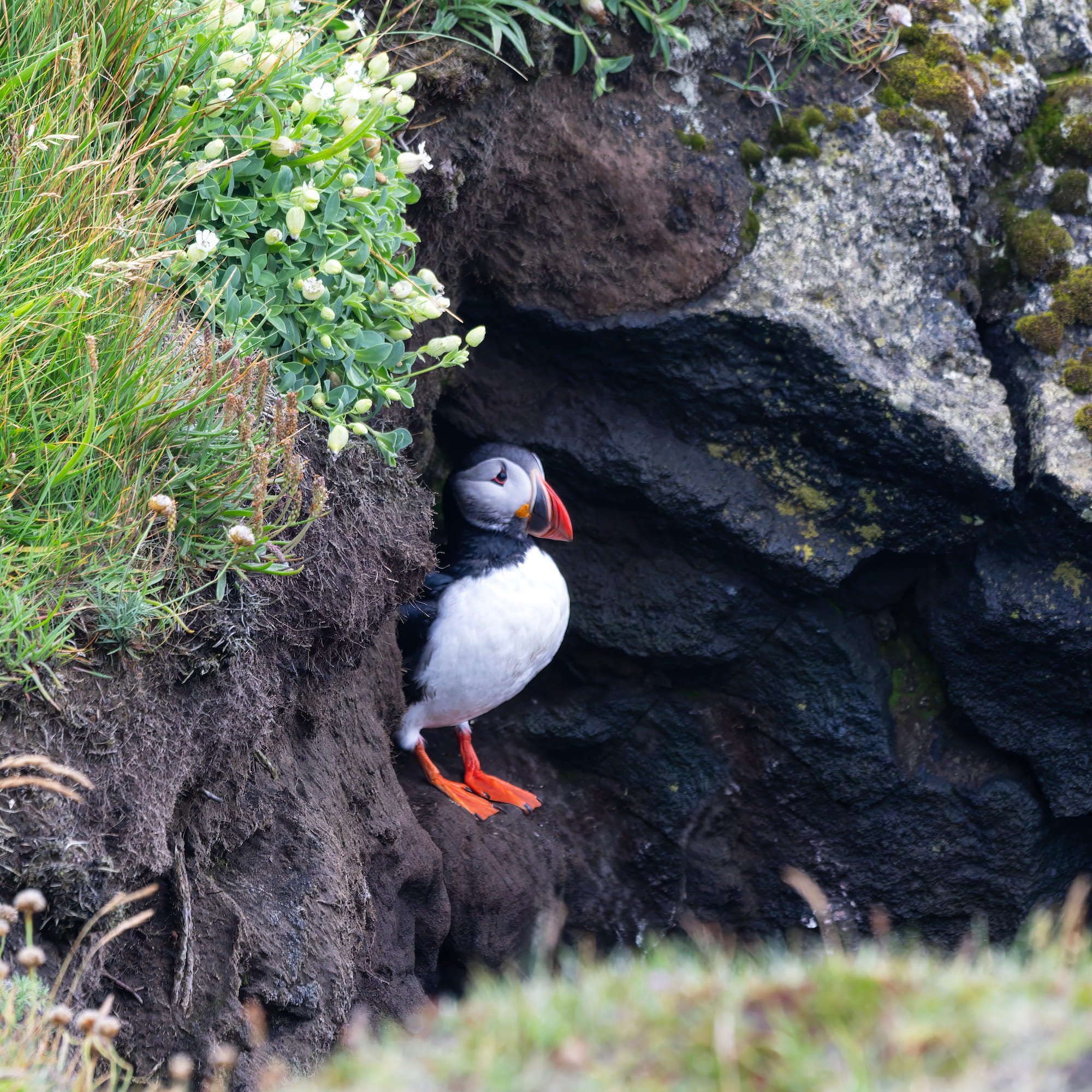
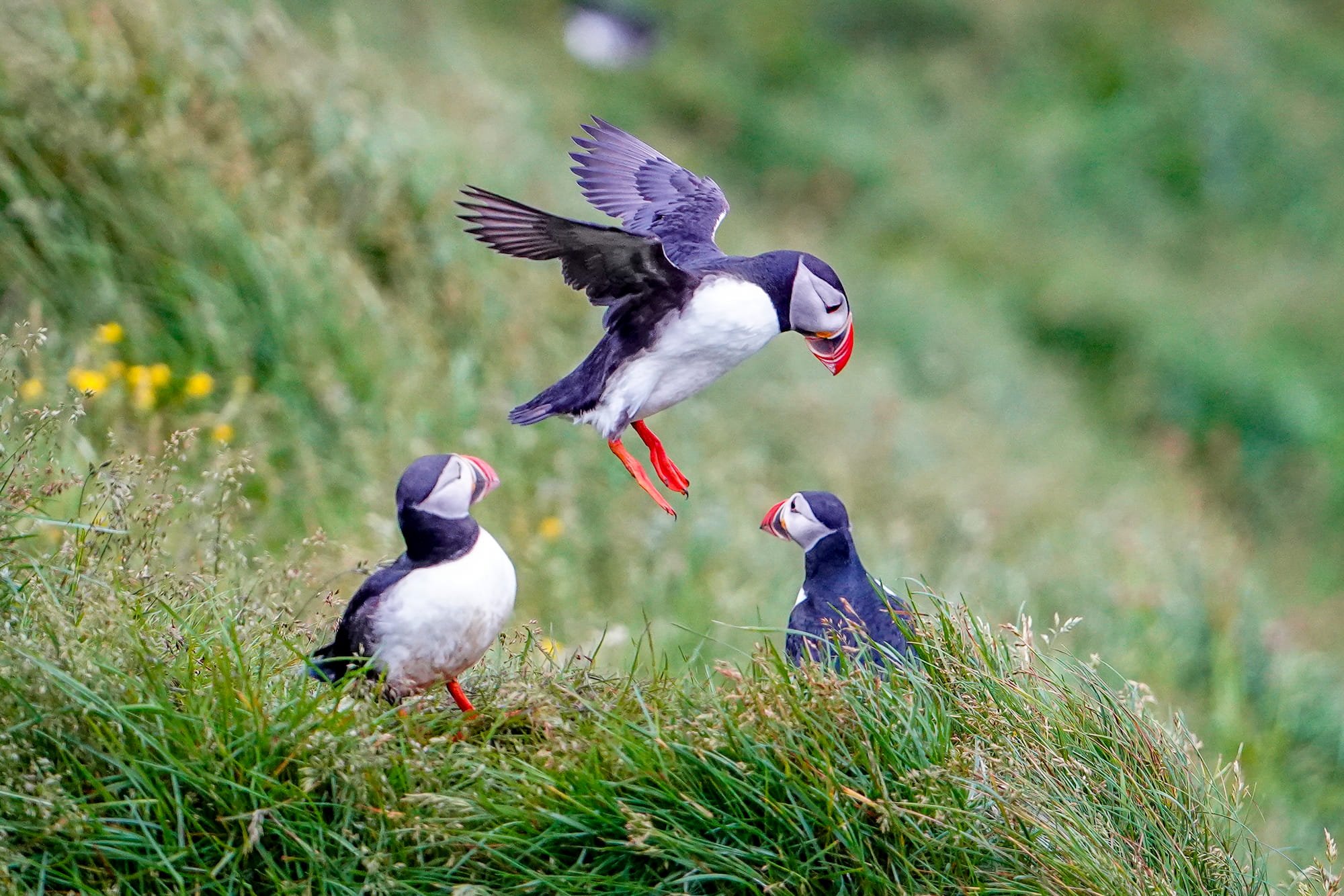
We returned to the same locations on our own the following morning, hoping for another good photography session. There were still puffins around, but noticeably fewer than we had seen with Thomas. It reinforced something we would discover several times in Iceland: sometimes the best conditions happen when you first arrive, and you have to take advantage of them when they do.
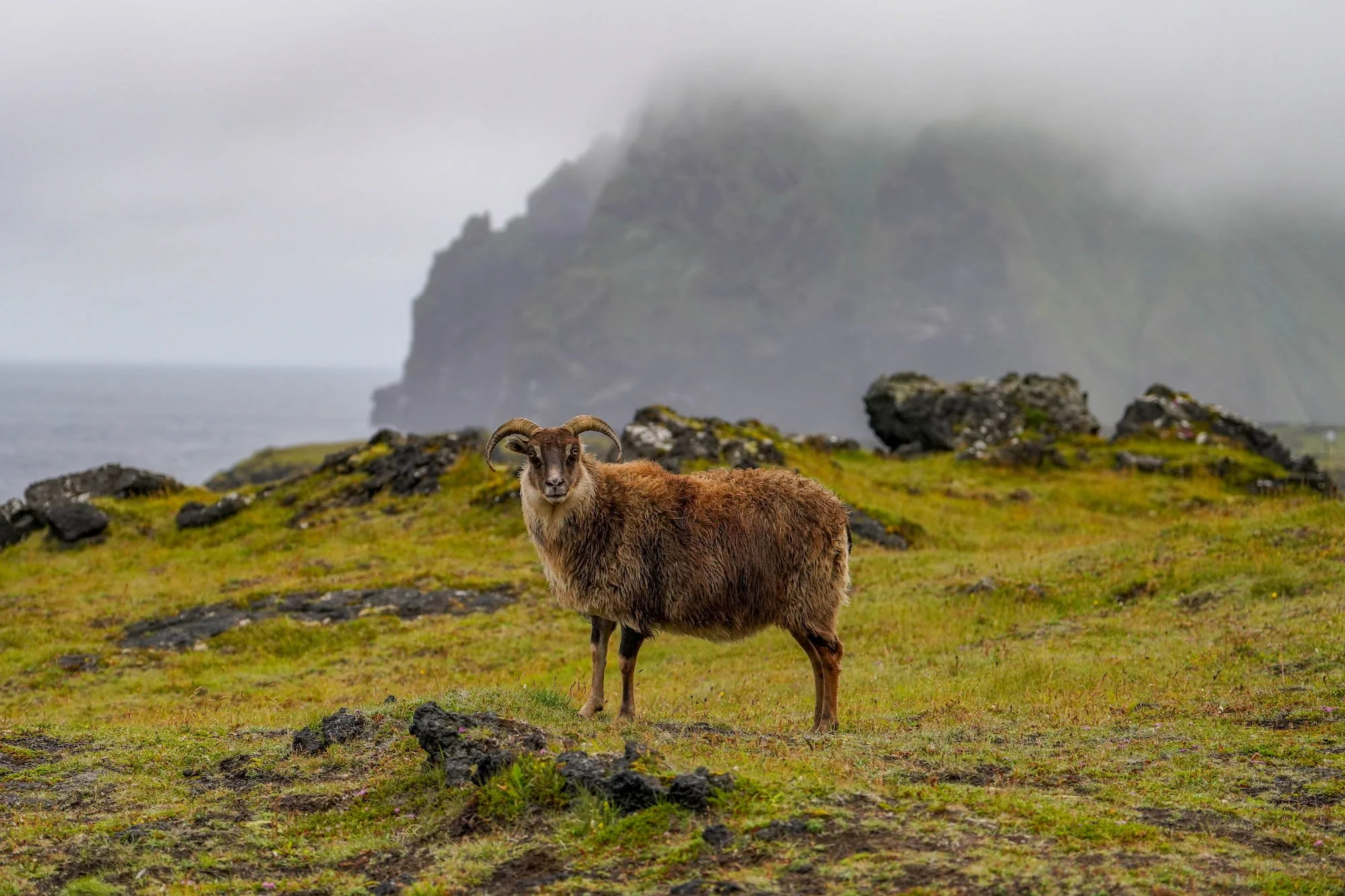
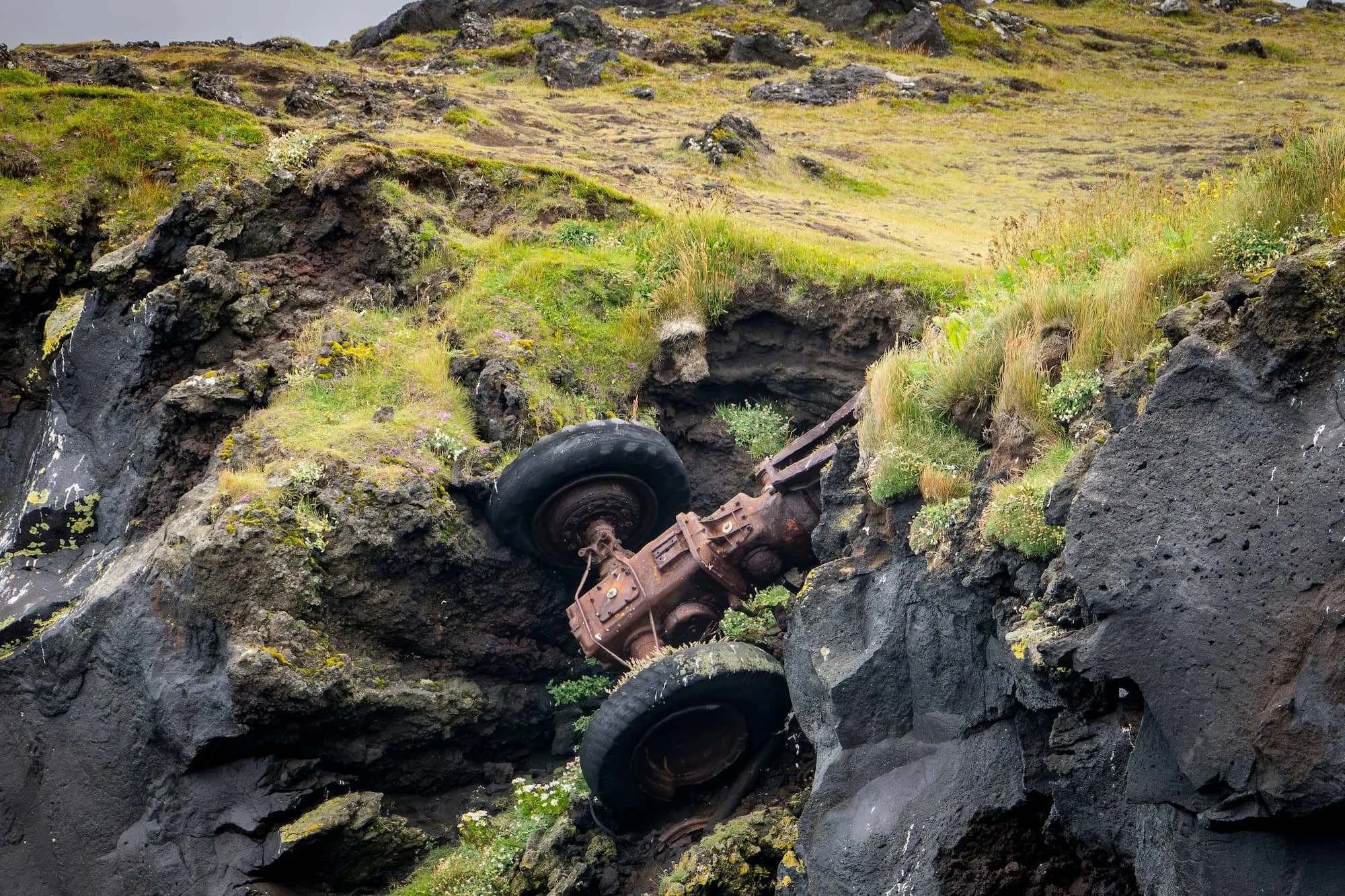
This ram, standing against the misty cliffs, felt perfectly at home in the damp, windswept landscape. And nearby, an old tractor lay rusting among the volcanic rock, slowly becoming part of the surrounding landscape — right beside the cliffs where we were photographing puffins.
An Island Shaped by a Volcano
The Westman Islands are about much more than puffins.
Thomas also took us to see the landscape created by the 1973 eruption of Eldfell, an event that dramatically changed Heimaey. Standing there today, it is difficult to comprehend that parts of what you are looking at simply didn't exist in the same form before the eruption. Areas that now feel completely integrated into the island were once lava moving across the landscape.
It was one of those moments when Iceland's geology stopped being something we had read about and became very tangible. Throughout the trip we would encounter lava fields, glaciers, black sand, geothermal landscapes and waterfalls, but Heimaey was our first real introduction to just how young and changeable this country can be.
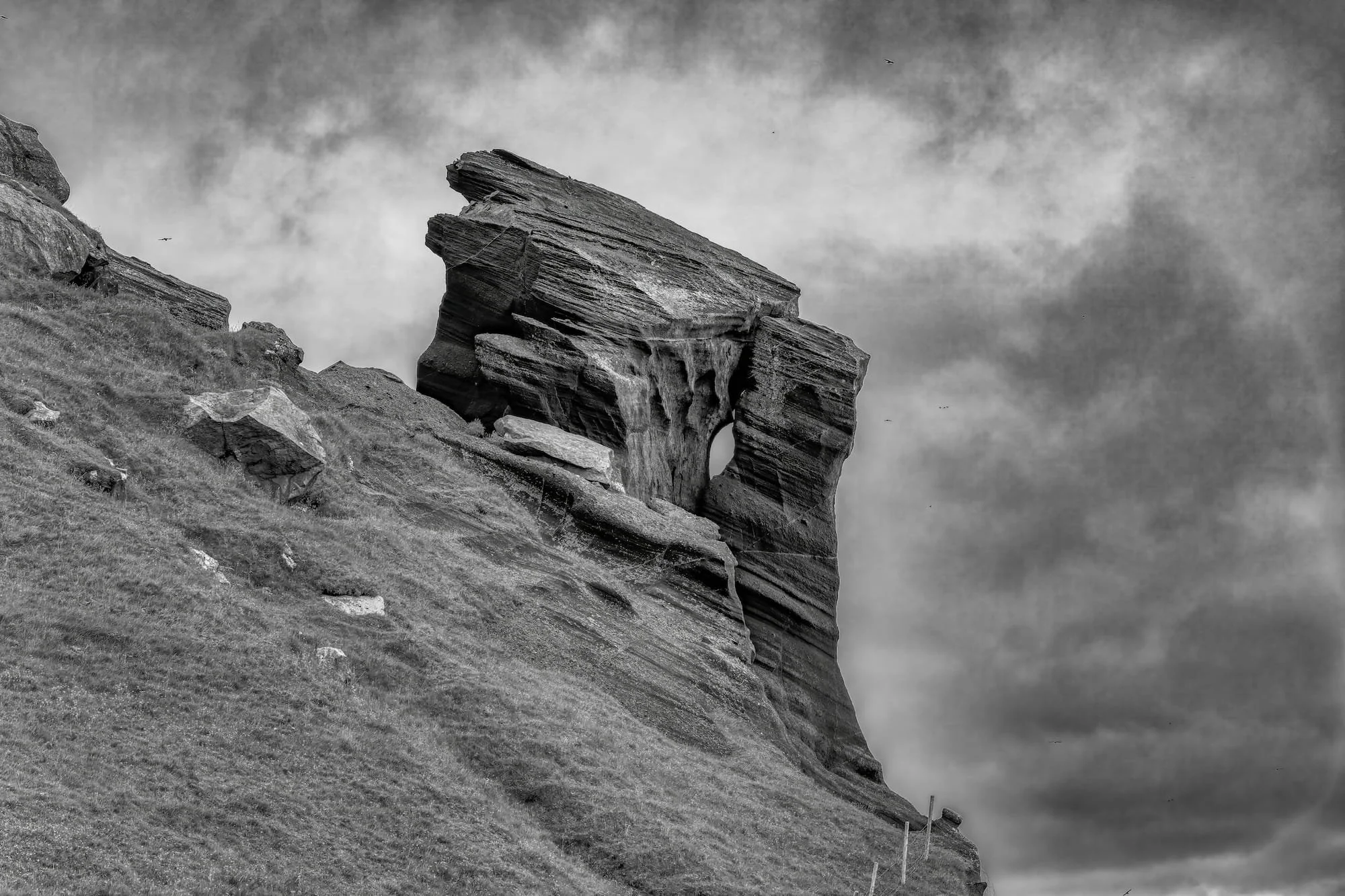
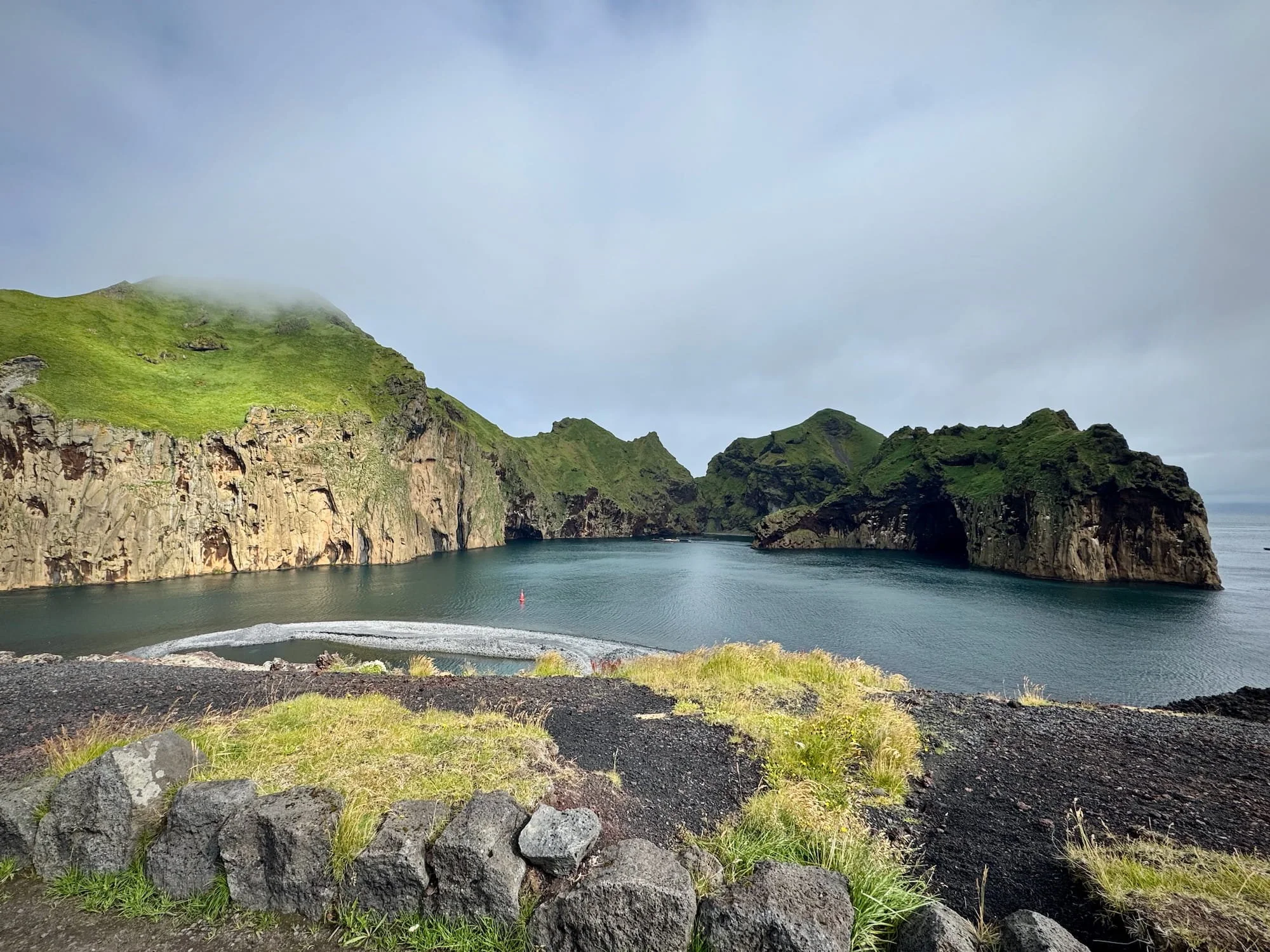
Thomas also introduced us to a local coffee shop, which was particularly welcome after several hours of wind and rain. Between the puffins, volcano, local stories and coffee, the tour gave us a much better sense of the island than we would have gained simply driving around ourselves.
After two nights, we headed east toward Vík.
Black Sand and Icelandic Horses
Our next base was Black Beach Suites, just outside Vík. Once again we arrived early, and once again we got lucky: our room was ready. We drove down toward Reynisfjara for a first look but didn't stay. We knew we had more time planned for the area and assumed we'd be back several times. That assumption turned out to be optimistic.
The next morning, however, we had something completely different planned — riding Icelandic horses on the black sand beach.
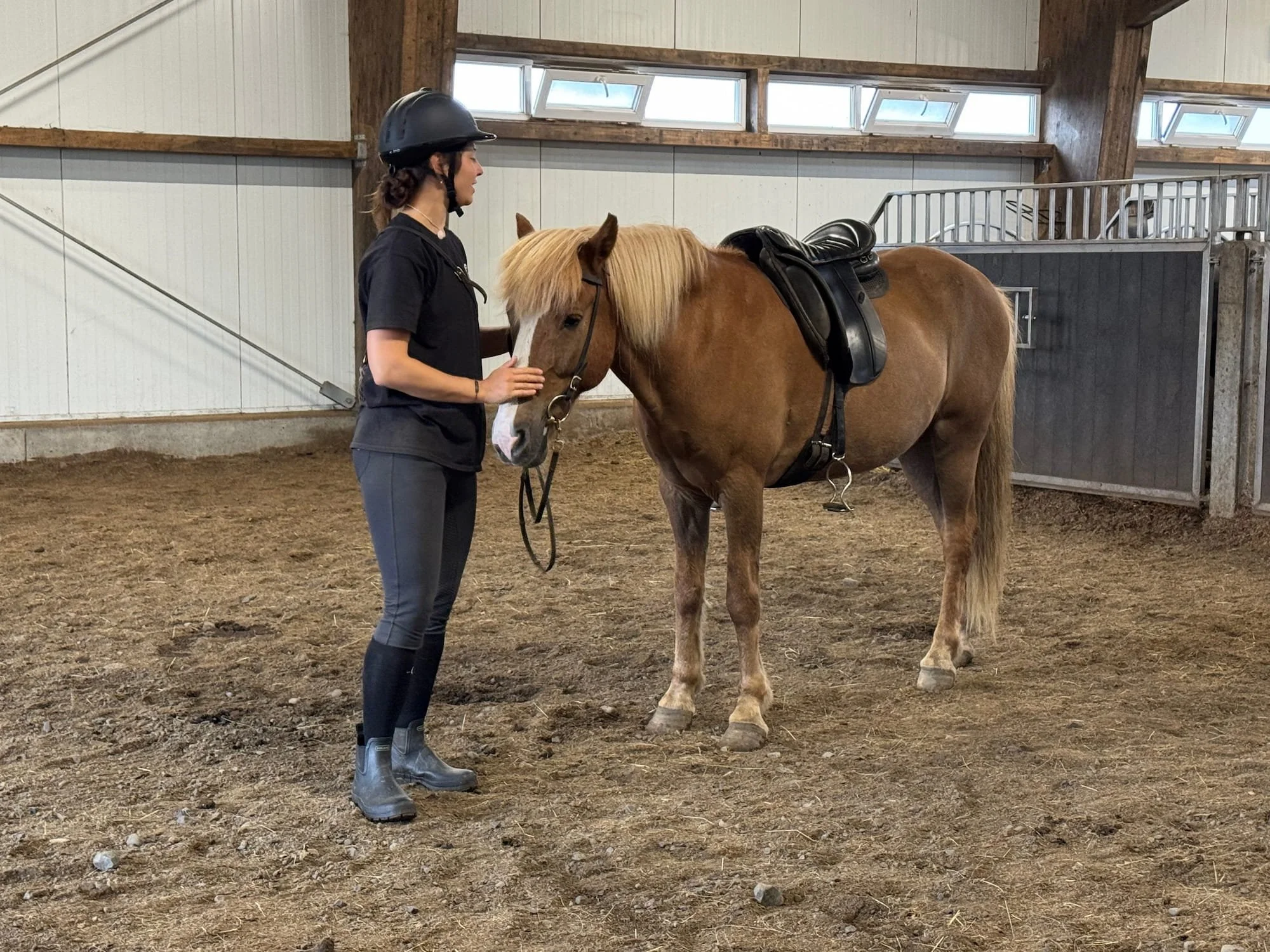
We had wanted to experience the Icelandic horse in Iceland, and riding along the black volcanic sand turned out to be one of the memorable non-photography experiences of the trip. Icelandic horses are smaller than many of the horses we're accustomed to seeing at home, but they're sturdy, sure-footed and wonderfully suited to the landscape.
We also had our first opportunity to try the tölt, the distinctive gait Icelandic horses are famous for. It really is remarkably smooth — a completely different sensation from a traditional trot.
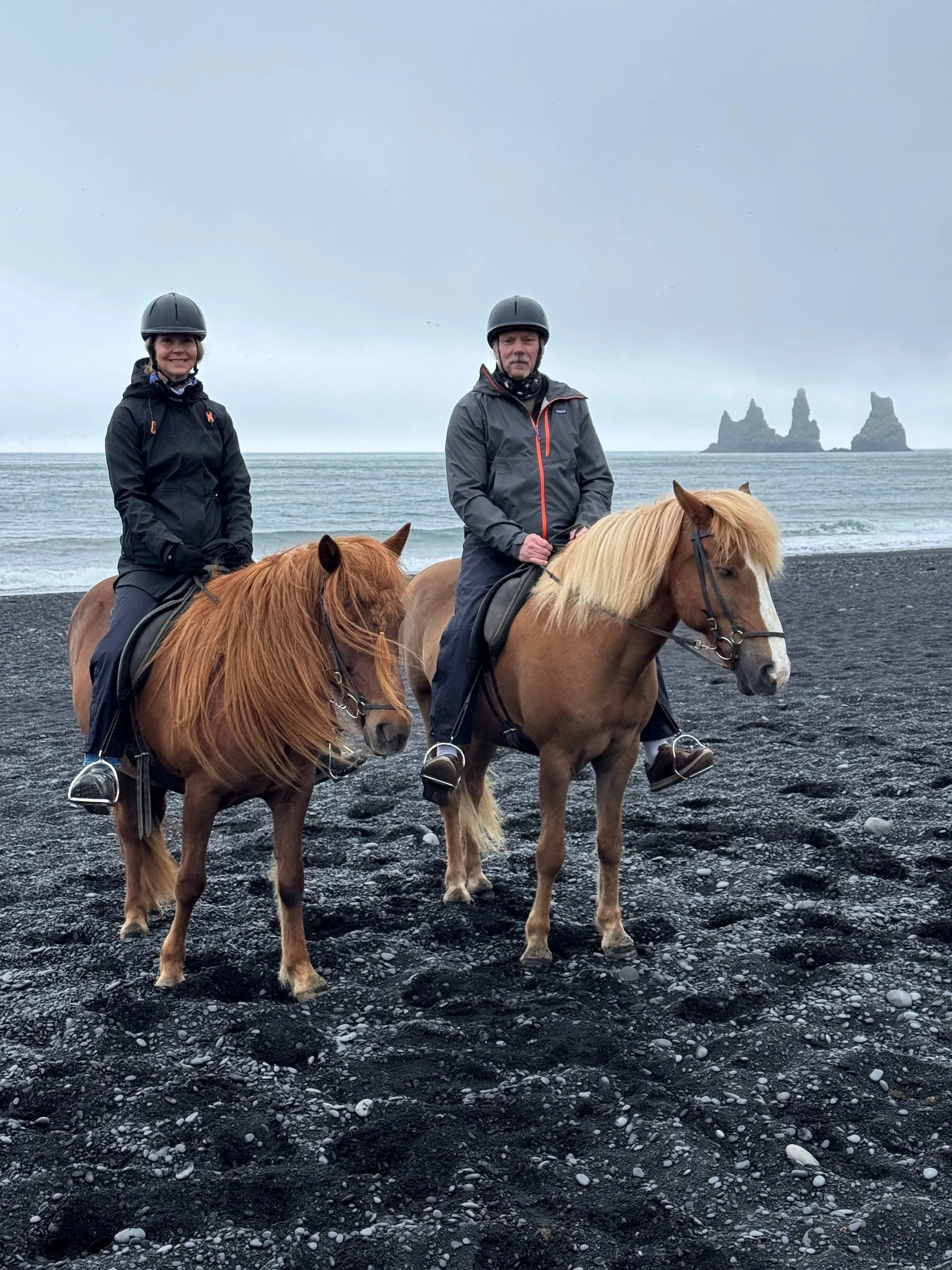
The weather added its own atmosphere. Offshore, the Reynisdrangar sea stacks drifted in and out of mist, giving the beach a mysterious, almost monochromatic quality. It wasn't the dramatic sunrise light a landscape photographer might normally hope for, but it suited the place.
Later we returned to Reynisfjara and took a few photographs, expecting we would have another chance to spend more time there. Instead, increasingly heavy rain and fog closed in over the following day, and those quick photographs ended up being most of what we had from the beach.
Iceland was already teaching us not to postpone a photograph simply because we thought we'd be back tomorrow.
We had hoped to use Iceland's long summer days to our advantage, sleeping for part of the evening and heading back out for the late light or an early-morning shoot. We managed it for a while, but quickly discovered that doing both wasn't a particularly sustainable vacation strategy.
Chasing Waterfalls in the Rain
With the weather remaining unsettled, we headed west from Vík one evening for a small waterfall run.
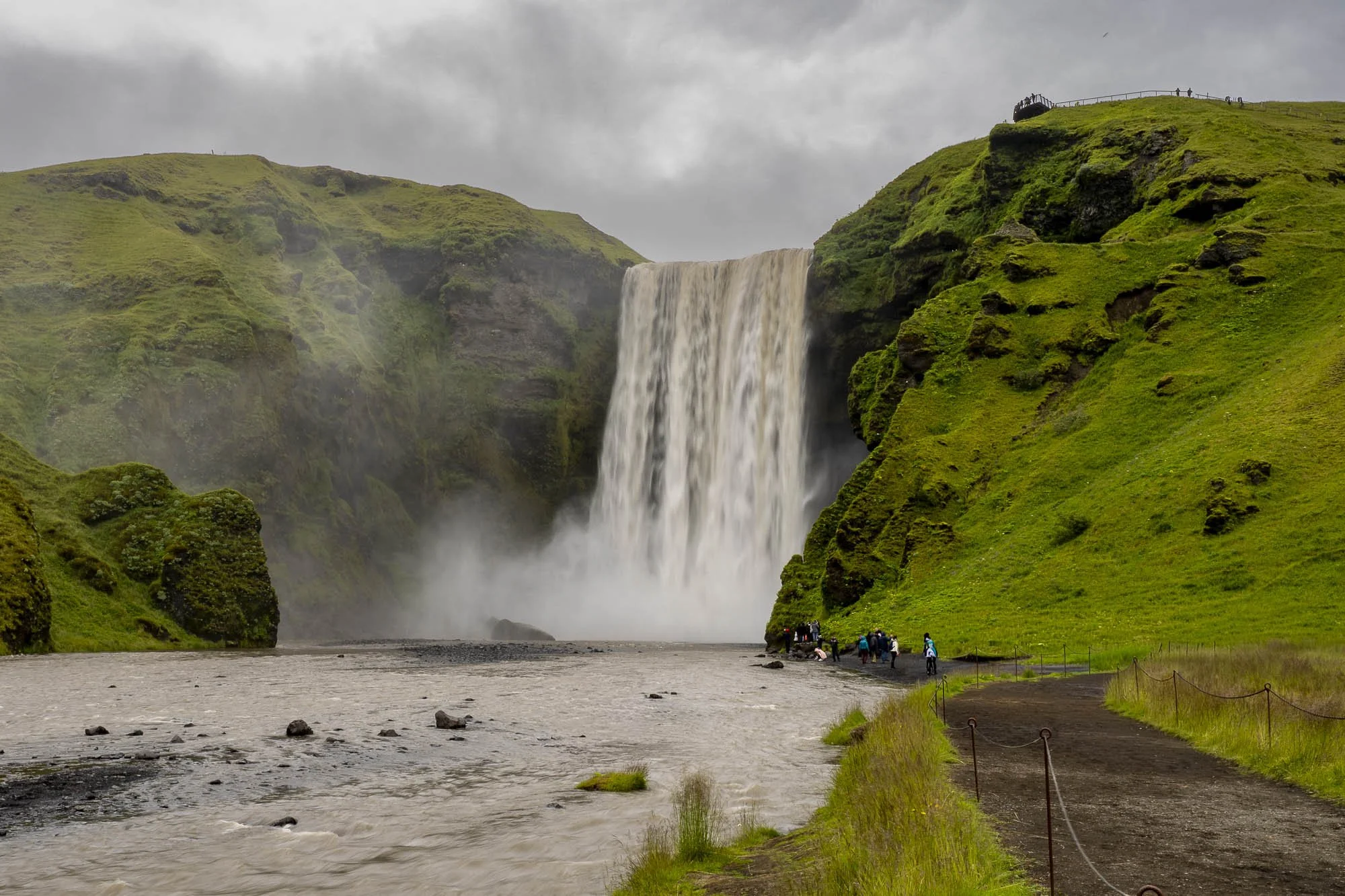
Skógafoss was every bit as powerful as expected, although it came with the crowds that accompany one of Iceland's most recognizable waterfalls.
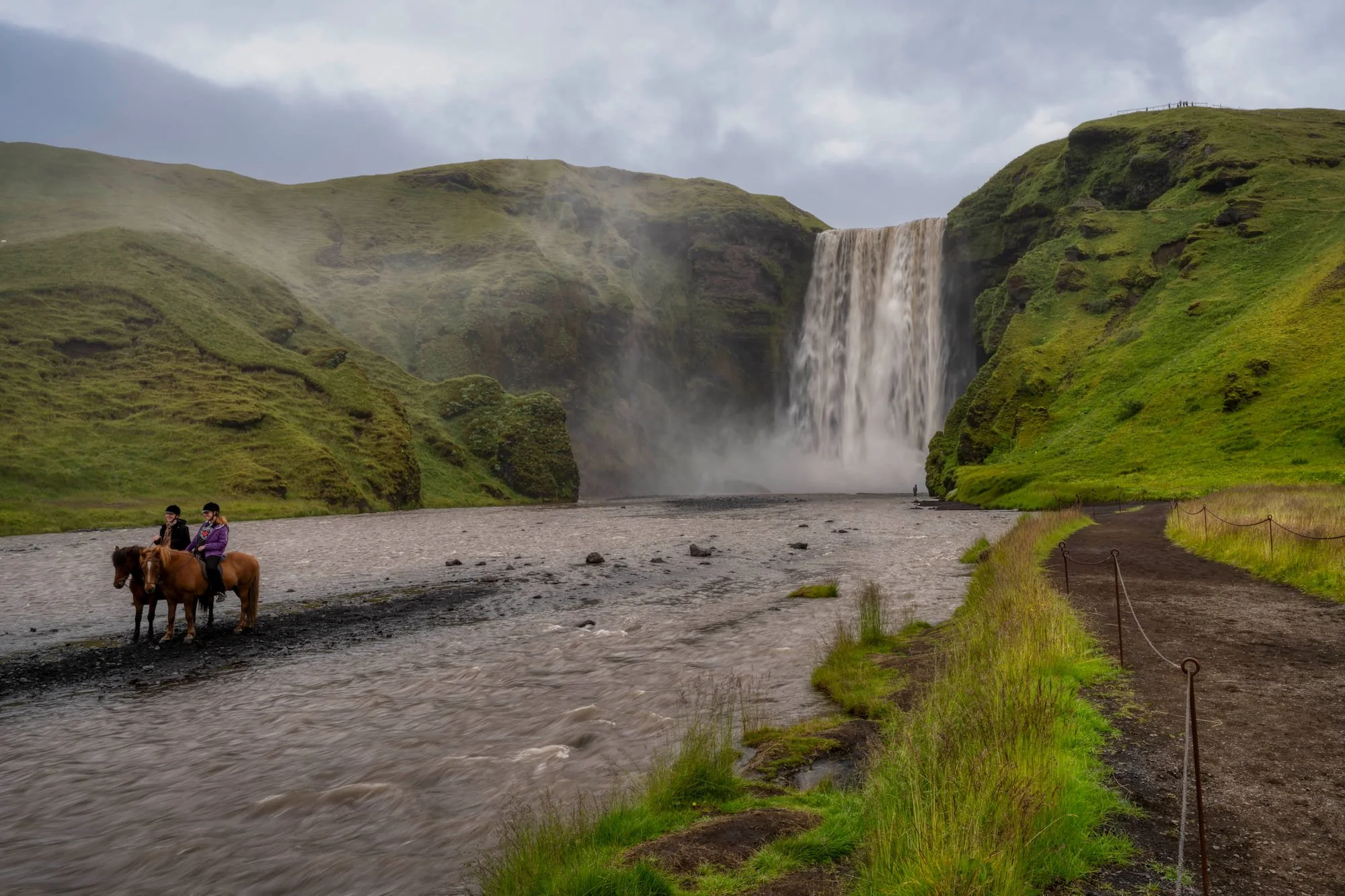
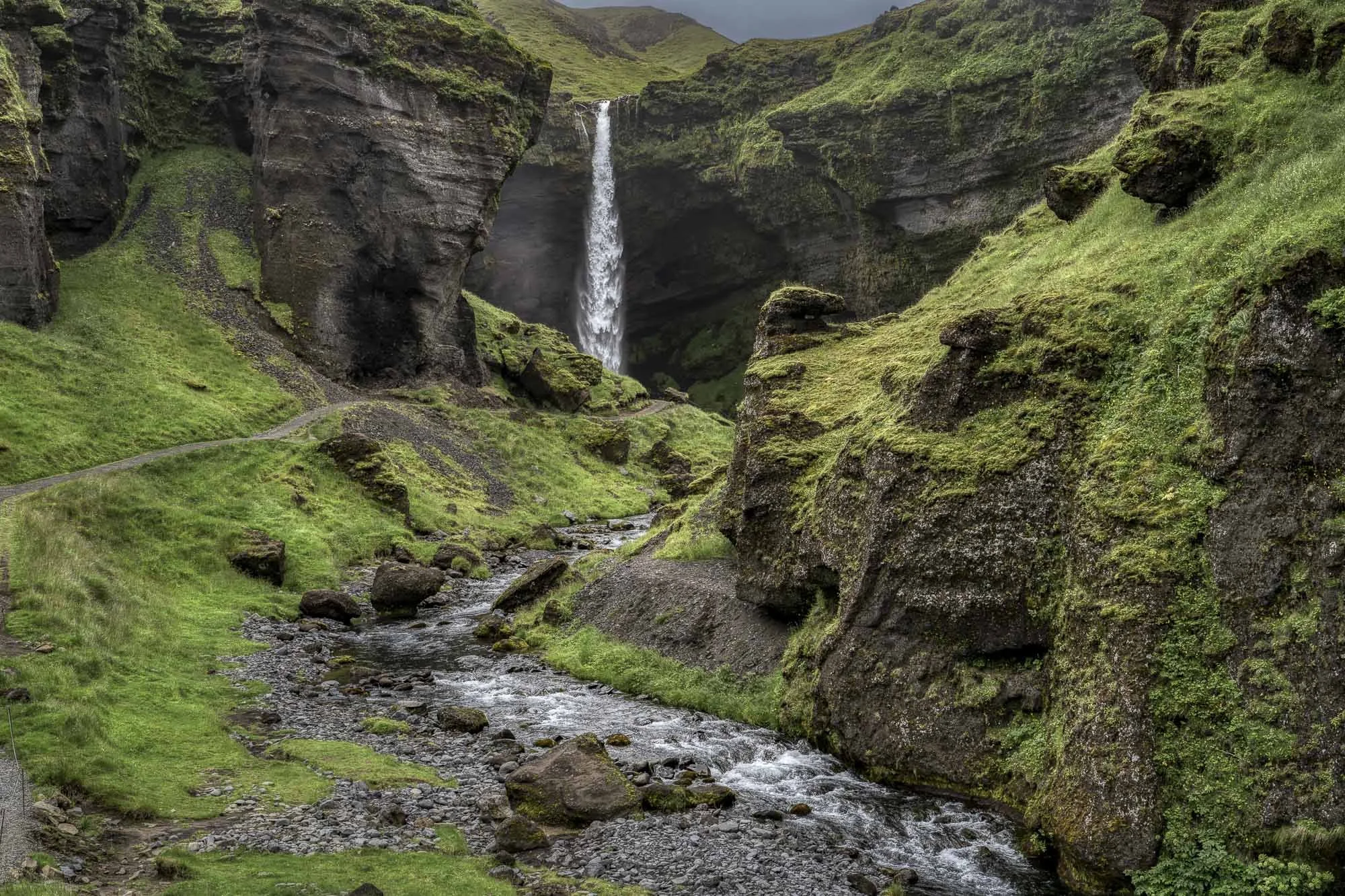
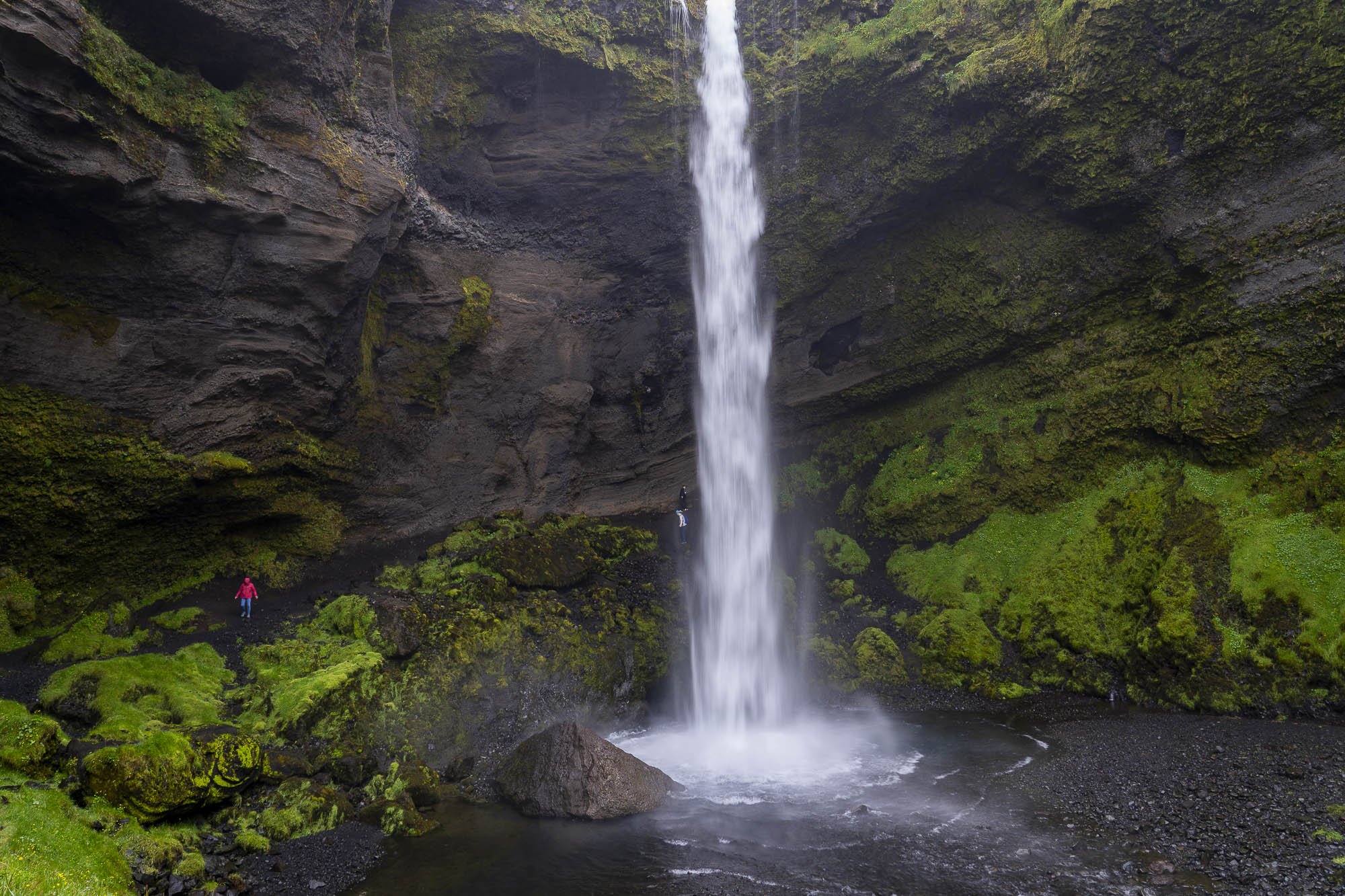
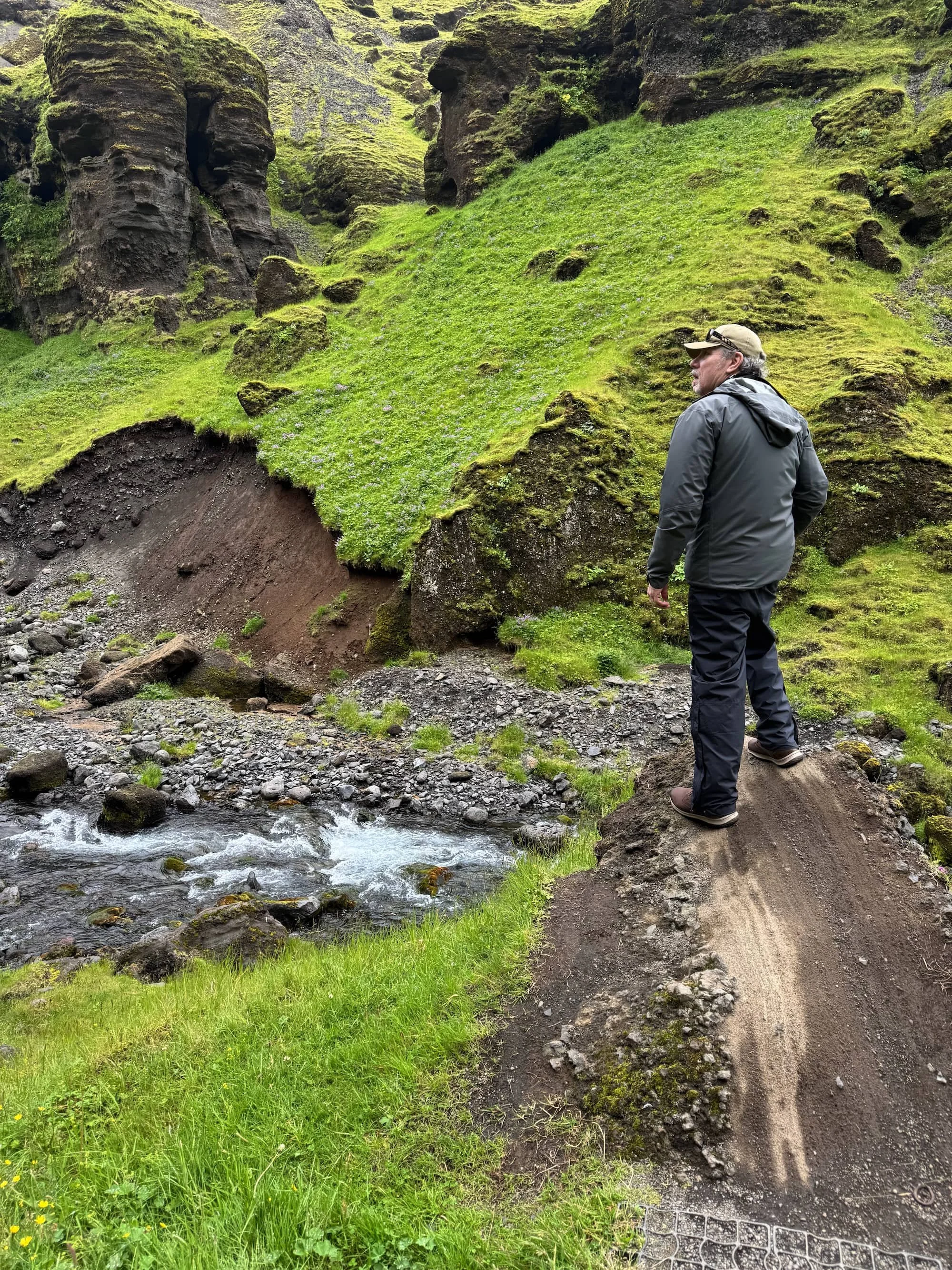
Nearby Kvernufoss was a very different experience. Reaching it required a short walk into a narrow green gorge, with the waterfall gradually revealing itself ahead.
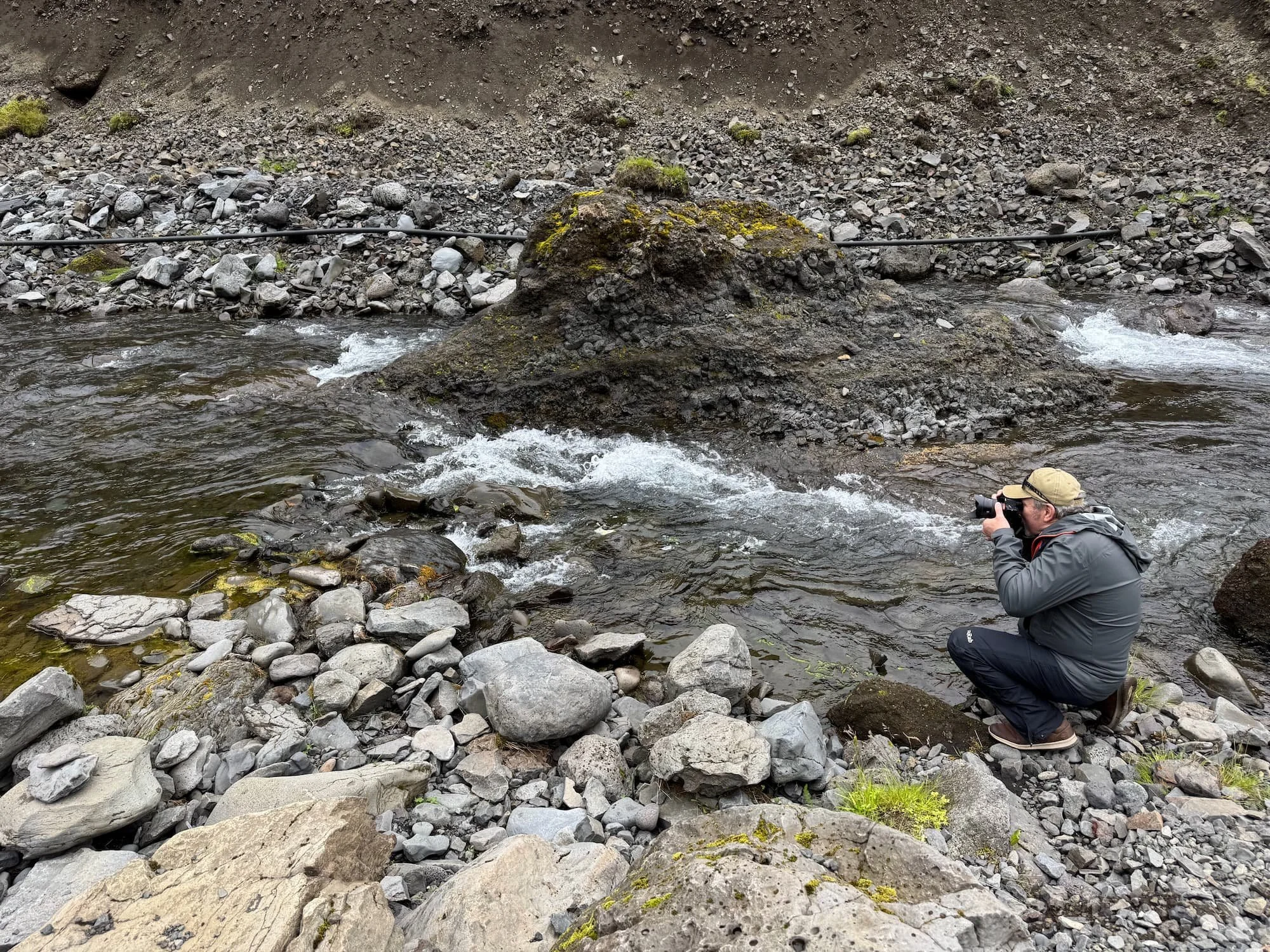
There is a trail that lets you walk behind Kvernufoss, but given the amount of rain and spray, we decided our rain gear wasn't quite up to that particular adventure. Even without going behind the falls, it was a beautiful little hike and one of those places where the walk itself was part of the experience.
Somewhere around this point, I bought what became known as my “raincoat for over my raincoat.” Iceland had made its point.
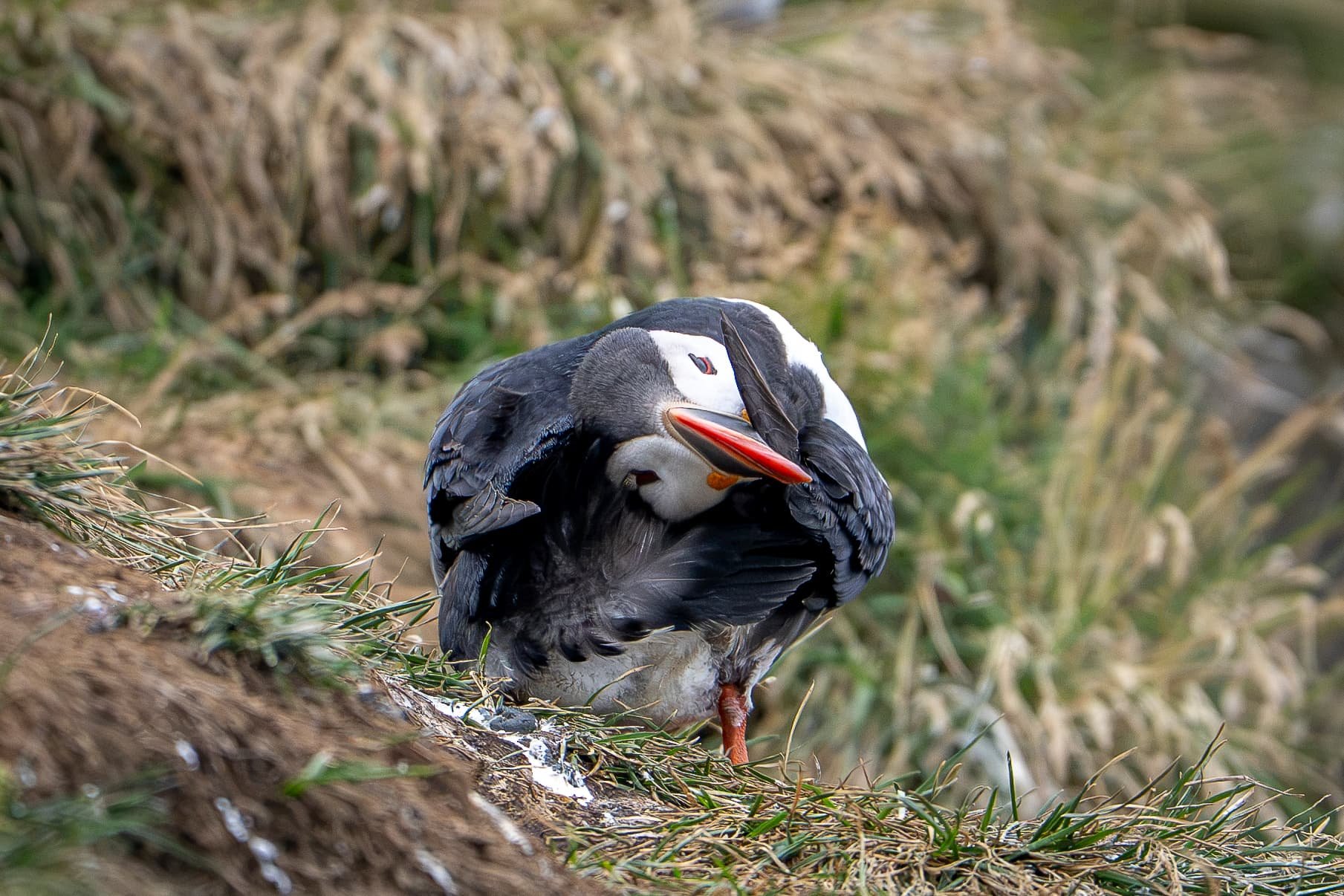
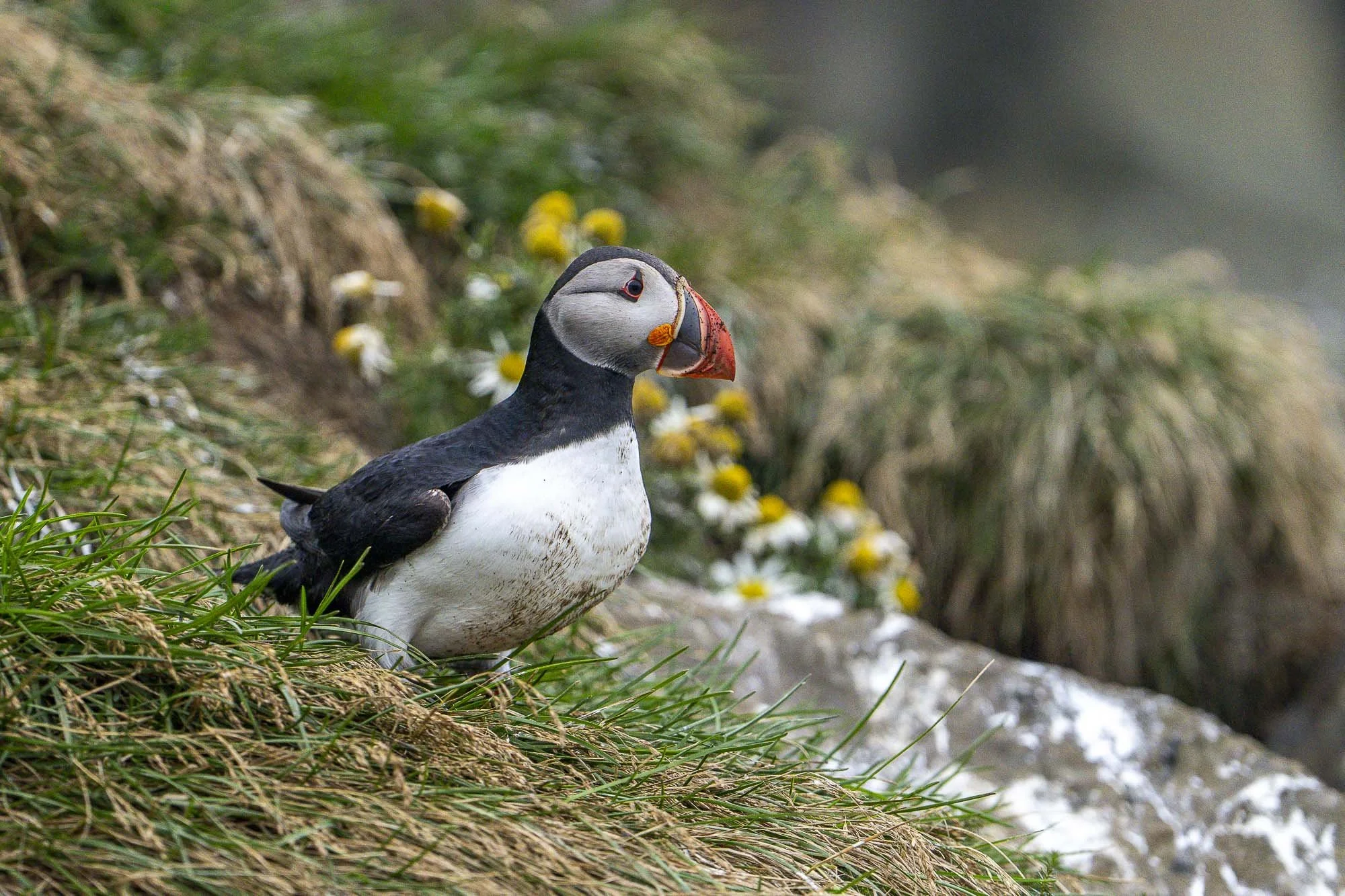
We also made our way to Dyrhólaey, where we spotted a handful of puffins along the cliffs. Under other circumstances, we probably would have been thrilled. After the sheer number we'd seen on the Westman Islands, however, it was difficult not to compare.
Westman Islands had spoiled us. But we still couldn't resist photographing a few more.
The following morning, we accidentally slept in longer than intended — always a danger when your photography schedule involves Iceland's long summer days. The weather initially looked promising, but the rain quickly returned. Plans to revisit the black sand beach and photograph Vík's hilltop church disappeared along with the view.
So we did what road trips sometimes require: filled the tank, stocked up on groceries and headed east.
The Road to Jökulsárlón
It was raining heavily when we left Vík, but the weather gradually improved. As it did, we started making some of the stops we'd hoped for along the South Coast.
The first was the Eldhraun lava field, a vast landscape created by the enormous Laki eruption in the 18th century. Thick moss now covers much of the old lava, softening what must once have been an extraordinarily harsh landscape.
The soft, moss-covered lava fields of Eldhraun.
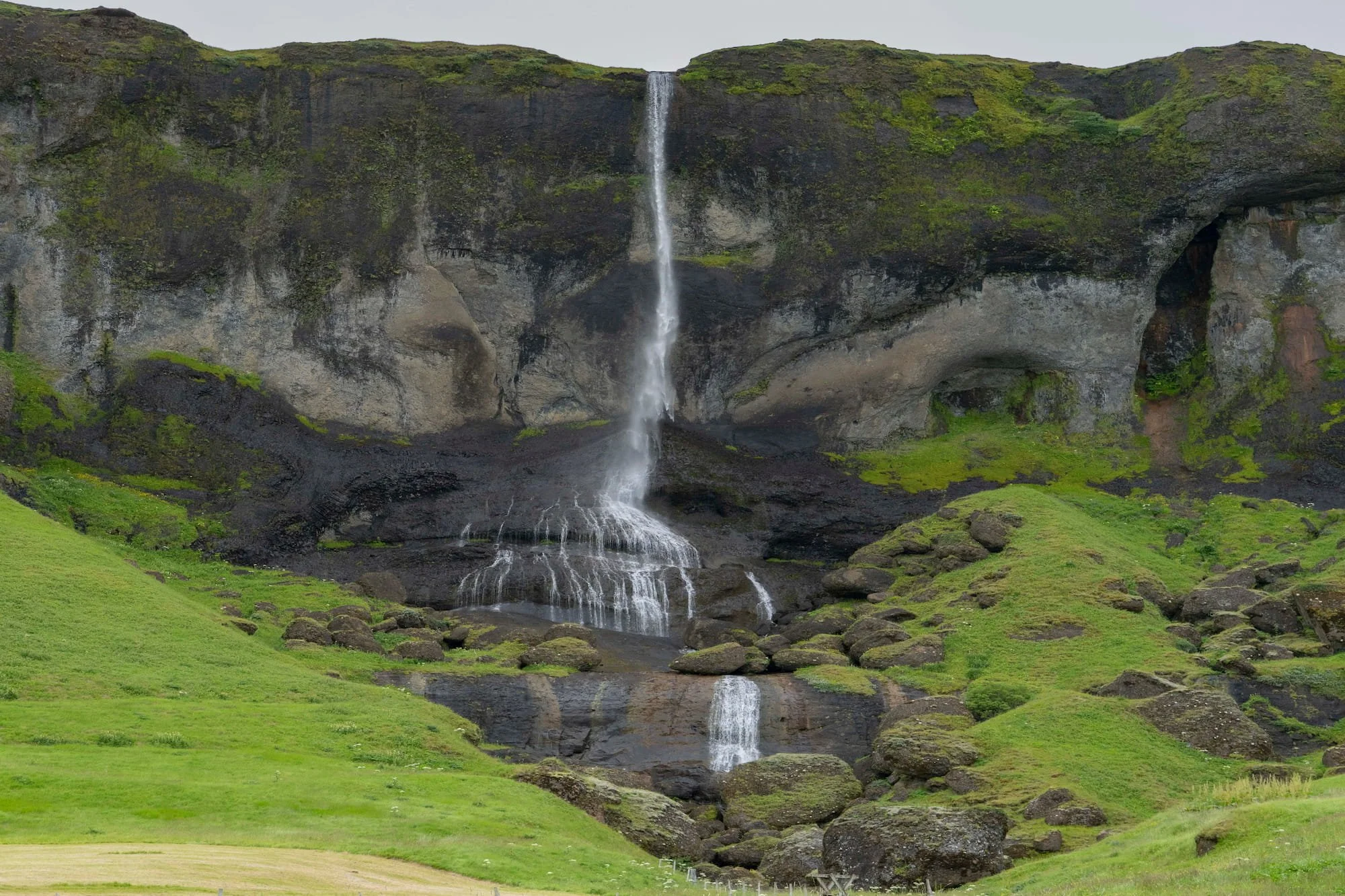
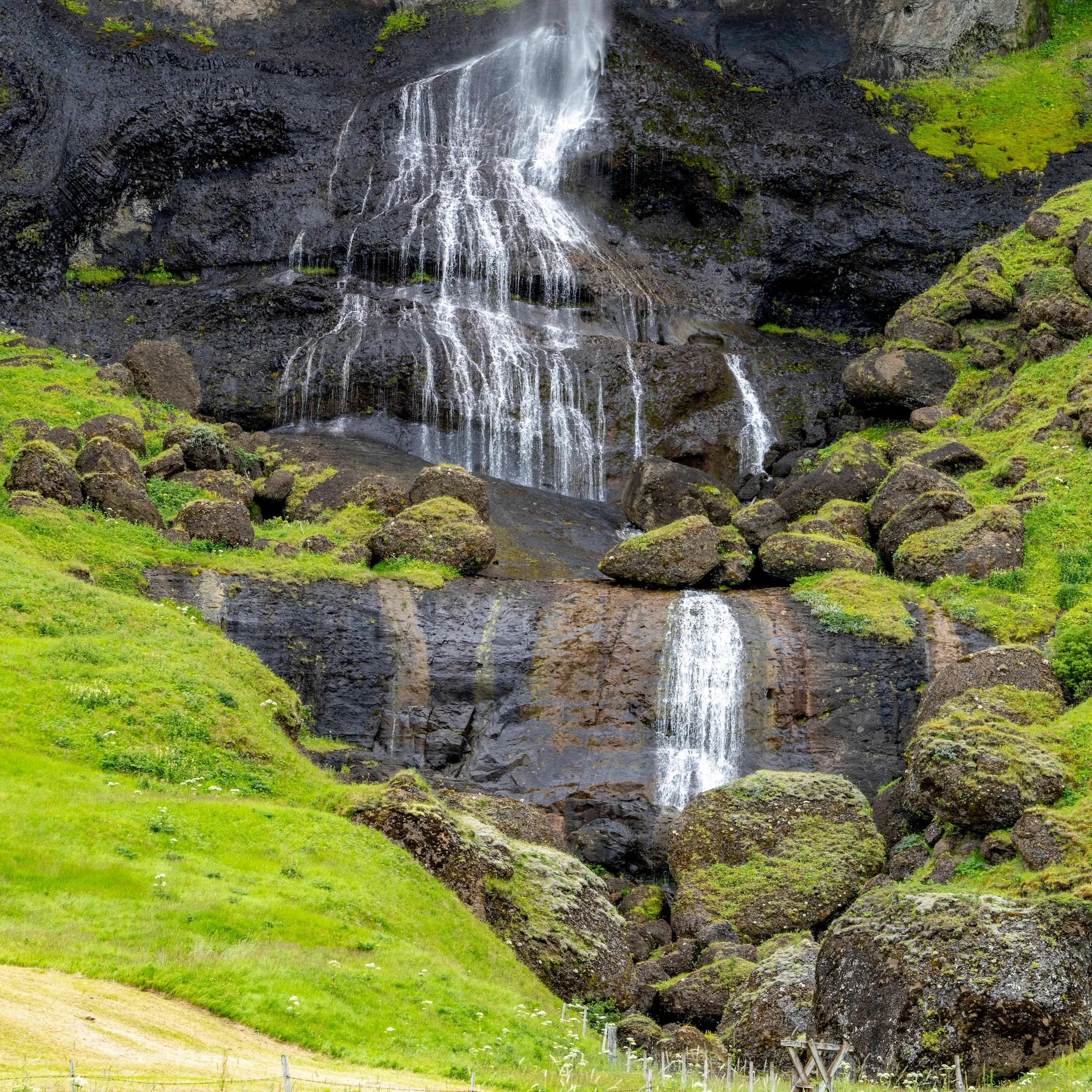
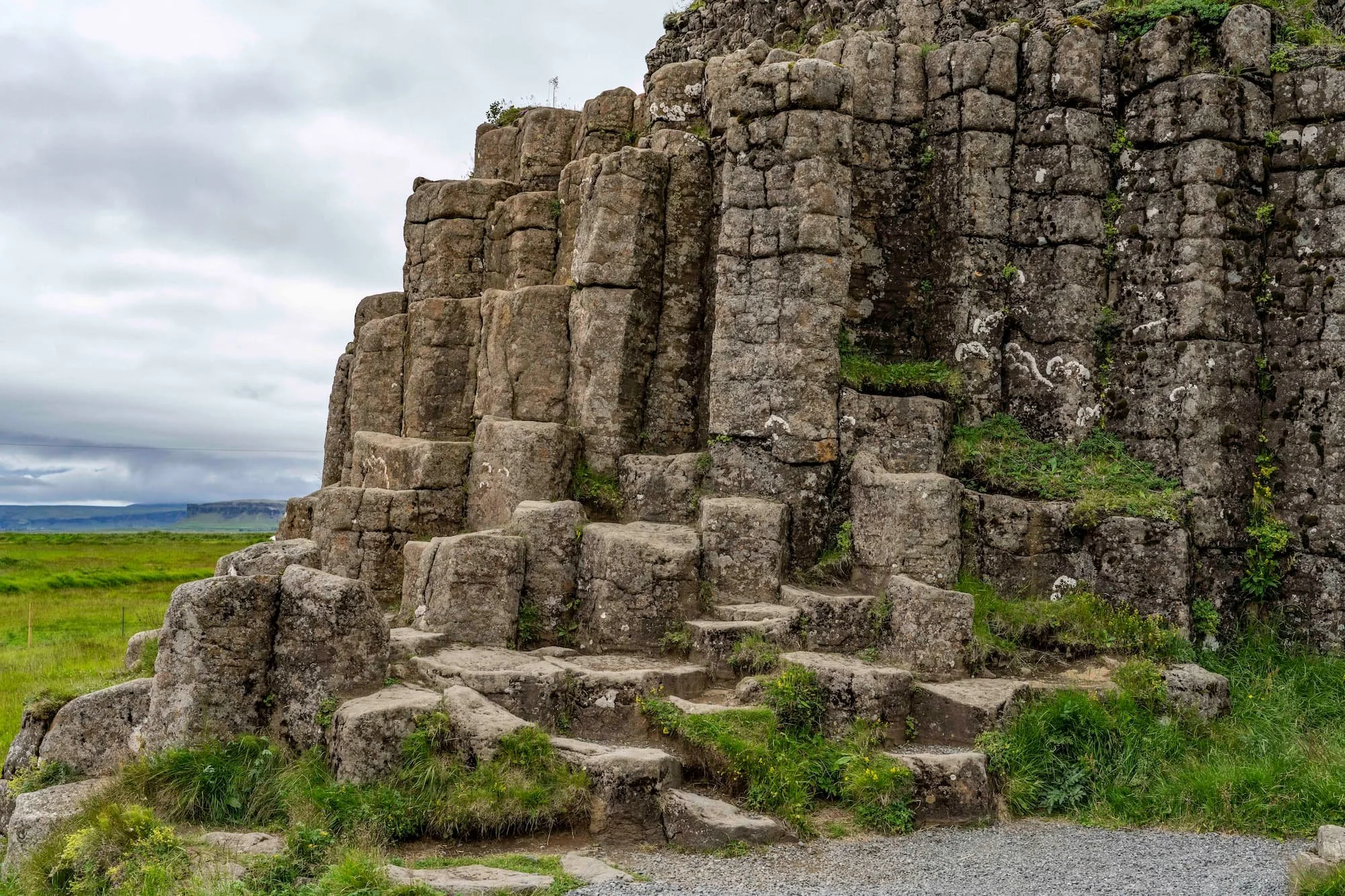
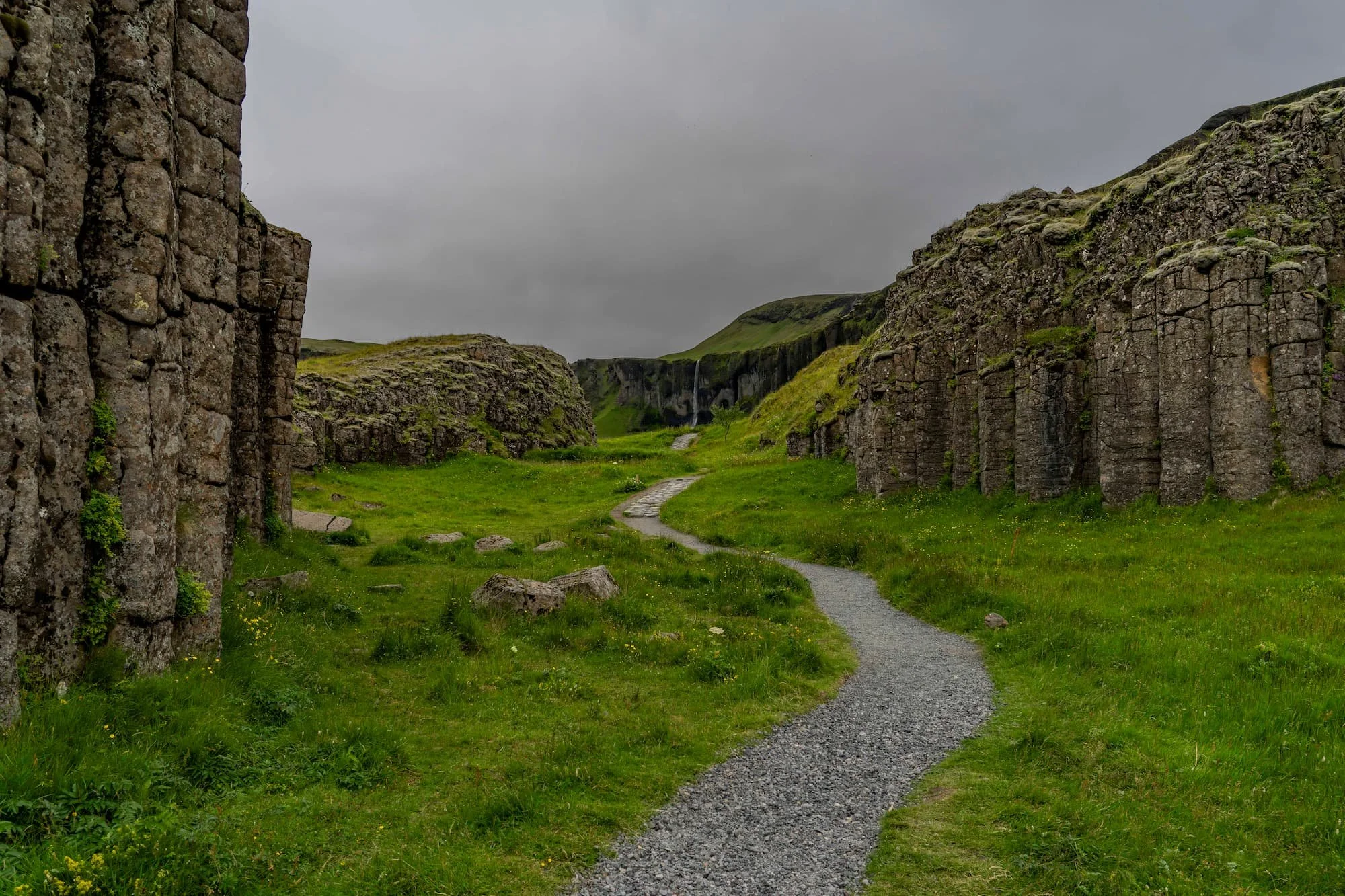
We also stopped at Foss á Síðu, where a slender waterfall drops from the cliffs behind a small cluster of farms, and at Dverghamrar — the Dwarf Cliffs, with their unusual basalt formations. These weren't long stops or major destinations. They were simply part of what makes driving through Iceland so interesting: even between the famous locations, there is almost always something that makes you want to pull over.
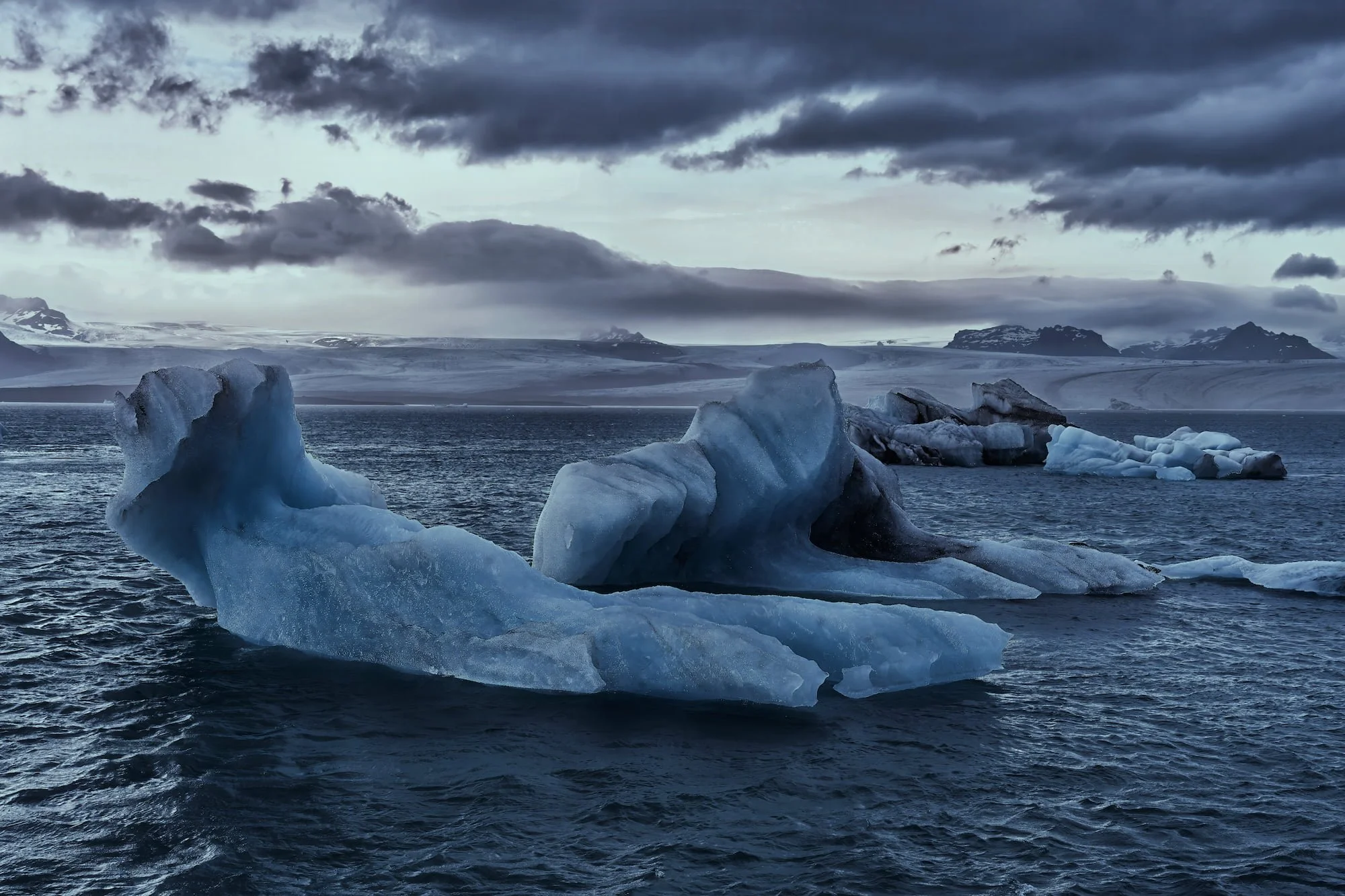
And then we reached Jökulsárlón Glacier Lagoon.
We had planned plenty of time there later, but there was no possibility of simply driving past it.
Icebergs floated across the lagoon in shades ranging from white to deep blue, some smooth and sculptural, others jagged and streaked with volcanic ash. In the distance was the glacier that had released them.
The sky was overcast, but for photography that wasn't necessarily a disadvantage. The softer light worked beautifully with the ice and water, and despite the number of visitors we managed to find parking, take out the cameras and spend some time photographing our first view of the lagoon.
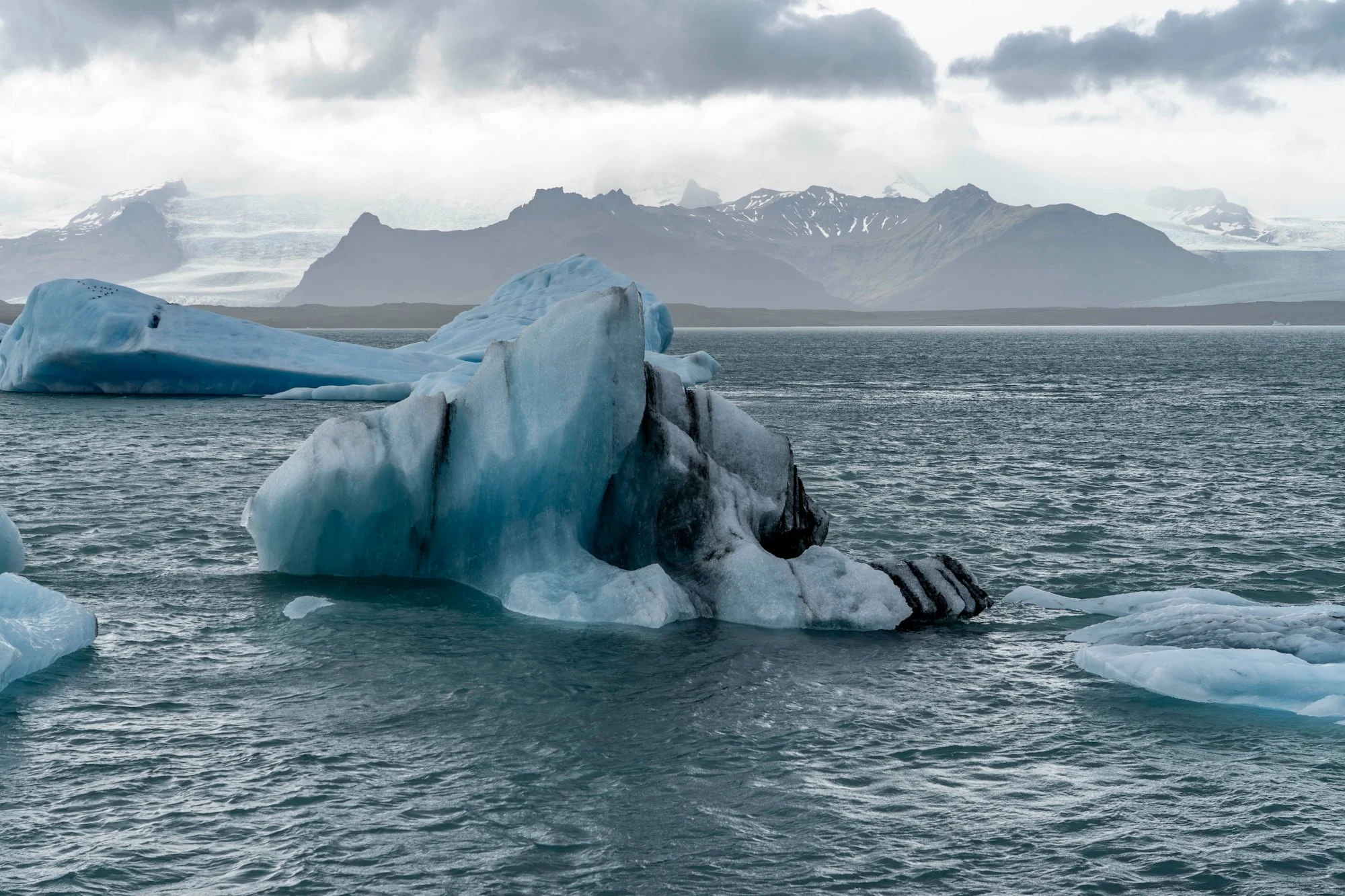
It was only meant to be a stop on the way to our accommodation.
Instead, it felt like the beginning of the next part of the trip.
Over the following days, Jökulsárlón and nearby Fjallsárlón would become a major focus for us before we continued east toward Stokksnes and Vestrahorn — landscapes very different from the puffin cliffs and black beaches where our Iceland adventure had begun.
Continue the Journey
Our Iceland journey continues east to glacier country, from Diamond Beach and the still waters of Jökulsárlón to Fjallsárlón and the wild black-sand landscape beneath Vestrahorn.
Continue to Jökulsárlón, Fjallsárlón and Vestrahorn →